Precision Fabrication: The Rise of Small Diameter Pipe Laser Technology in Antofagasta’s Industrial Sector
The industrial landscape of Antofagasta, Chile, serves as a critical node in the global supply chain, particularly regarding mineral extraction and desalination infrastructure. As operational demands for precision fluid transport and structural integrity increase, the adoption of advanced fabrication methods has become a necessity. Central to this evolution is the deployment of the Small Diameter Pipe Laser, a technology designed to handle the rigorous specifications of thin-walled and narrow-gauge piping used in chemical processing and hydraulic systems. This article examines the technical integration of energy-efficient fiber source technology within this specific geographic and industrial context, focusing on the mechanical advantages and operational cost reductions associated with modern fiber resonators.
The Transition to High-Efficiency Fiber Laser Sources
Traditional thermal cutting methods, such as plasma or CO2 laser systems, have historically struggled with the thermal management required for small-diameter profiles. The primary challenge lies in the heat accumulation on the opposite wall of the pipe during the cutting process. Modern fiber laser sources, operating at a wavelength of approximately 1.06 microns, offer a significantly smaller focal spot and higher absorption rates in metallic substrates compared to their gas-based predecessors.
In the context of Antofagasta’s heavy industry, the shift toward fiber technology is driven by Wall-Plug Efficiency (WPE). While CO2 lasers typically exhibit a WPE of 8% to 10%, contemporary fiber sources achieve efficiencies exceeding 35% to 40%. For large-scale fabrication facilities in Northern Chile, where energy costs and grid stability are constant variables, this 300% increase in electrical-to-optical conversion efficiency translates directly into lower kilowatt-hour consumption per linear meter of cut. This efficiency is not merely an environmental consideration but a fundamental requirement for maintaining competitive margins in high-volume pipe processing.
Technical Parameters for Small Diameter Processing
Processing pipes with diameters ranging from 10mm to 100mm requires specialized kinematic configurations. Unlike large-format tube lasers, a Small Diameter Pipe Laser must maintain high angular velocity in the chuck assembly to achieve the necessary surface speeds for thin-walled materials. The integration of fiber sources allows for high power density, which enables high-speed cutting without compromising the structural integrity of the workpiece.

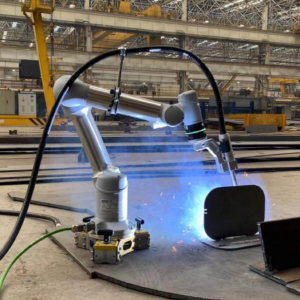
Industrial Application of Small Diameter Pipe Laser
Key technical advantages include:
- Minimized Heat Affected Zone (HAZ): The concentrated energy of the fiber source ensures that the thermal gradient is localized. This is critical for the stainless steel and duplex alloys frequently used in Antofagasta’s desalination plants, as it prevents the precipitation of carbides and maintains the material’s corrosion resistance.
- Narrow Kerf Width: Fiber lasers produce a kerf significantly narrower than plasma or mechanical sawing. This precision allows for complex geometries, such as interlocking joints and high-tolerance manifold ports, which are essential for modular mining equipment.
- Dynamic Beam Shaping: Advanced fiber resonators can modulate the beam profile in real-time to optimize for different wall thicknesses, ensuring a clean exit without dross or burr formation on the internal diameter of the pipe.
Operational Impact in the Antofagasta Industrial Hub
Antofagasta’s industrial ecosystem is characterized by its proximity to some of the world’s largest copper and lithium operations. These operations require extensive networks of high-pressure piping for reagent transport and tailings management. The implementation of Small Diameter Pipe Laser systems in local service centers has streamlined the “just-in-time” delivery of custom components.
The reliability of the Fiber Laser Resonator is a significant factor in this region. Unlike CO2 systems, fiber lasers utilize a solid-state gain medium and deliver the beam via a flexible fiber optic cable. This eliminates the need for complex internal mirrors, bellows, and beam path purging systems. In the dusty, high-altitude environments typical of the Antofagasta region, the sealed nature of the fiber delivery system reduces maintenance intervals and eliminates the risk of beam misalignment due to external environmental factors. This robustness ensures maximum uptime for facilities operating 24/7 schedules.
Energy Efficiency and Thermal Management
Energy efficiency in laser cutting is often misunderstood as simply “using less power.” In technical terms, it refers to the reduction of waste heat. Because fiber sources are more efficient at the molecular level, they generate significantly less heat during the light-generation process. This reduces the load on the secondary cooling systems (chillers).
For a fabrication plant in Antofagasta, the reduction in chiller load has a cascading effect on the facility’s total power draw. Smaller, more efficient chillers require less refrigerant and less maintenance. Furthermore, the ability of the fiber source to be pulsed at high frequencies allows for “cold cutting” techniques on extremely small diameters, where the laser is active only for the micro-seconds required to vaporize the metal, further preserving the metallurgical properties of the pipe.
Integration with Automated Material Handling
To fully leverage the speed of fiber source technology, the Small Diameter Pipe Laser must be integrated with automated loading and unloading systems. In the processing of small pipes, the cycle time for cutting is often shorter than the time required to manually load a new raw length. Automated bundle loaders and high-speed servo-driven chucks allow the machine to operate at its theoretical maximum throughput.
In the Antofagasta market, where labor costs and safety regulations are stringent, automation reduces the physical handling of materials, thereby decreasing the incidence of workplace injuries. The software controlling these systems utilizes nesting algorithms specifically designed for tubular geometries, which minimizes “remnant” or scrap material. Given the high cost of specialized alloys used in the mining sector, a 3% to 5% improvement in material utilization can result in six-figure annual savings for a medium-sized fabrication shop.
Concluding Industry Insight
The convergence of energy-efficient fiber technology and precision pipe fabrication represents a significant shift in industrial capability. As Antofagasta continues to position itself as a leader in sustainable mining and water management, the demand for high-performance, low-OPEX machinery will only intensify. The industry is moving away from multipurpose cutting tools toward application-specific systems like the Small Diameter Pipe Laser.
The broader insight for the global market is the move toward “Power Density over Raw Power.” In previous decades, the industry trend was toward higher kilowatt ratings. Today, the focus has shifted to the intelligence of the beam and the efficiency of the source. For global B2B stakeholders, the investment in fiber-based pipe processing is no longer an optional upgrade but a fundamental requirement for operational viability. The ability to produce high-precision components with a reduced carbon footprint and lower energy overhead is the new benchmark for industrial excellence in the 21st century.
Industrial Expertise & Support
Are you looking for high-performance Small Diameter Pipe Laser tailored for the Global market? Our engineering team provides comprehensive solutions for modern manufacturing.