Industrial Modernization: The Rise of Precision Fiber Laser Systems in Valencia, Venezuela
The industrial landscape of Valencia, Venezuela, long recognized as the nation’s manufacturing epicenter, is currently undergoing a significant technological transition. As global supply chains demand higher tolerances and faster throughput, local fabricators are pivoting from traditional CO2 and plasma cutting methods toward high-density photonics. The integration of the Precision Fiber Laser into this region represents a shift toward sub-micron accuracy and energy efficiency. This transition is not merely about hardware; it is defined by the convergence of high-power laser sources and Artificial Intelligence-driven Human-Machine Interfaces (HMI). By addressing the historical barriers to entry—specifically the steep learning curve associated with CNC programming—new AI-integrated systems are enabling local operators to achieve peak productivity in as little as 48 hours.
The Technical Architecture of Fiber Laser Systems
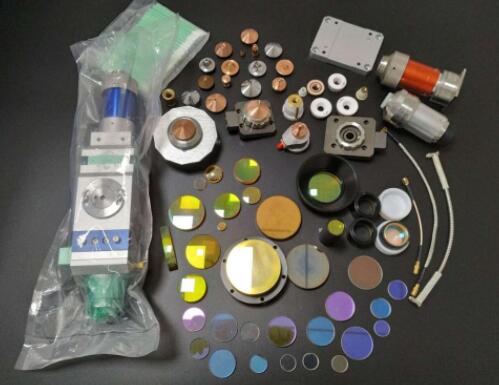
A Precision Fiber Laser operates on the principle of an active gain medium consisting of an optical fiber doped with rare-earth elements, typically ytterbium. Unlike gas lasers, these systems utilize solid-state architecture, which eliminates the need for mirror alignments and reduces the internal thermal load. The resulting beam quality, measured by the M2 factor, allows for a focused spot size significantly smaller than that of conventional systems. In the context of Valencia’s automotive and heavy machinery sectors, this translates to a reduced Heat Affected Zone (HAZ), ensuring the structural integrity of the base metal remains uncompromised during high-speed thermal separation.
The power density of these units, often ranging from 3kW to 20kW in industrial applications, allows for the processing of highly reflective materials such as aluminum and brass. Historically, these materials presented challenges for CO2 systems due to back-reflection risks. However, the 1.064-micron wavelength of fiber lasers is more readily absorbed by metallic surfaces, facilitating a more efficient energy transfer and enabling faster feed rates across varying material gauges.
AI-Driven HMI: Reducing Cognitive Load for Operators
The primary bottleneck in adopting advanced manufacturing technology has traditionally been the months of specialized training required for CNC operators. The introduction of AI-enhanced Human-Machine Interfaces has fundamentally altered this trajectory. These interfaces leverage Neural network-based parameter adjustment to automate the selection of cutting speeds, gas pressures, and focal positions. Instead of manually calculating the physics of the cut, the operator inputs the material type and thickness, and the AI references a massive database of optimized cutting conditions to configure the machine in real-time.
This AI layer acts as a bridge between CAD/CAM software and the physical execution of the cut. By utilizing Kerf width optimization algorithms, the HMI can predictively adjust the pathing to compensate for thermal expansion during long production runs. For manufacturers in Valencia, this means that a technician with basic mechanical aptitude can transition into a laser operator role with high-tier output capabilities without the prerequisite of years of manual G-code experience.

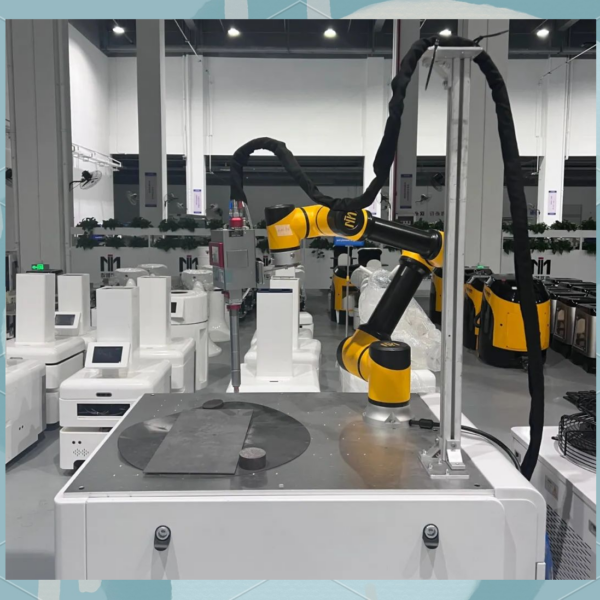
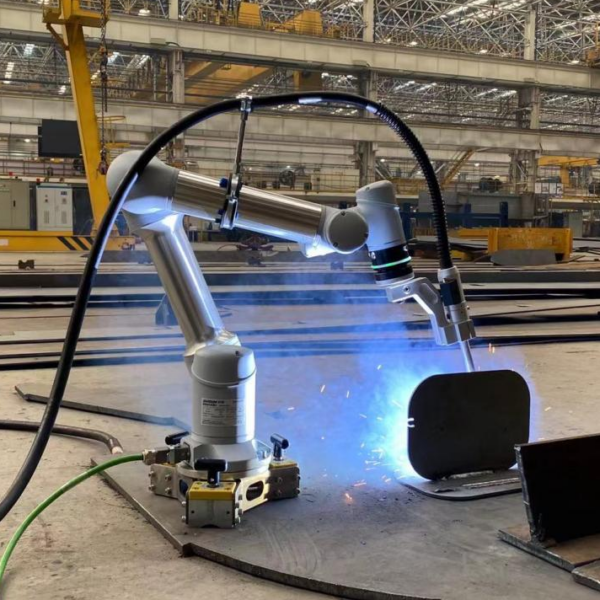
Industrial Application of Precision Fiber Laser
The 2-Day Learning Curve: A Breakdown of Operational Onboarding
The claim of a 2-day learning curve is substantiated by the modular design of modern AI HMIs. The training protocol is divided into two distinct phases that focus on system safety and autonomous optimization.
Day 1: Hardware Familiarization and Safety Protocols
The first eight hours are dedicated to the physical architecture of the fiber laser. This includes the maintenance of the Galvanometric scanning heads and the inspection of protective windows. Because fiber lasers operate in the invisible infrared spectrum, safety training is paramount. Operators learn to interface with the HMI to monitor real-time sensor data, including coolant temperature, gas flow rates, and beam stability. The AI system assists this process by providing visual diagnostics and preventative maintenance alerts, ensuring the operator understands the machine’s health status before the first arc is struck.
Day 2: Intelligent Nesting and Execution
The second day focuses on software integration. Modern AI HMIs feature “one-click” nesting, which optimizes sheet utilization to minimize scrap. Operators learn to import DXF or DWG files directly into the machine’s local storage. The AI then suggests the most efficient lead-in and lead-out points to prevent tip-ups or collisions. By the end of the second day, the operator is capable of executing complex multi-part layouts, adjusting the assist gas (Oxygen, Nitrogen, or Compressed Air) via the touchscreen, and troubleshooting minor deviations through the AI’s guided resolution engine.
Operational Efficiency and Economic Impact in the Venezuelan Context
In Valencia, where industrial uptime is critical due to fluctuating utility costs and supply chain constraints, the efficiency of a fiber laser is a significant advantage. These systems boast a wall-plug efficiency of over 30 percent, compared to the 10 percent typical of CO2 lasers. When combined with the AI’s ability to reduce setup times by up to 80 percent, the total cost of ownership (TCO) drops dramatically. Furthermore, the reduction in human error—achieved through the AI’s automated checks—ensures that material waste is kept to an absolute minimum, a vital factor when importing specialty alloys into the region.
The integration of Predictive maintenance sensors within the HMI further protects the investment. The system monitors the condition of the delivery fiber and the collimator, alerting the operator to potential failures before they result in downtime. This proactive stance on maintenance is essential for maintaining Valencia’s competitive edge in the South American export market.
Concluding Industry Insight: The Democratization of Precision
The convergence of fiber laser technology and artificial intelligence represents the democratization of high-precision manufacturing. We are moving away from an era where technical expertise was concentrated in a small cadre of veteran engineers and into an era where the machine’s own intelligence augments the human operator. In industrial hubs like Valencia, Venezuela, this shift is critical. It allows for rapid industrial scaling without the lag time traditionally associated with workforce development.
The 2-day learning curve is not a reduction in the complexity of the work, but rather an evolution of the tools used to manage that complexity. As AI continues to refine its ability to interpret material science data in real-time, the role of the operator will shift from “technician” to “system overseer.” For the global market, this means that geographic location is becoming less of a barrier to achieving world-class manufacturing tolerances. The ability to deploy a Precision Fiber Laser and have it operational at peak efficiency within 48 hours is the new benchmark for industrial agility. Organizations that embrace this synergy between photonics and machine learning will find themselves at the forefront of the next industrial cycle, characterized by low waste, high precision, and unprecedented operational flexibility.
Industrial Expertise & Support
Are you looking for high-performance Precision Fiber Laser tailored for the Global market? Our engineering team provides comprehensive solutions for modern manufacturing.