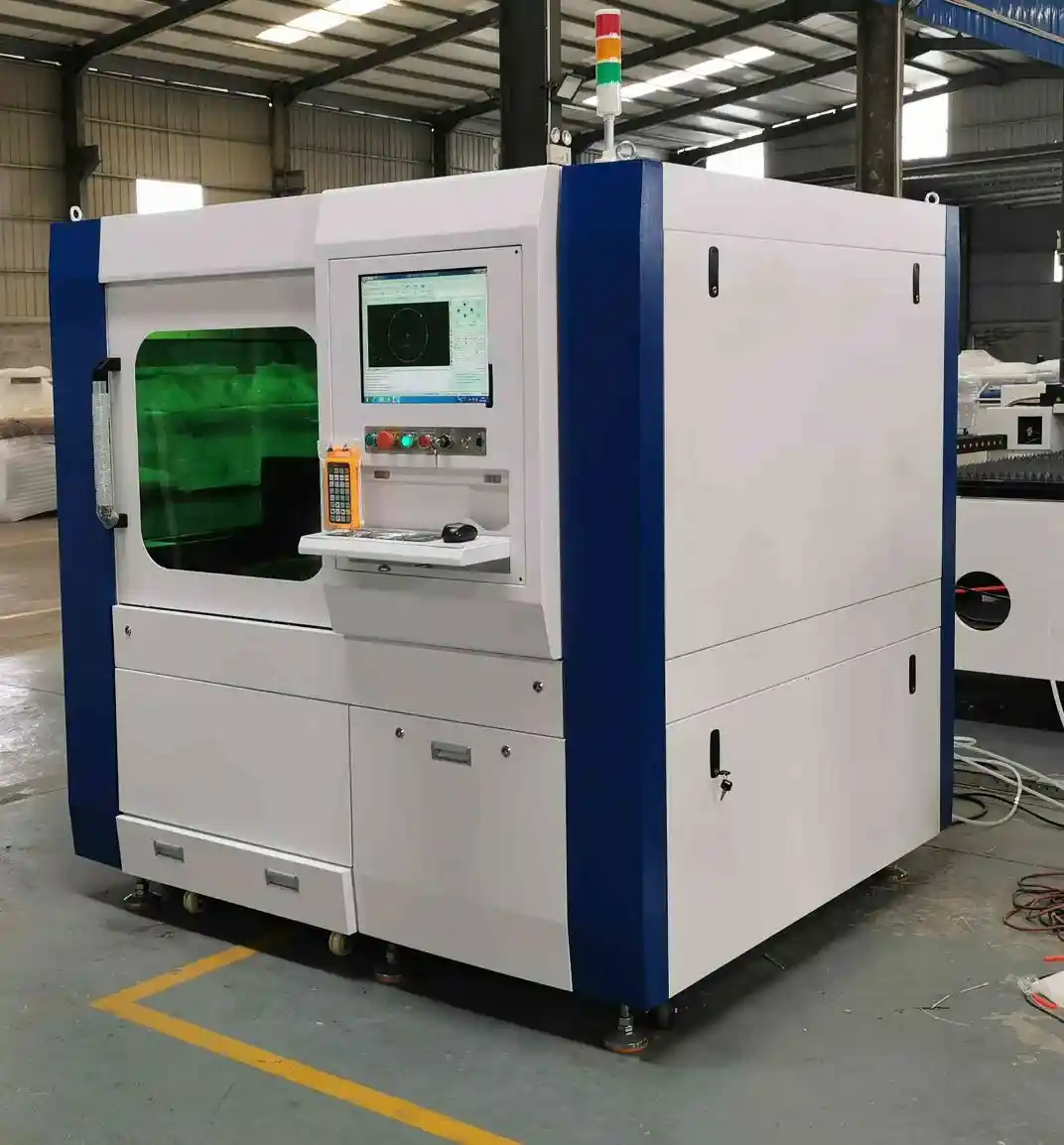
Industrial Evolution: The Implementation of Precision Fiber Laser Systems in Santa Cruz
The industrial landscape of Santa Cruz de la Sierra, Bolivia, has undergone a significant transformation, moving from traditional mechanical fabrication toward high-automation manufacturing. As the primary economic engine of the nation, the Santa Cruz industrial corridor—specifically within the Parque Industrial Latinoamericano—is increasingly adopting advanced photonics for metal processing. The integration of Precision Fiber Laser technology represents a shift in production methodology, prioritizing micron-level accuracy and high-speed throughput over legacy plasma or CO2 cutting systems. This transition is driven not only by the demand for higher quality components in the agricultural and mining sectors but also by the necessity to meet rigorous international safety and operational standards.
Technical Specifications and Beam Dynamics
Fiber laser resonators utilize an optical fiber doped with rare-earth elements, typically ytterbium, as the active gain medium. In the context of the Santa Cruz manufacturing sector, these systems are deployed with power outputs ranging from 1kW to 20kW, depending on the material thickness requirements. The fundamental advantage of this technology lies in its wavelength—approximately 1.064 microns—which allows for a significantly higher absorption rate in reflective metals such as aluminum, brass, and copper compared to the 10.6-micron wavelength of CO2 lasers.
The Beam Parameter Product (BPP) of these systems ensures a high-quality focal point, minimizing the Heat Affected Zone (HAZ). By maintaining a narrow kerf width, manufacturers in Bolivia can achieve tolerances within +/- 0.03mm. This level of precision is critical for the production of heavy machinery components and structural steel elements that require perfect fitment for subsequent robotic welding processes. Furthermore, the solid-state nature of the fiber source eliminates the need for internal moving parts or laser gases, reducing the Total Cost of Ownership (TCO) and increasing uptime in high-altitude industrial environments.
Industrial Application of Precision Fiber Laser
CE Certification: Ensuring Global Quality Standards
For industrial enterprises in Santa Cruz looking to export components to the European Union or other regulated markets, CE (Conformité Européenne) compliance is non-negotiable. A CE-certified fiber laser system indicates that the equipment meets stringent health, safety, and environmental protection standards. This certification involves rigorous testing of the machine’s electrical systems, electromagnetic compatibility, and mechanical stability.
Specifically, the Machinery Directive 2006/42/EC and the Low Voltage Directive 2014/35/EU are the benchmarks for these systems. In Santa Cruz, where electrical grid fluctuations can occur, CE-compliant machines are equipped with advanced voltage stabilization and filtration systems to protect the sensitive laser diodes and CNC controllers. This compliance ensures that the equipment can operate reliably under continuous industrial duty cycles without compromising the integrity of the internal electronics or the safety of the operational environment.
NR-12 Compliance: The Regulatory Framework for South American Safety
In addition to international CE standards, the adoption of NR-12 (Norma Regulamentadora 12) has become a critical focal point for safety engineering in Bolivia, influenced heavily by regional trade and industrial safety trends from Brazil. NR-12 defines the technical references, fundamental principles, and protective measures to ensure the health and physical integrity of workers who interact with machinery.
A fiber laser system compliant with NR-12 must incorporate specific safety features that go beyond standard operation. These include:
Physical Barriers and Interlocking Systems
NR-12 requires that the working area of the fiber laser be fully enclosed to prevent accidental exposure to Class 4 laser radiation. These enclosures must feature safety interlocks that immediately terminate the laser emission if a door or access panel is opened during operation. The viewing windows must be constructed from certified laser-safe glass, specifically rated for the 1070nm wavelength.
Redundant Safety Circuits and Emergency Stops
The control architecture must utilize safety relays and redundant circuits to ensure that a single component failure does not lead to a loss of safety function. Emergency stop buttons must be strategically located and easily accessible, designed to bring all hazardous movements to a controlled and immediate halt. For the Santa Cruz industrial operator, this means a significantly reduced risk of workplace accidents, lower insurance premiums, and higher employee retention due to a safer working environment.
Material Processing Capabilities in the Santa Cruz Region
The versatility of Precision Fiber Laser systems allows Santa Cruz manufacturers to diversify their output. The region’s focus on agribusiness requires the fabrication of complex grain silos, harvesting equipment, and processing plant components. These often involve stainless steel and galvanized steel, materials that are processed with maximum efficiency using fiber technology.
The use of high-pressure nitrogen as an assist gas allows for oxide-free cutting edges, which is essential for components that require painting or powder coating without further surface preparation. In the mining sector, the ability to cut high-strength, wear-resistant alloys like Hardox ensures that maintenance and repair operations can be localized in Santa Cruz rather than relying on imported parts, significantly reducing lead times for critical infrastructure.
CNC Integration and Automation Readiness
Modern fiber laser systems in Bolivia are increasingly equipped with sophisticated CNC Motion Control platforms that support Industry 4.0 integration. These systems allow for real-time monitoring of gas pressure, laser power, and cutting speed. Advanced nesting software optimizes material utilization, which is a vital economic factor given the logistics of importing raw metal sheets into the landlocked region of Bolivia.
Automation readiness is another key technical requirement. Many systems installed in Santa Cruz are now configured for automatic pallet changers, allowing for continuous loading and unloading without interrupting the cutting cycle. This maximizes the duty cycle of the laser source and ensures that the high capital investment yields the highest possible throughput per square meter of factory floor space.
Concluding Industry Insight: The Future of Manufacturing in Bolivia
The strategic deployment of fiber laser technology in Santa Cruz marks a maturation of the Bolivian industrial sector. By adhering to CE and NR-12 safety standards, local manufacturers are not merely purchasing equipment; they are adopting a globalized standard of operational excellence. This commitment to safety and precision serves as a catalyst for foreign investment and positions Santa Cruz as a competitive hub for high-tech fabrication in the Southern Cone.
The future trajectory of this market will likely see an increased emphasis on the integration of artificial intelligence within the laser control systems to predict maintenance needs and optimize cutting parameters for varying material grades. As global supply chains remain volatile, the ability to produce high-precision, safety-compliant components locally will be the defining factor for economic resilience in the region. Enterprises that prioritize these technical standards today are securing their position in the increasingly automated and safety-conscious global marketplace of tomorrow.
Industrial Expertise & Support
Are you looking for high-performance Precision Fiber Laser tailored for the Global market? Our engineering team provides comprehensive solutions for modern manufacturing.