Industrial Evolution in Caxias do Sul: The Integration of Laser Technology
Caxias do Sul, located in the Rio Grande do Sul region of Brazil, stands as the country’s second-largest metal-mechanic hub. The city’s industrial landscape is defined by the production of heavy-duty transportation equipment, automotive components, and agricultural machinery. As global demands for structural integrity and weld longevity increase, manufacturers in this cluster are transitioning from traditional abrasive cleaning methods to high-precision laser systems. The implementation of the Laser Rust Cleaning Machine has become a pivotal factor in meeting international quality standards, particularly when preparing substrates for high-stress applications.
The core challenge in heavy manufacturing is the presence of surface contaminants—primarily iron oxides (rust), mill scale, and protective oils—which compromise the metallurgical bond during welding. In Caxias do Sul’s manufacturing facilities, the shift toward fiber laser systems allows for the selective removal of these layers without compromising the underlying substrate. This technical transition is not merely about cleanliness; it is about the precise geometric preparation of edges, specifically through 45-degree beveling, to facilitate seamless, deep-penetration welding.
The Mechanism of Fiber Laser Ablation in Surface Preparation
The efficacy of a Laser Rust Cleaning Machine resides in the principle of Fiber Laser Ablation. This process involves the delivery of high-intensity, pulsed laser beams to the metal surface. When the laser hits the rust layer, the energy is absorbed by the contaminants, causing rapid thermal expansion and evaporation. Because the base metal (typically carbon steel or stainless steel used in Brazilian heavy industry) has a higher reflectivity and a different thermal threshold, the laser can be tuned to remove the oxide layer without melting the substrate.
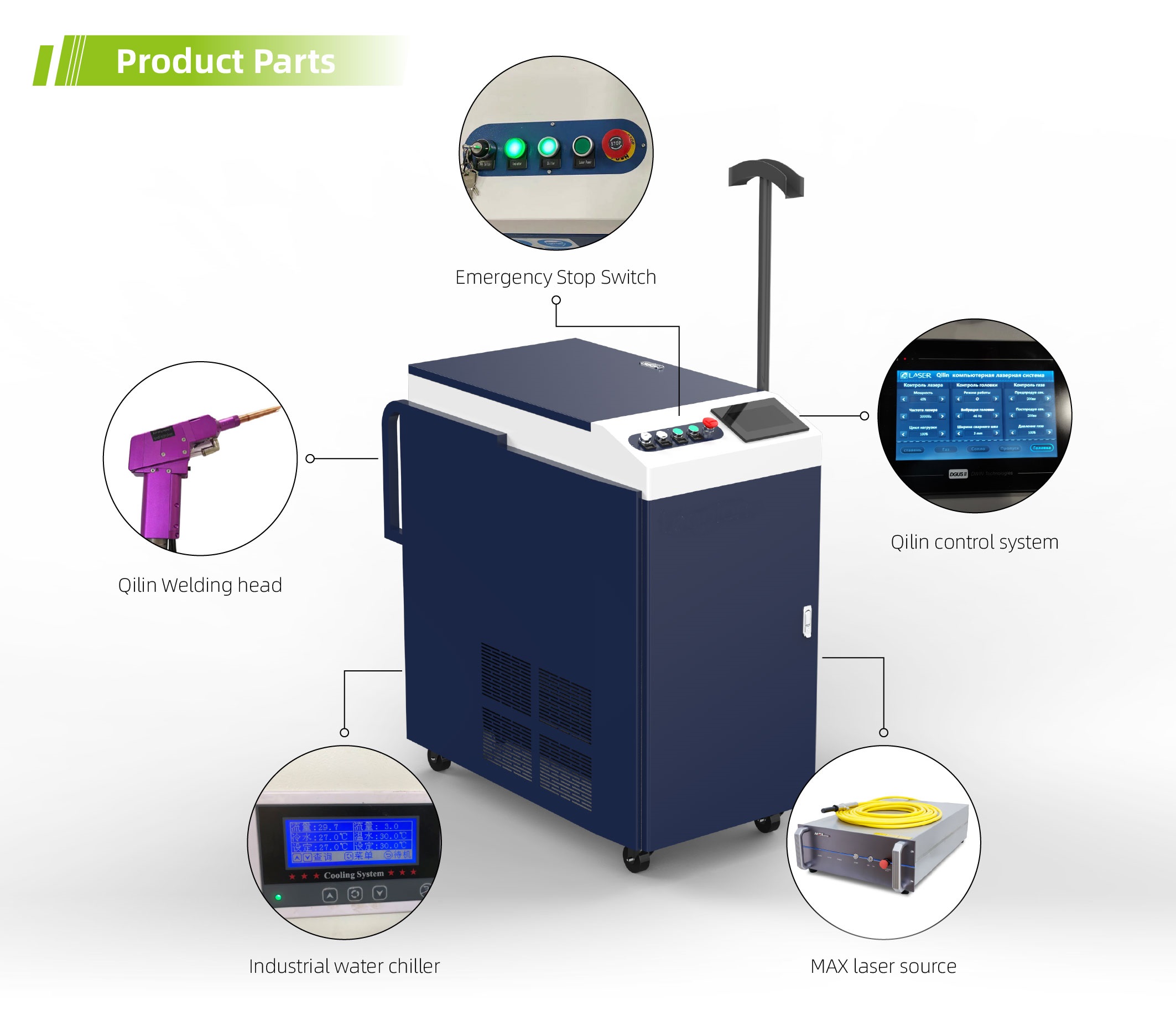
Industrial Application of Laser Rust Cleaning Machine
Technical parameters such as pulse frequency, scan width, and focal length are critical. For the thick-gauge plates common in Caxias do Sul’s trailer and bus body production, high-power fiber sources ranging from 2kW to 6kW are utilized. These systems ensure that the surface tension of the metal is optimized for the subsequent welding process. Unlike sandblasting, which can embed particulates into the metal, laser cleaning leaves a chemically pure surface, reducing the risk of porosity and hydrogen cracking in the weld pool.
45-Degree Beveling: Precision Geometry for Seamless Welding
In the context of structural welding, the 45-degree bevel is a standard requirement for V-groove joints. This geometry allows the welding electrode or wire to reach the root of the joint, ensuring full penetration. Traditionally, this beveling was performed using mechanical milling or plasma cutting, both of which introduce significant heat or mechanical stress. Modern laser systems in Caxias do Sul now integrate cleaning and beveling into a synchronized workflow.
The 45-degree Beveling process executed via laser provides a superior edge compared to mechanical alternatives. The laser-cut edge is characterized by a minimal Heat Affected Zone (HAZ), which is essential for maintaining the mechanical properties of high-strength, low-alloy (HSLA) steels. By combining the cleaning of the rust and the cutting of the bevel in a single or sequential laser process, manufacturers eliminate the secondary cleaning step usually required after plasma cutting. This ensures that the beveled face is instantly ready for robotic or manual welding, with zero residual oxides that could interfere with the arc stability.
Minimizing the Heat Affected Zone (HAZ) for Structural Integrity
One of the most significant technical advantages of using laser technology for rust removal and beveling is the control over the Heat Affected Zone (HAZ). In the heavy-duty manufacturing sector of Southern Brazil, the fatigue life of welded joints is a primary engineering concern. Traditional thermal cutting or aggressive grinding can alter the microstructure of the steel, leading to localized hardening or embrittlement.
Laser cleaning and beveling systems utilize ultra-short pulses or highly concentrated continuous waves that limit the duration of heat exposure. This precision ensures that the metallurgical grain structure remains stable just microns away from the treated surface. For the specialized alloys used in the Caxias do Sul automotive cluster, maintaining this integrity is vital for passing non-destructive testing (NDT), such as ultrasonic or X-ray inspections, which are mandatory for export-grade equipment.
Operational Efficiency and Environmental Compliance in Brazil
The adoption of laser technology also addresses the stringent environmental and labor regulations in Brazil. Traditional rust removal methods, such as chemical pickling or abrasive blasting, generate significant waste streams, including spent acids and contaminated grit. These methods require extensive personal protective equipment (PPE) and complex waste management protocols.
A Laser Rust Cleaning Machine operates as a dry process. It produces only a small amount of fine dust, which is typically captured by integrated high-efficiency particulate air (HEPA) extraction systems. This not only improves the air quality within the manufacturing plant but also aligns with the ESG (Environmental, Social, and Governance) goals of many leading Brazilian firms. From an operational standpoint, the lack of consumables—aside from electricity and occasional protective gas—results in a lower cost-per-meter for edge preparation when compared to traditional grinding discs or chemicals.
Technical Comparison: Laser vs. Traditional Preparation
To understand the B2B value proposition, one must look at the quantitative improvements in the production line. In a typical Caxias do Sul assembly plant, preparing a 10-meter steel plate for welding using manual grinding can take several hours and result in inconsistent bevel angles. A CNC-integrated laser system can clean and bevel the same plate in a fraction of the time with a tolerance of +/- 0.1mm.
Furthermore, the surface roughness (Ra) achieved through laser cleaning is highly controllable. For seamless welding, a specific surface profile is often required to promote wetting of the molten weld metal. Laser systems allow operators to adjust the scan pattern to create the ideal surface morphology, ensuring that the weld bead adheres perfectly to the beveled edge, thereby eliminating the risk of cold laps or lack of fusion.
Concluding Industry Insight: The Future of Metal Fabrication
The industrial landscape of Caxias do Sul is emblematic of a broader global shift toward “Industry 4.0” in metal fabrication. The integration of Laser Rust Cleaning Machine technology and precision beveling represents a move away from labor-intensive, variable processes toward automated, data-driven manufacturing. As welding standards continue to tighten globally, the ability to guarantee a pristine, perfectly angled surface prior to the first arc flash is no longer a luxury but a technical necessity.
The insight for the global market is clear: the most significant gains in welding quality are not found in the welding process itself, but in the preparation of the substrate. By investing in laser-based surface conditioning, manufacturers in Caxias do Sul are reducing rework rates by up to 30% and significantly extending the service life of their products. This focus on the “pre-weld” phase through advanced laser ablation and geometric precision is the new benchmark for excellence in the global metal-mechanic industry.
Industrial Expertise & Support
Are you looking for high-performance Laser Rust Cleaning Machine tailored for the Global market? Our engineering team provides comprehensive solutions for modern manufacturing.





