Introduction: The Intersection of Precision and Extraction
The Brazilian mining sector, particularly within the iron ore corridors of Minas Gerais and the Carajás region, operates under some of the most abrasive conditions globally. To maintain operational continuity, the industry relies heavily on wear-resistant components that can withstand extreme impact and friction. Historically, the fabrication of these components—specifically wear-plates—involved traditional mechanical cutting or plasma systems, which often introduced significant thermal stress and required extensive secondary finishing.
São Paulo has emerged as the primary technological nexus for addressing these challenges. By integrating Heavy-Duty Beam Laser systems into the regional supply chain, fabricators are now capable of delivering rapid, high-precision customization of wear-resistant alloys. This shift represents a move toward high-fluence thermal processing that prioritizes structural integrity and dimensional accuracy, directly impacting the Mean Time Between Failures (MTBF) for heavy mining equipment such as crushers, chutes, and hopper liners.
Technical Specifications of Heavy-Duty Beam Laser Systems
The deployment of a Heavy-Duty Beam Laser in an industrial context refers to high-power fiber laser oscillators, typically ranging from 12kW to 30kW. Unlike standard CO2 lasers, these fiber systems operate at a wavelength of approximately 1.06 microns, allowing for superior absorption rates in high-carbon and alloyed steels. In the context of São Paulo’s fabrication hubs, these machines are configured with large-format gantries capable of handling plates exceeding 12 meters in length and 3 meters in width.

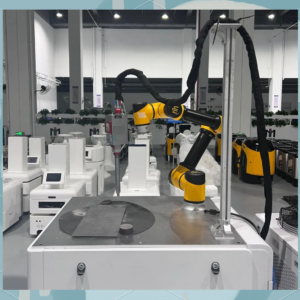
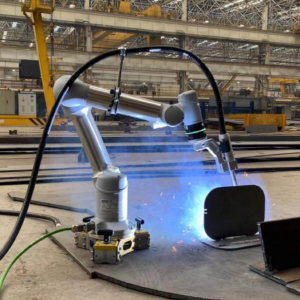
Industrial Application of Heavy-Duty Beam Laser
The primary technical advantage lies in the power density of the beam. By concentrating high energy into a microscopic focal point, the system achieves rapid sublimation of the material. This process minimizes the Heat-Affected Zone (HAZ), a critical factor when working with quenched and tempered steels like AR400, AR500, or specialized Chromium Carbide Overlay (CCO) plates. Traditional cutting methods often degrade the hardness of the material at the edge; however, high-power laser processing preserves the metallurgical properties of the wear-plate up to the kerf line.
Customization Dynamics for Wear-Plate Geometry
Mining operations require bespoke geometries to fit aging infrastructure or specific ore flow characteristics. Rapid customization in São Paulo is driven by the integration of CAD/CAM Integration software with the laser hardware. This allows for the immediate translation of field measurements into machine code, bypassing the need for physical templates or complex jigging.
Complex Internal Profiles and Perforations
Standard mechanical drilling of hardened wear-plates is time-consuming and accelerates tool wear. A heavy-duty laser system executes complex internal cutouts, countersunk holes, and interlocking tabs in a single pass. This capability is vital for modular lining systems where plates must be bolted with extreme precision to prevent fine-particle ingress behind the liners, which can lead to catastrophic structural erosion.
Nesting Optimization and Material Yield
Given the high cost of specialized wear alloys, material utilization is a key performance indicator. Advanced nesting algorithms used in São Paulo’s laser facilities allow for tighter spacing between parts than is possible with oxy-fuel or plasma cutting. The narrow kerf width of the laser—often less than 0.5mm—enables the recovery of significant scrap value and reduces the overall cost per square meter of the finished component.
Logistical Advantages of the São Paulo Industrial Hub
The proximity of high-capacity laser facilities to Brazil’s major steel producers and logistics networks creates a “just-in-time” ecosystem for mining maintenance. When a critical failure occurs in a remote mine site, the ability to transmit digital specifications to a São Paulo-based facility for immediate laser processing reduces lead times from weeks to days.
Furthermore, the regional expertise in São Paulo includes specialized post-processing, such as robotic hardfacing and precision bending. When combined with laser cutting, these services provide a turnkey solution for the most demanding mining environments. The precision of the laser-cut edge also eliminates the need for edge grinding, allowing for immediate welding or assembly upon arrival at the mine site.
Comparative Analysis: Laser vs. Conventional Thermal Cutting
To understand the technical superiority of the Heavy-Duty Beam Laser, one must examine the metallurgical outcomes. In plasma cutting, the wide arc results in a substantial thermal gradient, often leading to edge rounding and a loss of hardness in a zone up to 5mm from the cut. In high-abrasion mining applications, these “soft edges” become the primary point of failure.
In contrast, the laser’s high-speed processing results in a nearly vertical cut edge with a surface roughness (Ra) that often negates the need for further machining. For plates up to 50mm thick, the laser maintains a tolerance of +/- 0.1mm, a level of precision that ensures perfect fitment in complex assemblies like vibratory screen decks and trommel frames.
Operational Reliability and Maintenance Efficiency
The transition to laser-customized wear-plates significantly reduces the Total Cost of Ownership (TCO) for mining equipment. Because the plates are cut with higher precision, the fitment is tighter, reducing the turbulence of the material flow. Smooth material flow reduces localized “hot spots” of wear, thereby extending the service life of the entire liner package.
Additionally, the speed of the customization process allows mining companies to maintain lower on-site inventories. Rather than stocking dozens of different liner shapes, companies can rely on the rapid fabrication capabilities of the São Paulo hub to produce parts as needed, freeing up capital and reducing warehouse footprints.
Industry Insight: The Future of Distributed Manufacturing in Mining
The integration of Heavy-Duty Beam Laser technology in São Paulo signals a broader shift in the global mining supply chain toward decentralized, high-tech fabrication hubs. As mining operations move toward more remote and geologically challenging locations, the reliance on traditional, mass-produced wear components is diminishing.
The future of the industry lies in the “digital twin” approach, where every liner in a mine is mapped digitally. When wear reaches a critical threshold, the digital file is sent to a high-power laser facility for exact replication. This move toward data-driven fabrication, supported by the precision of fiber laser systems, will likely become the global standard for heavy industry. Brazil’s investment in this infrastructure positions São Paulo not just as a regional provider, but as a global model for how technology can bridge the gap between heavy extraction and high-precision manufacturing. The ability to manipulate the hardest materials on earth with the surgical precision of a beam of light is no longer a luxury—it is a fundamental requirement for the next generation of mining efficiency.
Industrial Expertise & Support
Are you looking for high-performance Heavy-Duty Beam Laser tailored for the Global market? Our engineering team provides comprehensive solutions for modern manufacturing.