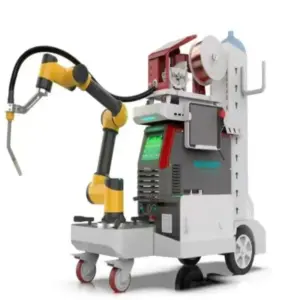
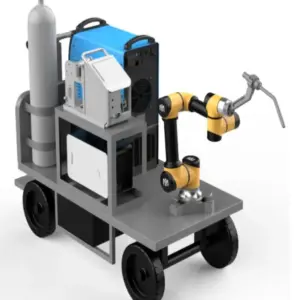
Introduction to Industrial Laser Integration in the São Paulo Manufacturing Hub
São Paulo represents the primary industrial engine of South America, hosting a dense concentration of automotive, aerospace, and heavy machinery manufacturing facilities. As these industries transition toward high-precision fabrication, the deployment of high-kilowatt laser systems has become a technical necessity. Specifically, the integration of a Heavy-Duty Beam Laser into these production lines requires a sophisticated understanding of both international performance benchmarks and localized regulatory frameworks. In the Brazilian market, operational success is not merely defined by the wattage or the beam quality (M2 factor), but by the rigorous adherence to safety protocols that protect human capital while maintaining high throughput. This article examines the technical requirements and the intersection of CE marking and the Brazilian NR-12 standard for heavy-duty laser applications.
Technical Architecture of Heavy-Duty Beam Lasers
A Heavy-Duty Beam Laser is characterized by its ability to maintain continuous wave (CW) output in harsh industrial environments, often exceeding 10kW of power. These systems utilize advanced fiber laser oscillators or disk laser technology to deliver high brightness and high power density to the workpiece. The mechanical construction of these units involves reinforced chassis designs to dampen harmonic vibrations, which is critical for maintaining beam stability over long focal distances.
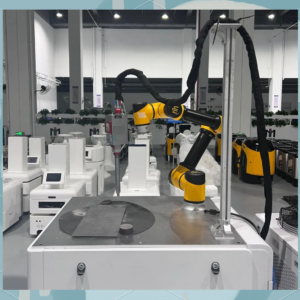
The beam delivery system typically employs high-purity silica fibers with diameters ranging from 50 to 200 micrometers, depending on the required power density and the material thickness. In the context of São Paulo’s heavy industry, these lasers are frequently integrated into multi-axis robotic cells or large-scale gantry systems. The thermal management of such systems requires closed-loop deionized water cooling circuits, ensuring that the Optical Resonator and the process head maintain a stable operating temperature, thereby preventing thermal lensing effects that could compromise cut quality or weld integrity.
The Regulatory Landscape: Understanding NR-12 in Brazil
For any multinational or local entity operating in São Paulo, compliance with Norma Regulamentadora 12 (NR-12) is a non-negotiable legal requirement. NR-12 is a comprehensive set of safety standards specifically designed to ensure that machinery and equipment are safe for use by workers throughout their entire lifecycle, from design and transport to disposal. Unlike some international standards that serve as voluntary guidelines, NR-12 is a mandatory regulation enforced by the Brazilian Ministry of Labor.
When implementing a Heavy-Duty Beam Laser, NR-12 necessitates the inclusion of physical barriers, categorized safety circuits, and redundant emergency stop systems. The standard requires a detailed risk analysis conducted by a legally qualified professional (Engenheiro Habilitado) registered with the CREA (Regional Council of Engineering and Agronomy). This analysis must document all potential hazards, including mechanical, electrical, and radiation risks, and specify the mitigation measures taken to reach a safe residual risk level. For laser systems, this involves the installation of Class 4 enclosures that prevent any stray radiation from escaping the work zone.
Synergy Between CE Marking and NR-12 Compliance
While NR-12 is the local requirement in Brazil, the CE (Conformité Européenne) marking is the global benchmark for safety, particularly for machinery manufactured in Europe. For global B2B procurement, a machine that carries the CE mark provides a baseline of safety that aligns with ISO and IEC standards. However, it is a common technical misconception that CE compliance automatically guarantees NR-12 compliance.

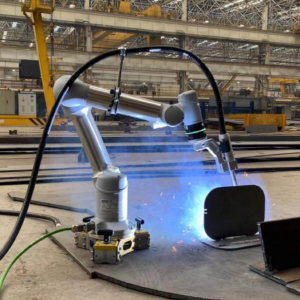
Industrial Application of Heavy-Duty Beam Laser
The technical overlap between CE and NR-12 is significant, particularly regarding Active Safety Interlocks and performance levels (PL) according to ISO 13849. A CE-compliant laser system will typically feature dual-channel safety monitoring and monitored reset functions. To achieve full NR-12 certification in São Paulo, engineers must often augment the CE-certified machine with localized documentation in Portuguese, specific electrical panel layouts that prevent unauthorized access, and localized safety signaling. The integration of these two standards ensures that the equipment meets the highest global safety performance while adhering to the specific legal nuances of the Brazilian industrial sector.
Safety Enclosures and Radiation Protection for High-Power Systems
The primary hazard associated with a Heavy-Duty Beam Laser is non-ionizing radiation. At the power levels utilized in São Paulo’s automotive plants, a direct or reflected beam can cause instantaneous permanent damage to biological tissue and ignite flammable materials at significant distances. Therefore, the enclosure design must meet the requirements of IEC 60825-4.
The protective housing must be constructed from materials capable of withstanding the laser’s power for a specified duration, allowing the safety system to detect a breach and terminate the beam. This is often achieved through “Active Guarding” technology, where the enclosure walls contain integrated sensors or pressurized layers that trigger a Safety PLC if the wall is compromised. In Brazil, NR-12 mandates that these safety systems must be fail-safe and tamper-proof. The doors of the laser cell must be equipped with trapped-key interlocking or non-contact coded magnetic switches that prevent the laser from firing unless the cell is fully hermetic.
Operational Reliability and Maintenance in the Brazilian Climate
São Paulo’s industrial environment presents specific challenges for high-precision laser optics, including high humidity and ambient temperature fluctuations. Maintaining a Heavy-Duty Beam Laser in this region requires high-efficiency HVAC systems for the power supply cabinets and precise humidity control for the optical path. Any condensation on the optics can lead to catastrophic failure of the laser head due to absorption-induced thermal runaway.
From a B2B perspective, the availability of local technical support and spare parts is a critical factor in the Total Cost of Ownership (TCO). Companies operating in Brazil prioritize vendors who can provide NR-12 certified maintenance services. This includes periodic validation of the safety systems and recalibration of the laser power sensors to ensure that the system operates within its design parameters. Preventive maintenance schedules must be strictly followed to ensure that the protective windows and internal mirrors remain free of contaminants, which is essential for maintaining the beam’s focus and power stability.
Industry Insight: The Path Toward Standardized Global Manufacturing
The convergence of international standards like CE and local regulations like NR-12 in major industrial hubs like São Paulo is indicative of a broader trend in global manufacturing: the professionalization of safety as a core component of operational efficiency. In the past, safety was often viewed as a secondary constraint that hampered productivity. However, in the modern B2B landscape, the integration of Active Safety Interlocks and high-performance laser technology is seen as a method to reduce unplanned downtime and legal liability.
As Brazil continues to attract investment in its manufacturing sectors, the demand for “safety-by-design” equipment will only increase. For manufacturers of Heavy-Duty Beam Laser systems, the ability to provide a turnkey solution that satisfies both the technical requirements of high-speed fabrication and the legal requirements of NR-12 is a significant competitive advantage. The future of the industry lies in the development of “smart” safety systems that utilize real-time diagnostics to predict component failure before it results in a safety breach or a production halt. In the high-stakes environment of São Paulo’s industrial corridors, compliance is not just about following rules; it is about engineering a resilient and sustainable production ecosystem.
Industrial Expertise & Support
Are you looking for high-performance Heavy-Duty Beam Laser tailored for the Global market? Our engineering team provides comprehensive solutions for modern manufacturing.