Precision Engineering in Rosario: The Rise of Heavy-Duty Beam Laser Technology
Rosario, Argentina, has long served as a critical industrial nexus, particularly for the agricultural machinery and structural steel sectors. As global demand for high-integrity steel structures increases, the regional manufacturing base is shifting toward advanced automated solutions. The introduction of the Heavy-Duty Beam Laser into this ecosystem represents a significant departure from traditional plasma and oxy-fuel cutting methods. By integrating high-wattage fiber laser sources with multi-axis motion control, fabricators in the Santa Fe province are achieving tolerances previously unattainable in large-scale structural components.
The primary driver for this technological adoption is the requirement for weld-ready parts. In heavy industry, the preparation of I-beams, H-beams, and C-channels often involves labor-intensive manual grinding to achieve the necessary edge profiles for deep-penetration welding. The deployment of laser systems capable of 45-degree beveling eliminates these secondary processes, streamlining the workflow from raw material to final assembly. This transition is not merely an incremental improvement; it is a fundamental shift in the precision of structural fabrication.
Technical Specifications of 5-Axis Beveling Systems
The core of the modern beam processing unit is the 5-Axis Bevel Cutting head. Unlike standard 2D laser systems that operate on a vertical plane, these heavy-duty systems utilize a sophisticated kinematic chain that allows the laser nozzle to tilt and rotate around the workpiece. This enables the machine to execute complex geometries, including V-grooves, Y-grooves, and K-grooves, which are essential for high-strength welded joints.
Power delivery is typically managed by a high-brightness Fiber Laser Resonator, with outputs ranging from 12kW to 30kW. This power density is necessary to penetrate thick-walled structural steel while maintaining a narrow kerf width. The precision of the 45-degree bevel is maintained through real-time height sensing and capacitive sensors that adjust for any deviations in the beam’s straightness or surface irregularities. In the context of Rosario’s industrial output, this ensures that large structural members for silos, bridges, and heavy transport frames meet international ISO standards for weld preparation.
Thermal Management and Material Integrity
One of the critical advantages of laser processing over thermal alternatives like plasma is the reduction of the Heat Affected Zone (HAZ). When steel is subjected to the intense heat of a plasma torch, the metallurgical properties of the edge can change, often leading to increased hardness and potential embrittlement. This can complicate subsequent welding operations and may require pre-heating or post-weld heat treatment.
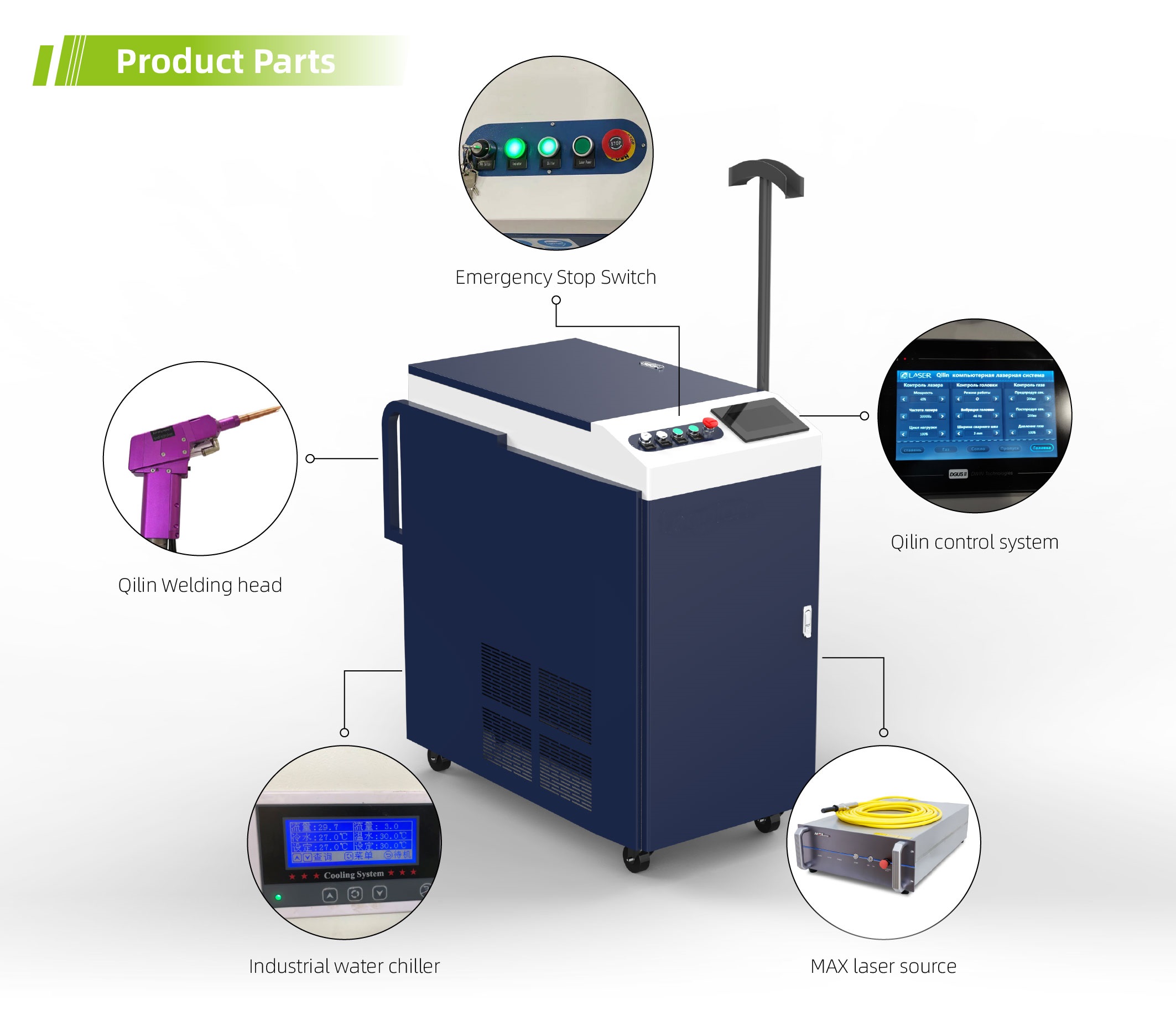
Industrial Application of Heavy-Duty Beam Laser
The Heavy-Duty Beam Laser concentrates energy into a much smaller area, resulting in a localized melt pool that is rapidly evacuated by high-pressure assist gases (typically Nitrogen or Oxygen). This localized approach minimizes thermal distortion across the length of the beam. For manufacturers in Rosario, where structural integrity is paramount for heavy-load applications, the ability to maintain the base metal’s mechanical properties near the cut edge is a vital technical advantage. The resulting 45-degree bevel is clean, free of dross, and requires zero mechanical cleaning before entering the welding cell.
Optimizing Seamless Welding Through Geometric Accuracy
Seamless welding is contingent upon the fit-up accuracy of the mating components. In traditional fabrication, gaps between structural members are common due to the variance in manual beveling. These gaps must be filled with additional weld metal, increasing consumables cost and the risk of internal defects such as porosity or slag inclusions. By utilizing a laser-cut 45-degree bevel, the fit-up is virtually airtight.
The 45-degree angle is specifically calibrated to allow for full-thickness penetration during the welding process. When two beams with laser-cut bevels are joined, the geometry facilitates a consistent root opening and a uniform groove volume. This uniformity allows for the implementation of robotic welding systems, which require highly predictable joint geometries to function effectively. In Rosario’s high-throughput facilities, the synergy between laser beveling and robotic welding has led to a measurable reduction in cycle times and a significant decrease in weld repair rates.
Software Integration and CAD/CAM Workflows
The operational efficiency of these laser systems is underpinned by advanced CAD/CAM software. These programs take 3D models of structural assemblies and automatically generate the toolpaths required for complex beveling. The software must account for the beam’s entry and exit points, ensuring that the 45-degree tilt does not result in collisions with the machine’s chucks or the workpiece itself. This digital thread ensures that the “as-designed” geometry is perfectly replicated in the “as-built” component, a necessity for the large-scale infrastructure projects managed by Argentinian engineering firms.
Economic Impact on the Rosario Industrial Corridor
The investment in heavy-duty laser technology provides a competitive edge for Rosario-based companies in the global market. By reducing the reliance on manual labor for edge preparation, these firms can offer shorter lead times and higher quality assurance. Furthermore, the material utilization is optimized through nesting algorithms that minimize scrap, a critical factor given the fluctuating costs of raw steel. The ability to perform cutting, beveling, and hole-drilling in a single setup on one machine significantly reduces the factory footprint and the logistical complexity of moving large beams between different workstations.
Concluding Industry Insight: The Future of Structural Fabrication
The integration of the Heavy-Duty Beam Laser with 45-degree beveling capabilities in Rosario signifies a broader trend toward the “digitalization of steel.” As the industry moves toward Industry 4.0, the role of the fabricator is evolving from a manual craft to a high-tech data-driven process. The future of global B2B manufacturing lies in the ability to eliminate secondary operations and move toward “first-time-right” production.
We anticipate that the next phase of evolution will involve the integration of in-situ monitoring systems where the laser itself scans the material for metallurgical flaws before cutting. For the industrial sector in Argentina, maintaining this trajectory of technological adoption is essential for sustaining growth in the face of international competition. The 45-degree bevel is more than a geometric feature; it is a symbol of the precision and efficiency required to build the infrastructure of the next century.
Industrial Expertise & Support
Are you looking for high-performance Heavy-Duty Beam Laser tailored for the Global market? Our engineering team provides comprehensive solutions for modern manufacturing.





