Integration of Heavy-Duty Beam Laser Systems in the Manaus Industrial Pole: Technical Requirements for Dust-Free Operation
The Industrial Pole of Manaus (PIM), located in the heart of the Amazon region, represents one of the most significant manufacturing clusters in South America. As global supply chains demand higher precision and stricter adherence to Environmental, Health, and Safety (EHS) protocols, the adoption of advanced thermal processing tools has become mandatory. Among these technologies, the Heavy-Duty Beam Laser stands out as a critical component for high-capacity fabrication. However, the unique atmospheric conditions of Manaus—characterized by high relative humidity and consistent ambient temperatures—necessitate a specialized approach to laser integration, particularly regarding particulate management and dust-free operational standards.
Transitioning from mechanical shearing and plasma cutting to laser-based systems allows manufacturers in the electronics, automotive, and heavy machinery sectors to achieve micron-level tolerances. Yet, the high-energy interaction between the laser beam and metallic substrates generates significant volumes of airborne contaminants. Achieving a dust-free environment is not merely an aesthetic preference but a technical requirement to maintain beam integrity, protect sensitive optical components, and comply with rigorous Brazilian labor regulations such as NR-12 and NR-15.
Technical Specifications of Heavy-Duty Laser Systems in Tropical Industrial Environments
A Heavy-Duty Beam Laser typically operates in the power range of 10kW to 40kW, utilizing fiber-optic delivery systems to maintain beam quality over extended distances. In the context of Manaus, the primary challenge is the attenuation of the laser beam due to suspended particulate matter and moisture. When the laser interacts with materials like carbon steel or aluminum, it induces rapid vaporization, creating a plume of metallic oxides and sub-micron particles.
To counteract this, modern systems implement a closed-loop Fume Extraction System designed to capture 99.9% of particles at the source. The integration of high-pressure nitrogen or oxygen assist gases further optimizes the melt-ejection process, ensuring that dross and dust are directed downward into specialized collection hoppers rather than dispersing into the facility’s atmosphere. This level of control is essential for the longevity of the laser’s external optics, where even a single layer of dust can lead to thermal lensing or catastrophic optical failure under high-wattage loads.
Achieving Dust-Free Standards through Advanced Filtration
The definition of “dust-free” in a heavy industrial setting refers to the maintenance of air quality within the limits defined by ISO 14644-1, adapted for manufacturing floors. For the PIM region, where external air can introduce organic contaminants, the internal filtration system of the laser cell must be robust. This is achieved through multi-stage High-Efficiency Particulate Air (HEPA) Filtration units that utilize PTFE-coated membranes. These membranes allow for pulse-jet cleaning, ensuring that the filter media does not become blinded by the oily residues often found in tropical industrial zones.

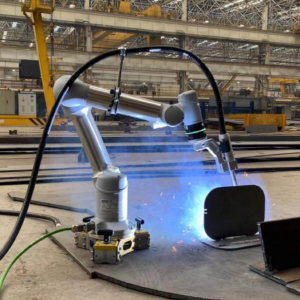
Industrial Application of Heavy-Duty Beam Laser
Furthermore, the airflow dynamics within the cutting chamber are engineered to create a laminar flow that sweeps the Particulate Matter (PM2.5) away from the cutting head. By maintaining a negative pressure environment within the laser enclosure, manufacturers ensure that no fugitive emissions escape into the broader factory floor, thereby protecting neighboring assembly lines—particularly sensitive electronics SMT (Surface Mount Technology) lines prevalent in Manaus—from metallic cross-contamination.
EHS Compliance and Worker Safety in Brazilian Manufacturing
In Brazil, the Ministry of Labor enforces strict standards regarding occupational exposure to metal fumes. The implementation of a Heavy-Duty Beam Laser with integrated dust-free technology is a direct response to these EHS mandates. Traditional cutting methods often expose operators to hexavalent chromium or manganese fumes, which pose long-term respiratory risks. By automating the extraction and filtration process, the concentration of these substances in the breathing zone is reduced to levels well below the Threshold Limit Values (TLV).
Beyond air quality, the “heavy-duty” aspect of these lasers involves significant structural safety. The enclosures are designed to meet Class 1 laser safety standards, meaning the beam is entirely contained. In Manaus, where industrial real estate is optimized for high-density production, the ability to place a high-power laser cutter in close proximity to other workstations without risking ocular damage or dust inhalation to other staff is a major operational advantage. This spatial efficiency is a key driver for the adoption of fully enclosed, dust-managed laser systems.
Thermal Management and System Longevity
Dust-free operation is inextricably linked to the thermal management of the laser system. In the Manaus climate, heat dissipation is a constant hurdle. If dust accumulates on the heat exchangers or the chiller units of the Heavy-Duty Beam Laser, the cooling efficiency drops, leading to Thermal Distortion Compensation errors. Modern systems utilize dual-circuit cooling systems that are hermetically sealed to prevent the ingress of humid, dust-laden ambient air.
By keeping the internal components pristine, the Mean Time Between Failures (MTBF) is significantly extended. For B2B operations in Manaus, where the logistics of sourcing specialized spare parts can be affected by the geographical isolation of the Amazon, the reliability provided by a dust-free setup is a critical economic factor. Preventing the ingress of conductive metallic dust into the electrical cabinets of the laser source prevents short circuits and expensive downtime, ensuring that the PIM facilities remain competitive on a global scale.
Industry Insight: The Future of Clean Fabrication in South America
The shift toward heavy-duty laser technology in Manaus is symptomatic of a broader global trend: the convergence of high-output industrial capacity with stringent environmental stewardship. As Brazil continues to align its industrial policies with OECD standards, the tolerance for “dirty” manufacturing processes is evaporating. The future of fabrication in the Amazon region will be defined by “Invisible Infrastructure”—where the most powerful tools, like the Heavy-Duty Beam Laser, operate with zero localized environmental impact.
For global stakeholders, the Manaus model serves as a case study in how high-precision technology can thrive in challenging equatorial climates. The emphasis on dust-free operation is no longer an optional upgrade; it is the baseline for any facility aiming for ISO 45001 (Occupational Health and Safety) and ISO 14001 (Environmental Management) certifications. As laser powers continue to scale upward, the sophistication of the filtration and containment systems must evolve in parallel. The manufacturers who invest in integrated EHS-compliant laser solutions today are securing their position in the sustainable supply chains of tomorrow, proving that heavy industry and environmental preservation can coexist through engineering excellence.
Industrial Expertise & Support
Are you looking for high-performance Heavy-Duty Beam Laser tailored for the Global market? Our engineering team provides comprehensive solutions for modern manufacturing.