Advanced Material Processing: The Industrial Evolution in Joinville
Joinville, Santa Catarina, has solidified its position as the primary industrial engine of Southern Brazil. As a hub for automotive, refrigeration, and heavy machinery manufacturing, the region is increasingly demanding precision tools capable of handling non-ferrous metals. The integration of the Heavy-Duty Beam Laser into local production lines marks a significant shift from traditional CO2 systems to high-brightness fiber laser technology. This transition is driven by the need to process high-reflectivity materials such as copper and aluminum, which have historically posed significant risks to optical resonators due to back-reflection.
The global manufacturing sector is currently witnessing a surge in demand for electric vehicle (EV) components and renewable energy infrastructure. Both sectors rely heavily on copper for electrical conductivity and aluminum for lightweight structural integrity. However, the physics of laser-material interaction for these metals requires more than just raw power; it requires sophisticated optical management to ensure system longevity and weld consistency.
The Challenge of High-Reflectivity Metals
Copper and aluminum present unique challenges in laser processing due to their low absorption rates at the standard 1.064-micron wavelength of fiber lasers. At room temperature, copper reflects over 95% of incident near-infrared radiation. When a laser beam hits a polished copper surface, the reflected energy can travel back through the delivery fiber and into the laser source, causing catastrophic damage to the gain medium and sensitive optical components.

Industrial Application of Heavy-Duty Beam Laser
In the industrial corridors of Joinville, where throughput is measured in high-volume cycles, downtime caused by optical failure is unacceptable. To mitigate this, modern systems utilize Back-Reflection Suppression technology. This involves a multi-stage approach: first, the use of optical isolators that act as one-way valves for light; and second, the implementation of real-time monitoring sensors that can detect back-reflected light and modulate the beam in microseconds to prevent hardware damage.
Technical Architecture of Anti-Reflection Systems
The efficacy of a Heavy-Duty Beam Laser in processing reflective alloys is determined by its internal architecture. Leading systems deployed in Brazil now incorporate a “fail-safe” optical design. This design utilizes a stripping mechanism within the feeding fiber that redirects reflected photons into a water-cooled heat sink. This ensures that even during the “piercing” phase—where reflection is at its peak before the material enters a molten state—the laser source remains thermally stable.
Furthermore, the integration of Photonics-Based Sensing allows the system to analyze the plasma plume and the melt pool in real-time. If the sensors detect a spike in back-reflected energy, the control software adjusts the beam parameters, such as pulse frequency or duty cycle, to maintain the coupling of energy into the material. This is particularly vital for Joinville’s automotive suppliers who must maintain strict tolerances in copper busbar welding for battery modules.
Optimizing Beam Quality for Aluminum Alloys
Aluminum processing requires a different set of considerations. While its reflectivity is lower than copper, its high thermal conductivity means that heat dissipates rapidly from the focal point. To compensate, heavy-duty lasers must maintain a high M2 factor (beam quality) to ensure a concentrated energy density. By focusing the beam into a smaller spot size, the laser can surpass the “keyhole” threshold faster, where the material’s absorption rate increases significantly as it transitions from solid to liquid.
The 5000 and 6000 series aluminum alloys, common in Brazil’s aerospace and transport sectors, are also prone to solidification cracking. Advanced laser systems address this by employing beam-shaping technology. By distributing the energy in a “ring-mode” or “adjustable beam profile” (ABP), the cooling rate of the melt pool is controlled, reducing the Thermal Expansion Coefficient stress and preventing micro-cracks in the finished weld or cut.
Operational Parameters and Integration in Joinville
For facilities in Joinville looking to upgrade their fabrication capabilities, the technical specifications of the laser source are paramount. A standard 10kW to 20kW fiber laser system optimized for copper must include:
- Multi-stage optical isolation modules.
- High-peak-power capabilities to overcome initial reflectivity.
- Nitrogen or Argon assist-gas integration to prevent oxidation.
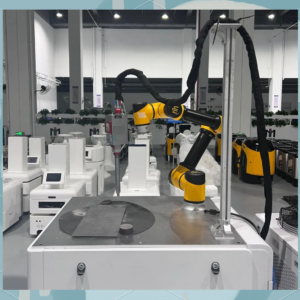
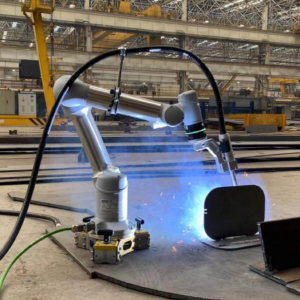
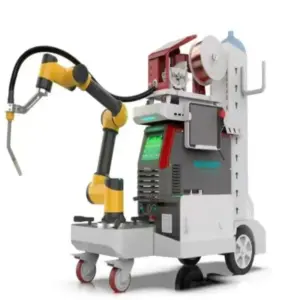
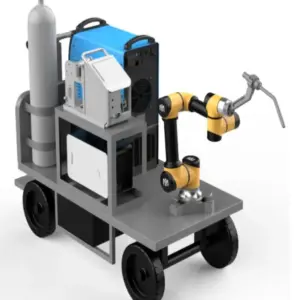
- Compatibility with CNC or robotic arm integration for 3D processing.
The shift toward these high-spec systems is not merely about performance but about total cost of ownership (TCO). While the initial investment in anti-reflection technology is higher, the reduction in consumable costs and the elimination of resonator repairs provide a clear ROI for high-output manufacturing plants. In the competitive landscape of Mercosur, the ability to process copper and aluminum with the same reliability as carbon steel is a decisive advantage.
Industry Insight: The Future of High-Power Photonics
The deployment of Heavy-Duty Beam Laser technology in Joinville is a microcosm of a broader global trend: the move toward “intelligent” photonics. We are moving past the era of raw wattage. The next generation of industrial lasers will be defined by their ability to sense and adapt to the material’s state in real-time. As copper becomes the “new oil” in the transition to electrification, the ability to weld it without spatter or system failure becomes a core competency for any industrial economy.
For Brazilian manufacturers, the adoption of anti-reflection technology is more than a technical upgrade; it is a strategic requirement. As global supply chains demand higher precision and lower carbon footprints, the efficiency of fiber lasers—combined with the safety of anti-reflection hardware—offers a sustainable path forward. The focus will continue to shift toward “green” metals like aluminum, and the facilities that master the nuances of laser-material interaction today will lead the industrial landscape of tomorrow. The convergence of high-power output and refined optical control is no longer an optional luxury; it is the baseline for modern metal fabrication.
Industrial Expertise & Support
Are you looking for high-performance Heavy-Duty Beam Laser tailored for the Global market? Our engineering team provides comprehensive solutions for modern manufacturing.