Introduction: The Industrial Convergence in Joinville
Joinville, located in the state of Santa Catarina, Brazil, has solidified its position as a primary metallurgical and mechanical engineering hub in South America. The city’s industrial ecosystem, characterized by a high concentration of automotive, aerospace, and heavy machinery manufacturers, has necessitated a shift toward advanced fabrication technologies. Among these advancements, the implementation of the Heavy-Duty Beam Laser represents a significant departure from traditional plasma and oxy-fuel cutting methods. As global demand for high-precision structural steel components increases, the ability to execute complex geometries—specifically 45-degree beveling—on large-scale profiles has become a critical requirement for achieving seamless welding and structural integrity.
Technological Architecture of Heavy-Duty Beam Laser Systems
The transition to fiber laser technology for structural beam processing involves a sophisticated integration of high-power resonators and multi-axis motion control. Unlike standard flat-bed lasers, heavy-duty beam systems are designed to handle massive structural shapes, including I-beams, H-beams, channels, and rectangular hollow sections (RHS). The core of this technology lies in the fiber laser source, typically ranging from 12kW to 30kW, which provides the photon density required to penetrate thick-walled carbon steel and stainless steel alloys.
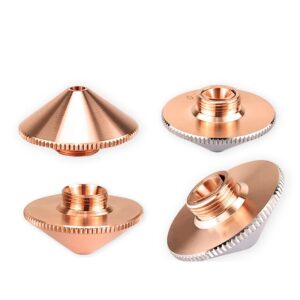
In the Joinville manufacturing context, these machines are equipped with advanced 3D cutting heads capable of articulating across multiple planes. The precision of the 5-axis kinematic head allows the laser to maintain a constant focal point while navigating the complex radii and flanges of structural members. This capability is essential for executing the 45-degree bevel cuts required for high-strength weld preparations. By utilizing a high-brightness laser source, the system minimizes the kerf width and maximizes the energy density, resulting in a cleaner cut with significantly less thermal distortion compared to thermal cutting alternatives.
The Mechanics of 45-Degree Beveling for Weld Preparation
In heavy structural fabrication, the quality of the weld is directly proportional to the precision of the edge preparation. A 45-degree bevel is the industry standard for creating V-groove or K-groove joints, which allow for full-penetration welding in thick materials. Traditional methods of achieving this bevel—such as manual grinding or mechanical milling—are labor-intensive, prone to human error, and inconsistent across long spans of steel.
The heavy-duty beam laser automates this process by integrating the beveling instruction directly into the CNC program. When the laser head tilts to a 45-degree angle, the software must compensate for the increased material thickness the beam must traverse. For instance, cutting a 20mm plate at a 45-degree angle effectively increases the cutting path to approximately 28.2mm. The control systems in Joinville’s advanced facilities utilize real-time sensors to adjust power output and gas pressure, ensuring that the V-groove weld preparation remains uniform across the entire length of the beam. This uniformity is vital for robotic welding cells, which require tight tolerances to maintain arc stability and consistent bead deposition.
Minimizing the Heat-Affected Zone (HAZ)
One of the primary technical advantages of laser beveling over plasma or oxy-fuel is the reduction of the Heat-Affected Zone (HAZ). In heavy-duty applications, excessive heat input can alter the metallurgical properties of the steel, leading to grain growth and reduced toughness in the area adjacent to the cut. This is particularly problematic in high-strength low-alloy (HSLA) steels frequently used in Joinville’s heavy equipment sector.
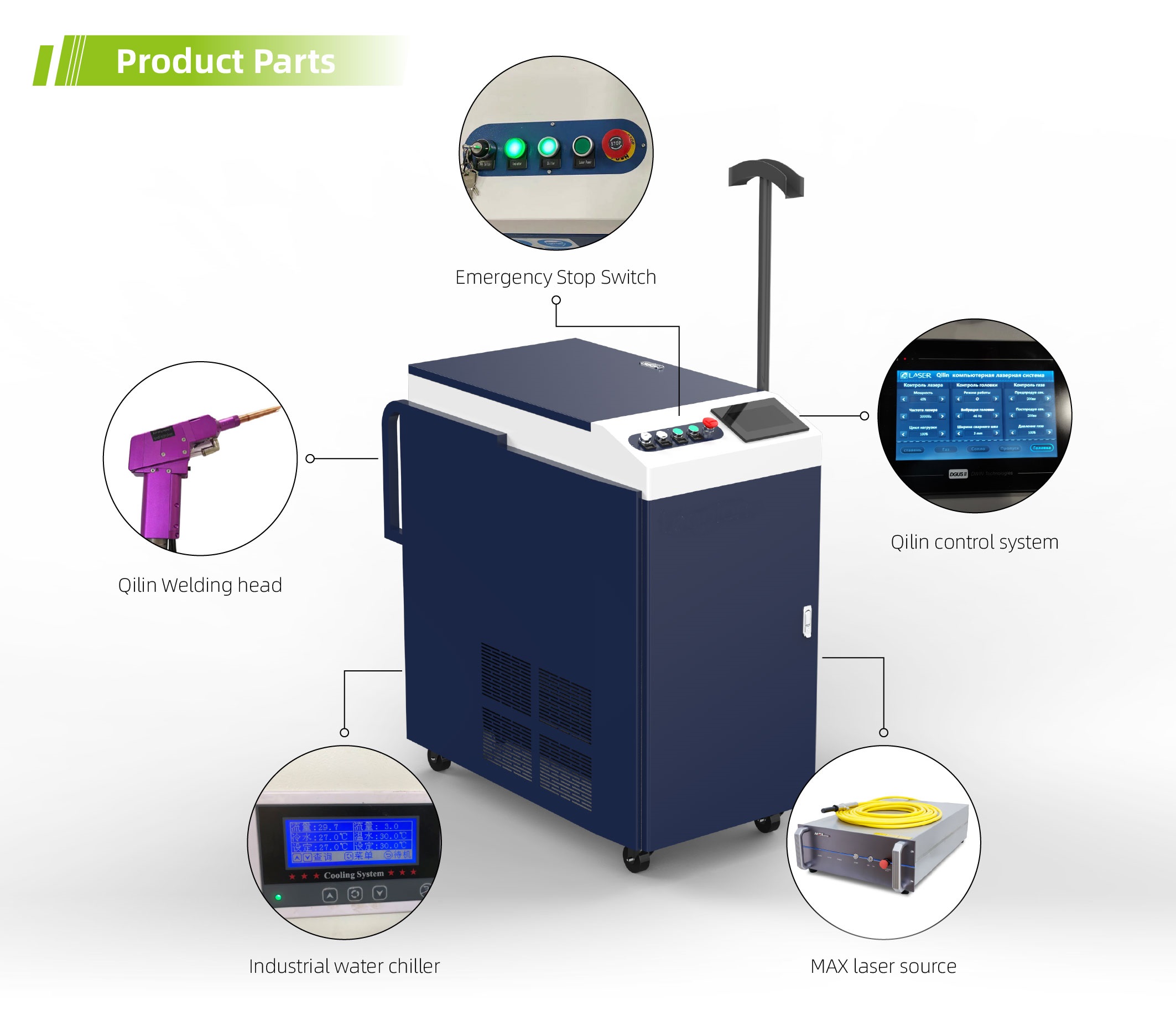
Industrial Application of Heavy-Duty Beam Laser
The concentrated energy of a fiber laser ensures that the energy is localized. The rapid cooling rates associated with laser cutting result in a much narrower HAZ. For a 45-degree bevel, this means the structural integrity of the flange or web is preserved, and the edge remains metallurgically “clean.” This eliminates the need for post-cut pickling or grinding to remove hardened slag or oxidized layers, allowing the component to move directly from the laser cell to the welding station. The absence of dross and the high surface finish of the laser-cut edge ensure that the subsequent weld fusion is free from inclusions and porosity.
Integration with Automated Welding and Industry 4.0
The adoption of heavy-duty beam lasers in Joinville is not an isolated upgrade but part of a broader shift toward Industry 4.0. The digital thread begins with CAD/CAM software, where the beam’s geometry and bevel requirements are defined. The software calculates the optimal nesting patterns to minimize scrap and generates the G-code for the laser system. Because the laser produces parts with tolerances within +/- 0.2mm, the “fit-up” during the assembly phase is nearly perfect.
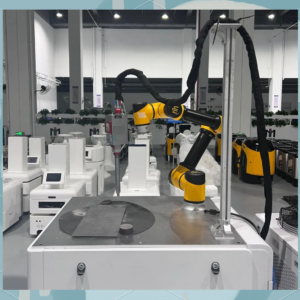
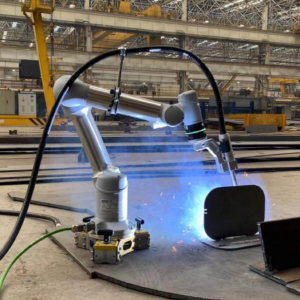
Seamless welding is achieved when the gap between two joined members is minimized and consistent. In large-scale structural projects, such as bridge girders or industrial crane frames, even a 1mm deviation can lead to significant cumulative errors. The precision of laser-beveled edges ensures that components “lock” into place, reducing the reliance on heavy clamping and tack-welding adjustments. This level of accuracy is a prerequisite for the implementation of automated submerged arc welding (SAW) or robotic gas metal arc welding (GMAW) systems, which are increasingly prevalent in the Santa Catarina industrial corridor.
Economic and Operational Efficiency
From a B2B perspective, the investment in heavy-duty beam laser technology is justified by the drastic reduction in secondary processing costs. Traditional fabrication workflows involve multiple stages: cutting to length, mechanical beveling, hole drilling, and manual deburring. A modern beam laser system performs all these functions in a single setup. In Joinville, facilities utilizing these systems have reported throughput increases of up to 300 percent compared to conventional mechanical processing lines.
Furthermore, the reduction in consumables—such as drill bits, milling inserts, and grinding discs—contributes to a lower cost per part. The use of nitrogen or oxygen as an assist gas is optimized through high-speed valves, ensuring that gas consumption is synchronized with the cutting path. For global clients sourcing components from Brazil, this efficiency translates to competitive pricing and shorter lead times without compromising on the stringent quality standards required for international structural certifications.
Conclusion: Industry Insight
The evolution of heavy-duty beam laser processing in Joinville signifies a broader trend in global manufacturing: the convergence of thermal cutting and precision machining. As structural designs become more complex and safety factors more stringent, the tolerance for “traditional” fabrication errors is disappearing. The industry is moving toward a “zero-gap” philosophy, where the precision of the primary cut dictates the success of the entire assembly. For the global B2B market, the takeaway is clear: the integration of 45-degree laser beveling is no longer a luxury but a fundamental requirement for facilities aiming to compete in high-stakes sectors like infrastructure, energy, and heavy transport. Joinville’s adoption of these technologies positions it as a critical node in the global supply chain, capable of delivering “weld-ready” components that meet the highest technical benchmarks of the modern era.
Industrial Expertise & Support
Are you looking for high-performance Heavy-Duty Beam Laser tailored for the Global market? Our engineering team provides comprehensive solutions for modern manufacturing.