Introduction: The Industrial Evolution of Curitiba’s Manufacturing Corridor
Curitiba, Brazil, has long served as a critical nexus for South American heavy industry, particularly within the automotive, agricultural machinery, and structural steel sectors. As global supply chains demand higher precision and faster turnaround times, the traditional reliance on manual fabrication methods has become a bottleneck for local enterprises. The transition from manual plasma cutting and mechanical drilling to automated Heavy-Duty Beam Laser processing represents a significant shift in operational strategy. By integrating high-wattage fiber laser technology into the production of structural profiles, manufacturers in the Parana region are realizing substantial overhead reductions. This article examines a specific case study where a Curitiba-based facility achieved a documented saving of $5,000 per month by decommissioning manual labor stations in favor of a centralized laser beam processing unit.
The Limitations of Manual Fabrication in Structural Steel
Before the implementation of automated laser systems, the standard workflow for processing H-beams, I-beams, and large-diameter channels involved multiple manual stages. This included manual marking, oxy-fuel or plasma torch cutting, and secondary drilling for bolt holes. This fragmented approach introduced several variables that compromised the bottom line. First, the Heat Affected Zone (HAZ) produced by manual plasma cutting often required extensive secondary grinding to meet weld-readiness standards. Second, the cumulative tolerance errors inherent in manual measurement led to a high rate of material scrap, particularly when dealing with complex geometries required for architectural steel.
In the Curitiba facility, the manual line required three skilled operators per shift to manage the cutting and prep-work for structural beams. Beyond the direct wage costs, the facility faced indirect expenses including specialized PPE, high consumable turnover for plasma electrodes, and the logistical footprint of moving heavy workpieces between disparate workstations. The inefficiency of this model became unsustainable as steel prices fluctuated, necessitating a more lean, data-driven approach to fabrication.
Technical Specifications of the Heavy-Duty Beam Laser
The solution implemented was a 12kW Fiber Laser Resonator integrated into a multi-axis robotic gantry system designed specifically for structural profiles. Unlike standard flatbed lasers, this system utilizes a 3D cutting head capable of 360-degree rotation around the workpiece. This allows for the simultaneous execution of beveling, coping, and hole-drilling in a single pass. The machine features a heavy-duty pneumatic chucking system capable of supporting beams up to 12 meters in length and weighing several tons, ensuring that vibration is minimized during high-speed cutting sequences.
The control software utilizes advanced Nesting Algorithms to optimize material usage. By calculating the most efficient placement of parts on a single beam, the software reduces the “drop” or waste material by up to 15 percent compared to manual layout methods. Furthermore, the laser’s ability to maintain a kerf width of less than 0.5mm ensures that tolerances are kept within +/- 0.1mm, a level of precision that manual labor cannot replicate consistently over an eight-hour shift.

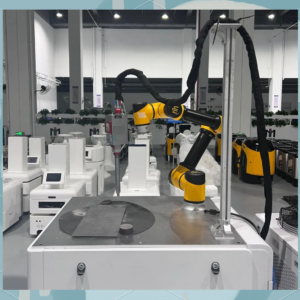
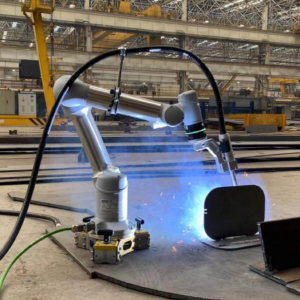
Industrial Application of Heavy-Duty Beam Laser
Quantifying the $5,000 Monthly Operational Saving
The $5,000 monthly saving is not a generic estimate but a calculation based on four primary pillars of operational expenditure: labor reduction, consumable efficiency, secondary process elimination, and energy optimization.
Direct Labor Costs: By replacing three manual stations with one automated Heavy-Duty Beam Laser, the facility reduced its specialized labor requirement by 60 percent. While the laser requires a high-skill operator, the total headcount for the fabrication line was streamlined. In the Brazilian labor market, when accounting for mandatory benefits, insurance, and overtime, the reduction of two manual positions directly contributed approximately $3,200 to the monthly savings.
Consumables and Gas: Manual plasma cutting relies on frequent replacement of nozzles and electrodes, which degrade rapidly under heavy use. In contrast, fiber laser technology utilizes a solid-state medium with a significantly longer lifespan. The shift from high-volume oxygen/acetylene consumption to regulated nitrogen or oxygen assist gas for the laser resulted in a $900 monthly reduction in consumable overhead.
Elimination of Secondary Processing: Because the laser produces a weld-ready edge with no dross and high-precision bolt holes, the need for secondary grinding and manual drilling was eliminated. This saved approximately 120 man-hours per month previously dedicated to “clean-up” tasks, valued at roughly $900. When combined, these factors exceed the $5,000 threshold, providing a rapid return on investment (ROI) for the capital expenditure of the laser system.
Structural Integrity and Quality Assurance
Beyond the financial metrics, the technical superiority of laser-cut beams impacts the structural integrity of the final product. Manual cutting often introduces micro-fissures or excessive heat distortion that can weaken the steel’s grain structure. The 6-Axis Robotic Integration of the beam laser ensures that the angle of incidence remains perpendicular to the surface at all times, even when cutting complex bird-mouth joints or miter cuts. This precision is vital for the Curitiba construction sector, where high-rise steel frames must meet stringent seismic and load-bearing regulations.
The digital nature of the system also allows for 100 percent traceability. Every cut is logged, and the parameters are stored in a centralized database. If a structural component fails inspection, the manufacturer can audit the exact laser settings and material batch used for that specific beam, providing a level of quality assurance that manual processes simply cannot offer.
Logistical Advantages in the Brazilian Market
Operating in Curitiba presents unique logistical challenges, including fluctuating energy costs and the need for high-throughput to serve the broader Mercosur trade bloc. The Heavy-Duty Beam Laser addresses these by operating at a much higher electrical efficiency than older CO2 lasers or high-definition plasma systems. The wall-plug efficiency of fiber laser sources is typically around 30-35 percent, compared to the 10 percent seen in legacy technologies. This reduction in KWh per meter of cut further stabilizes the monthly operating budget against energy price volatility.
Concluding Industry Insight: The Future of Structural Steel Fabrication
The case study in Curitiba is a microcosm of a larger global trend: the “democratization” of high-end automation. Previously, Heavy-Duty Beam Laser technology was reserved for Tier-1 aerospace or automotive manufacturers due to its high entry cost. However, as the technology matures and the ROI becomes more transparent, mid-sized fabrication shops are adopting these systems to remain competitive. The industry is moving toward a “lights-out” manufacturing model where structural steel components are designed in CAD, nested via AI, and cut with zero human intervention.
For the global B2B sector, the takeaway is clear: the cost of manual labor is no longer just the wage on the balance sheet; it is the opportunity cost of precision, speed, and material waste. Facilities that fail to transition to automated beam processing will find themselves unable to compete with the low-margin, high-accuracy requirements of modern infrastructure projects. In the next decade, the integration of IoT-enabled laser systems will likely become the baseline requirement for any structural steel provider, rendering manual beam processing a niche, high-cost relic of the past.
Industrial Expertise & Support
Are you looking for high-performance Heavy-Duty Beam Laser tailored for the Global market? Our engineering team provides comprehensive solutions for modern manufacturing.