Technical Integration of Heavy-Duty Beam Laser Systems in the Caxias do Sul Industrial Hub
Caxias do Sul, located in the state of Rio Grande do Sul, stands as the second-largest metal-mechanic pole in Brazil. The region’s industrial output is heavily concentrated on the production of heavy vehicles, agricultural machinery, and structural steel components. To maintain global competitiveness, regional manufacturers have increasingly transitioned from traditional plasma and mechanical cutting to high-power laser processing. Central to this transition is the deployment of the Heavy-Duty Beam Laser, a system engineered to handle large-format workpieces with high spatial frequency and thermal stability.
Integrating these high-capacity systems requires more than just optical precision; it necessitates a rigorous adherence to international and domestic safety frameworks. For global manufacturers exporting to or operating within Brazil, the dual-certification of CE (Conformité Européenne) and NR-12 (Norma Regulamentadora 12) is not merely a preference but a mandatory operational requirement. This article analyzes the technical intersections of these safety standards and the engineering specifications required for heavy-duty laser operations in the Brazilian market.
Structural Engineering and Beam Delivery Dynamics
The Heavy-Duty Beam Laser systems utilized in Caxias do Sul typically utilize high-power fiber laser sources ranging from 12kW to 30kW. Unlike standard CO2 systems, fiber resonators provide a shorter wavelength (approximately 1.06 microns), resulting in higher absorption rates in metallic substrates. This efficiency allows for the processing of thick-plate carbon steel and aluminum alloys essential for the local transport and agribusiness sectors.

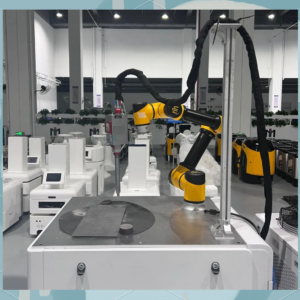
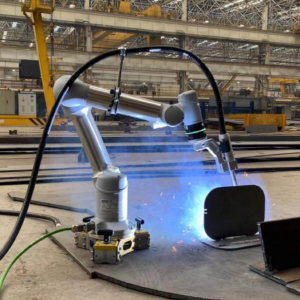
Industrial Application of Heavy-Duty Beam Laser
The mechanical architecture of these machines must account for extreme dynamic loads. In a heavy-duty configuration, the gantry systems are often constructed from high-rigidity welded steel or mineral casting to dampen vibrations during high-acceleration maneuvers. The beam delivery system utilizes high-purity fused silica optics and specialized coating technologies to manage the high power density. Maintaining a stable BPP (Beam Parameter Product) is critical for ensuring consistent kerf width and surface finish across the entire processing area, which often exceeds 6000mm in length.
NR-12 Compliance: The Brazilian Regulatory Landscape
NR-12 is the Brazilian Ministry of Labor’s regulation governing the safety of machinery and equipment. It is recognized as one of the most stringent safety standards globally, often exceeding the requirements found in North American OSHA or even certain European ISO standards. For a Heavy-Duty Beam Laser to be legally operated in Caxias do Sul, it must undergo a comprehensive risk assessment (Appraisal of Risks) conducted by a legally qualified professional (Habilitado).
The core of NR-12 compliance involves the implementation of “fail-safe” systems. This includes the installation of physical barriers, categorized safety sensors, and redundant emergency stop circuits. In the context of high-power lasers, the standard mandates that any breach of the safety perimeter must result in an instantaneous cessation of the laser emission and the mechanical motion of the axes. This is typically achieved through a Safety PLC (Programmable Logic Controller) that monitors all inputs in real-time, ensuring that a single component failure does not lead to a loss of the safety function.
Interfacing CE Standards with NR-12 Requirements
While many laser systems manufactured in Europe arrive with the CE mark, this does not guarantee automatic compliance with NR-12. CE certification often relies on manufacturer self-declaration and adherence to EN ISO 11553 (Safety of machinery — Laser processing machines). NR-12, however, requires specific documentation in Portuguese, including a detailed technical manual, maintenance procedures, and a complete electrical schematic showing Galvanic Isolation and safety redundancy.
A critical technical distinction lies in the reset protocols. Under NR-12, the reactivation of a machine after a safety interruption must be a conscious, manual action performed at a control station located outside the hazard zone, with a clear view of the entire work area. Automated restarts, which may be permissible under certain international configurations, are strictly prohibited under Brazilian law to prevent accidental entrapment or exposure during maintenance cycles.
Optoelectronic Safety Barriers and Enclosures
The high-power density of a Heavy-Duty Beam Laser poses significant risks of diffuse reflection. Therefore, the machine must be housed in a Class 1 laser-safe enclosure. The viewing windows must be constructed from specialized polycarbonate or glass filters designed to attenuate the specific wavelength of the fiber laser. Under NR-12, these enclosures must be equipped with safety interlocks that prevent the laser from firing if any door is open.
Furthermore, because the Caxias do Sul industrial environment often involves large-scale material handling via overhead cranes, the integration of light curtains and laser scanners is essential. These optoelectronic devices create a virtual perimeter. If a worker or a forklift enters the restricted zone, the system triggers a Category 0 or Category 1 stop, depending on the risk assessment. The integration of these sensors into the machine’s NR-12 Safety Protocol ensures that high-speed production does not compromise personnel safety.
Maintenance and Technical Documentation
Compliance in Brazil extends beyond the hardware. Every Heavy-Duty Beam Laser in Caxias do Sul must have a “Prontuário” (Technical File). This file contains the history of maintenance, safety inspections, and the “ART” (Anotação de Responsabilidade Técnica), which is a document signed by a Brazilian engineer taking legal responsibility for the machine’s safety installation. For global B2B suppliers, providing comprehensive technical data that facilitates this local certification is a significant competitive advantage.
Conclusion and Industry Insight
The deployment of Heavy-Duty Beam Laser technology in Caxias do Sul represents a sophisticated convergence of high-power photonics and rigorous industrial safety regulation. While the requirements of NR-12 may initially appear as a barrier to entry, they have fostered an environment of high-level engineering discipline and operator protection that aligns with modern ESG (Environmental, Social, and Governance) goals.
Industry Insight: As the global manufacturing sector moves toward “Industry 4.0,” the integration of safety standards is shifting from reactive hardware to predictive software. We anticipate that future compliance in the Brazilian market will increasingly rely on digital twins and real-time sensor data to validate safety integrity levels (SIL). For companies operating in Caxias do Sul, the focus is moving toward “Safety-as-a-Service,” where the machine’s internal diagnostics proactively identify potential failures in safety circuits before they cause downtime. Manufacturers who master the synchronization of CE precision with NR-12’s robust safety mandates will define the next decade of heavy-duty metal fabrication in South America.
Industrial Expertise & Support
Are you looking for high-performance Heavy-Duty Beam Laser tailored for the Global market? Our engineering team provides comprehensive solutions for modern manufacturing.