Precision Engineering in the Serra Gaúcha: The Rise of Advanced Beam Technology
Caxias do Sul, located in the Rio Grande do Sul state of Brazil, has solidified its position as the second-largest metal-mechanic hub in the country. Historically driven by the automotive and heavy machinery sectors, the region is currently undergoing a technological transition to support its burgeoning furniture export industry. At the center of this transition is the implementation of the Heavy-Duty Beam Laser. As global demand for high-end, ready-to-assemble (RTA) and contract furniture increases, manufacturers in Caxias do Sul are replacing traditional mechanical sawing and plasma cutting with high-kilowatt fiber laser systems. This shift is not merely a matter of speed; it is a strategic move to achieve burr-free edge quality, which is a non-negotiable requirement for international markets.
The furniture export sector requires components that meet stringent aesthetic and structural tolerances. Traditional cutting methods often result in dross or slag accumulation on the underside of the workpiece, necessitating secondary grinding and polishing processes. By integrating Heavy-Duty Beam Laser technology, Caxias do Sul’s fabrication facilities are eliminating these secondary steps. The precision of the concentrated light beam ensures that the Heat-Affected Zone (HAZ) is kept to an absolute minimum, preserving the metallurgical properties of the substrate and providing a surface ready for immediate powder coating or chrome plating.
Technical Specifications of High-Power Fiber Resonators
The efficacy of the Heavy-Duty Beam Laser systems utilized in Caxias do Sul is rooted in the architecture of the Fiber Laser Resonator. Unlike CO2 lasers, fiber lasers operate at a wavelength of approximately 1.06 microns, which allows for higher absorption rates in metallic materials such as carbon steel, stainless steel, and aluminum. For furniture exporters, this means the ability to process thin-walled tubing and thick structural plates with the same machine configuration. The high power density of these systems allows for feed rates that exceed 20 meters per minute on standard 2mm carbon steel profiles, maintaining a kerf width of less than 0.1mm.
Furthermore, the beam quality factor, or M2, is optimized in these heavy-duty systems to ensure a narrow and stable focus over long distances. This stability is critical when cutting large-format structural beams or complex tubular geometries used in modern office furniture. The integration of CNC-controlled 3D cutting heads allows for the execution of intricate bevels and interlocking joints, which are essential for high-strength assembly without the need for excessive welding. This technical capability directly translates to a reduction in material waste and an increase in the structural integrity of the final export product.
Achieving Burr-Free Quality through Nitrogen-Assisted Cutting
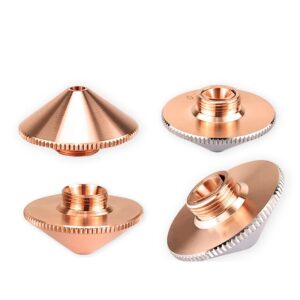
A primary challenge for furniture manufacturers is the oxidation of the cut edge. When oxygen is used as an assist gas, it creates an exothermic reaction that speeds up the cutting process but leaves an oxide layer on the edge. This layer can cause paint adhesion failure, a common point of rejection in global quality audits. To counter this, the industrial sector in Caxias do Sul has pivoted toward Nitrogen-Assisted Cutting. By using high-pressure nitrogen as a shielding gas, the laser melts the material, and the gas mechanically expels the molten metal from the kerf before it can oxidize.
The resulting “burr-free” finish is characterized by a smooth, silver-bright edge. In the context of furniture manufacturing, this eliminates the labor-intensive deburring stage. For exporters targeting the European and North American markets, where “Fit and Finish” metrics are critical, the use of Nitrogen-Assisted Cutting provides a competitive advantage. The absence of micro-cracks and dross ensures that the components transition seamlessly from the cutting table to the automated painting line, reducing the total lead time by up to 30%.

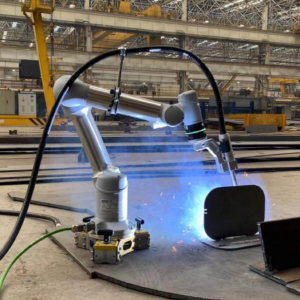
Industrial Application of Heavy-Duty Beam Laser
Optimizing the Supply Chain for Furniture Exporters
The adoption of Heavy-Duty Beam Laser technology in Caxias do Sul has significant implications for the regional supply chain. Local service centers are now capable of providing “Just-in-Time” (JIT) delivery of precision-cut parts to furniture assemblers. This reduces the need for large inventories of raw materials and allows for rapid prototyping of new designs. The digital nature of laser cutting means that design changes can be implemented in the CAD/CAM software and executed immediately on the shop floor, without the need for expensive tooling or dies.
For global furniture brands sourcing components from Brazil, this technological maturity ensures consistency across large production runs. The repeatability of CNC laser systems ensures that the first part produced is identical to the ten-thousandth, with tolerances often held within +/- 0.05mm. This level of precision is vital for modular furniture systems where components from different batches must interlock perfectly during final assembly at the end-user’s location.
Economic Impact and Global Competitiveness
While the initial capital expenditure for a Heavy-Duty Beam Laser is substantial, the Return on Investment (ROI) is driven by the elimination of manual labor and the reduction in consumables. Traditional mechanical tools require frequent sharpening and replacement, whereas fiber laser delivery systems have no moving parts in the light-generating source, leading to lower maintenance costs and higher uptime. In Caxias do Sul, the integration of these machines has allowed local firms to compete with low-cost manufacturers in Asia by focusing on high-quality finishes and complex geometries that are difficult to achieve with standard equipment.
Moreover, the environmental impact of laser technology aligns with the “Green Manufacturing” requirements of global furniture retailers. Laser cutting produces less noise and physical waste compared to traditional mechanical punching or sawing. The high energy efficiency of modern fiber resonators also reduces the carbon footprint per part produced, a metric that is increasingly scrutinized in international trade agreements and ESG (Environmental, Social, and Governance) reporting.
Concluding Industry Insight
The industrial landscape of Caxias do Sul is a bellwether for the broader South American manufacturing sector. The transition toward high-power, precision laser systems signifies a move away from commodity-based manufacturing toward high-value, tech-driven production. As furniture exporters continue to face pressure regarding lead times and aesthetic perfection, the Heavy-Duty Beam Laser will no longer be an optional upgrade but a fundamental requirement for market entry. The future of the region lies in the convergence of automated logistics and precision optics. Companies that fail to adopt these burr-free technologies will likely find themselves marginalized by the increasing demands for manufacturing transparency and finish quality. Ultimately, the success of the Caxias do Sul furniture cluster on the world stage will be defined by its ability to maintain this trajectory of technical excellence, ensuring that “Made in Brazil” remains synonymous with precision and durability.
Industrial Expertise & Support
Are you looking for high-performance Heavy-Duty Beam Laser tailored for the Global market? Our engineering team provides comprehensive solutions for modern manufacturing.