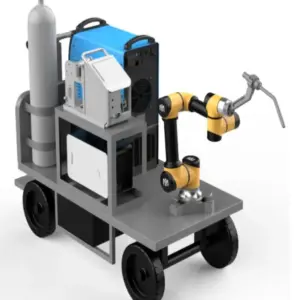
Introduction: The Strategic Evolution of Industrial Laser Processing in Minas Gerais
The industrial landscape of Belo Horizonte, Brazil, has transitioned from traditional mineral extraction and primary metallurgy toward advanced metal fabrication and heavy machinery manufacturing. As global supply chains demand higher precision and faster throughput, the integration of high-power laser systems has become a critical requirement. Central to this evolution is the deployment of the Heavy-Duty Beam Laser, a system engineered to handle large-format structural steel and thick-plate processing. However, the technical merit of the hardware is only one variable in the operational equation. In the Brazilian market, where logistical complexities and import lead times can impede production, the establishment of localized spare parts inventories and 24-hour service response protocols is the primary determinant of long-term Return on Investment (ROI).
Technical Specifications of Heavy-Duty Beam Laser Systems
A Heavy-Duty Beam Laser is characterized by its ability to maintain structural integrity under the thermal stress of continuous high-wattage operation. These systems typically utilize fiber laser sources ranging from 12kW to 40kW, capable of penetrating carbon steel exceeding 50mm in thickness. The mechanical architecture often features a reinforced hollow-welded bed or a plate-welded structure that has undergone stress-relief annealing to prevent deformation over decades of use.
Precision is maintained through high-performance Motion Control Systems, which coordinate the X, Y, and Z axes with micron-level accuracy. For heavy-duty applications, the integration of high-torque servo motors and helical rack-and-pinion drives is essential to move the massive gantry systems required for large-format cutting beds. Furthermore, the optical path must be shielded by localized pressurized nitrogen or air to prevent contamination of the protective windows and collimating lenses, ensuring a stable beam quality during prolonged cutting cycles.
Localized Spare Parts: Mitigating Supply Chain Volatility
In the context of Belo Horizonte’s industrial sector, the availability of localized spare parts is not merely a convenience but a structural necessity. International shipping to Brazil often involves complex customs clearance procedures and high duties, which can extend the downtime of a machine from days to weeks if components are sourced from overseas. By maintaining a regional warehouse in Minas Gerais, manufacturers ensure that critical consumables and high-value components are immediately accessible.

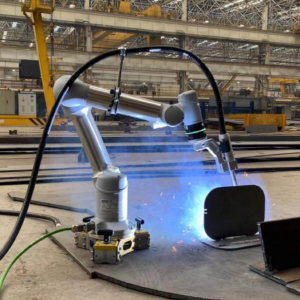
Industrial Application of Heavy-Duty Beam Laser
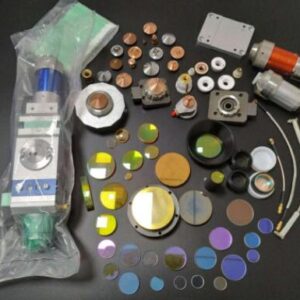
The localized inventory typically includes:
Optical Consumables and Protective Elements
Fiber laser heads require frequent replacement of protective windows, nozzles, and ceramic rings. Even minor contamination of these components can lead to beam divergence and damage to the Fiber Laser Resonator. Localized stocking ensures that these parts are replaced according to the preventive maintenance schedule rather than being stretched beyond their functional lifespan due to supply shortages.
Electronic and Mechanical Components
Beyond consumables, the inventory must include critical failure points such as solenoid valves, sensors, and motor drivers. For heavy-duty systems, specialized cooling components for the industrial chiller unit are also prioritized. Ensuring these parts are available within the Belo Horizonte metropolitan area reduces the Mean Time to Repair (MTTR) significantly, allowing facilities to maintain a higher Mean Time Between Failures (MTBF) through proactive component replacement.
The 24h Service Response Framework
Operational uptime in heavy industry is governed by the speed of technical intervention. A 24-hour service response mandate in Belo Horizonte involves a multi-tiered support structure designed to address mechanical or software anomalies before they result in a complete production halt. This framework is essential for industries such as mining equipment manufacturing and structural steel fabrication, where production delays incur heavy contractual penalties.
Tier 1: Remote Diagnostics and Tele-Support
Modern laser systems are equipped with IoT-enabled diagnostic tools. Upon the trigger of an error code, localized technicians can access the machine’s CNC interface remotely to analyze log files, sensor data, and power output stability. In many instances, parameter optimization or software resets can resolve the issue without the need for physical transit.
Tier 2: On-Site Technical Intervention
If a hardware failure is confirmed, the proximity of the service team in Belo Horizonte allows for on-site arrival within the 24-hour window. These technicians are specialized in high-power laser alignment, mechanical calibration, and gas path troubleshooting. The synergy between the service team and the localized parts warehouse means that the technician arrives with the necessary components, eliminating the need for a secondary visit.
Optimizing Production for the Brazilian Industrial Climate
Operating heavy machinery in Brazil requires an understanding of local environmental and electrical conditions. Fluctuations in the power grid and high ambient humidity in certain seasons can affect the performance of high-power lasers. Technical teams in Belo Horizonte provide localized expertise in installing voltage stabilizers and industrial-grade dehumidification systems tailored to the specific requirements of the Heavy-Duty Beam Laser.
Furthermore, the training of local operators is a core component of the service offering. Professional training ensures that the workforce understands the nuances of gas pressure settings, focal point adjustments, and nesting software optimization. This localized knowledge transfer reduces operator error, which remains one of the leading causes of unscheduled downtime in laser processing facilities.
Conclusion: Industry Insight on Localized Service Hubs
The global manufacturing sector is witnessing a decisive shift away from centralized service models toward localized technical hubs. In regions like Belo Horizonte, the ability to provide a Heavy-Duty Beam Laser with a robust local support ecosystem represents the new standard for industrial procurement. Technical excellence in laser physics is no longer sufficient; it must be coupled with logistical resilience.
As the demand for large-scale infrastructure and heavy machinery grows within South America, the presence of localized spare parts and rapid response teams will dictate the competitive landscape. For B2B stakeholders, the focus has moved from the initial capital expenditure (CAPEX) to the total cost of ownership (TCO). A system supported by local infrastructure ensures that the laser remains a high-utilization asset rather than a liability subject to global supply chain disruptions. In the coming decade, we expect to see further integration of predictive maintenance AI within these local hubs, allowing for the delivery of parts and service even before a failure occurs, thereby pushing the boundaries of industrial efficiency in the heart of Brazil’s industrial corridor.
Industrial Expertise & Support
Are you looking for high-performance Heavy-Duty Beam Laser tailored for the Global market? Our engineering team provides comprehensive solutions for modern manufacturing.