Industrial Context: Precision Manufacturing in the Minas Gerais Hub
Belo Horizonte, the capital of Minas Gerais, stands as a critical nexus for Brazil’s metallurgical and mining sectors. As industrial operations in this region transition toward high-density automation, the demand for robust thermal processing equipment has intensified. The deployment of the Heavy-Duty Beam Laser in this geographic corridor addresses a specific engineering challenge: the integration of high-wattage photonic tools within an industrial power grid prone to localized fluctuations. In large-scale fabrication environments, such as those supporting the Vale and Gerdau supply chains, the consistency of the laser’s output is directly proportional to the stability of the incoming electrical supply.
The technical requirement for heavy-duty laser systems in Belo Horizonte extends beyond mere cutting speed. These systems must maintain beam integrity across extended duty cycles while subjected to the harmonic distortions common in heavy-industrial zones. The introduction of built-in voltage regulation mechanisms represents a paradigm shift in how high-power fiber and CO2 lasers interface with the Brazilian National Interconnected System (SIN).
The Engineering Architecture of the Heavy-Duty Beam Laser
The Heavy-Duty Beam Laser is engineered with a multi-stage power conditioning architecture designed to decouple the sensitive resonator electronics from the raw industrial feed. At the core of this system is a high-capacity fiber oscillator capable of generating outputs ranging from 12kW to 40kW. To sustain such output, the system utilizes a high-brightness diode pump module that requires extremely tight tolerances in current delivery. Any deviation in the input voltage can result in premature diode degradation or catastrophic failure of the gain medium.

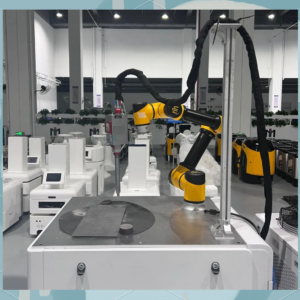
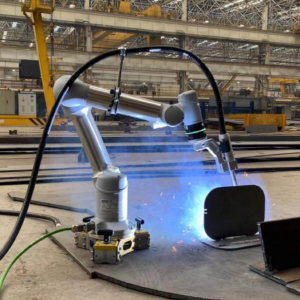
Industrial Application of Heavy-Duty Beam Laser
To mitigate these risks, the hardware incorporates Adaptive Voltage Regulation (AVR). Unlike external stabilizers which introduce latency in response times, the built-in AVR functions at the microsecond scale. It utilizes a series of solid-state thyristors and high-speed switching transistors to normalize incoming voltage sags or swells before they reach the DC bus of the laser source. This internal regulation ensures that the Beam Parameter Product (BPP) remains constant, preventing fluctuations in the kerf width during critical cutting or welding operations.
Voltage Regulation and Grid Stability Dynamics
Grid stability in the Belo Horizonte industrial belt is often compromised by the simultaneous activation of large-scale induction motors and arc furnaces. These heavy loads create transient voltage dips and “noise” that can interfere with the control logic of standard laser systems. The Heavy-Duty Beam Laser utilizes Galvanic Isolation as a primary defense layer, separating the control circuitry from the power stage to eliminate common-mode noise.
The built-in regulation system employs a double-conversion topology. Incoming AC power is first rectified to a stable DC intermediate bus, which is then filtered through a high-capacity capacitor bank. This bank acts as a buffer, providing the necessary energy to bridge millisecond-long voltage drops without interrupting the laser beam. Following this, a high-frequency inverter regenerates the precise AC or DC levels required by the laser’s internal power supply units (PSUs). This process ensures that the laser operates in a “clean room” electrical environment, regardless of the external grid’s volatility.
Impact on Thermal Management and Optical Fidelity
Voltage instability is not merely an electrical issue; it is a thermal management challenge. Inconsistent power delivery to the cooling chillers—often integrated into the laser system—can lead to fluctuations in the coolant temperature. For a Heavy-Duty Beam Laser, even a 0.5-degree Celsius variance in the cooling loop can shift the wavelength of the laser diodes, leading to a loss of focus and reduced cutting efficiency.
By integrating voltage regulation directly into the system’s main control cabinet, the laser can synchronize the power demands of the optical head and the cooling system. This synchronization is managed via a Transconductance Amplification feedback loop, which monitors the real-time load and adjusts the power factor correction (PFC) modules. The result is a system that maintains a power factor near 0.98, significantly reducing the reactive power drawn from the Belo Horizonte grid and lowering the overall thermal footprint of the installation.
Operational Benefits for Global B2B Stakeholders
For global manufacturers considering expansion into the Brazilian market, the technical specifications of the laser’s power handling are a primary KPI. The ability to operate without the need for massive, external uninterruptible power supplies (UPS) or dedicated transformers reduces the Total Cost of Ownership (TCO). In the context of Belo Horizonte’s industrial regulations, systems with built-in regulation also comply more easily with local electromagnetic compatibility (EMC) standards.
Furthermore, the data logged by the built-in voltage regulator provides valuable diagnostics. The system records every instance of grid instability, allowing plant managers to perform predictive maintenance. If the internal sensors detect a recurring pattern of under-voltage, the system can automatically throttle the feed rate to preserve the optical components, ensuring that the workpieces are not scrapped due to power-related defects.
Technical Specifications and Performance Metrics
The performance of these systems in the field has demonstrated a 15 percent increase in uptime compared to non-regulated alternatives. Specific metrics include:
1. Input Voltage Tolerance: +/- 20 percent nominal range without output degradation.
2. Response Time: Less than 2 milliseconds for transient suppression.
3. Harmonic Distortion Filtering: Reduction of Total Harmonic Distortion (THD) to under 3 percent.
4. Efficiency: 95 percent energy conversion efficiency at the PSU stage.
These figures emphasize the engineering priority placed on “electrical hardening.” By treating the power grid as a variable rather than a constant, the Heavy-Duty Beam Laser achieves a level of reliability that is mandatory for 24/7 manufacturing cycles in high-output regions like Minas Gerais.
Concluding Industry Insight
The evolution of industrial laser technology is increasingly defined not by the power of the beam alone, but by the intelligence of the power electronics supporting it. In emerging industrial hubs like Belo Horizonte, the infrastructure often lags behind the sophistication of the machinery it powers. Therefore, the “on-board” resilience of hardware—specifically through integrated voltage regulation—is becoming the decisive factor in global procurement strategies. As we move toward more decentralized energy grids and increased reliance on renewable sources, which are inherently intermittent, the ability of heavy-duty equipment to self-regulate will be the standard for operational continuity. The integration of such technology ensures that precision manufacturing remains decoupled from the instabilities of the macro-environment, securing the future of high-fidelity fabrication on a global scale.
Industrial Expertise & Support
Are you looking for high-performance Heavy-Duty Beam Laser tailored for the Global market? Our engineering team provides comprehensive solutions for modern manufacturing.