Precision Engineering in the Heart of Minas Gerais: The Evolution of Industrial Laser Processing
The industrial landscape of Belo Horizonte, Brazil, has long been defined by its proximity to the “Iron Quadrangle,” a region synonymous with large-scale mining and metallurgical operations. As the global demand for electrification and lightweight structural components intensifies, the regional manufacturing sector is transitioning from traditional extraction and smelting toward high-precision fabrication. Central to this shift is the deployment of the Heavy-Duty Beam Laser, a tool engineered to address the specific thermodynamic and optical challenges associated with processing highly reflective non-ferrous metals such as copper and aluminum.
For decades, the primary constraint in fiber laser application was the inherent instability caused by back-reflection. In the context of Belo Horizonte’s automotive and electrical manufacturing clusters, the inability to process copper and aluminum with high reliability represented a significant bottleneck. However, recent advancements in optical isolation and beam delivery systems have redefined the parameters of what is possible on the factory floor, allowing for continuous, high-kilowatt operations without the risk of catastrophic hardware failure.
The Physics of Back-Reflection in Non-Ferrous Metallurgy
Copper and aluminum are characterized by high thermal conductivity and low absorption rates at the standard 1.06-micron wavelength used by most industrial fiber lasers. At the onset of a cut or weld, these materials can reflect up to 95% of the incident laser energy. This reflected light travels back through the delivery fiber and into the resonant cavity of the laser source. Without robust back-reflection protection, this energy causes localized overheating, destabilizes the pump diodes, and can lead to the permanent degradation of the optical fiber core.
In Belo Horizonte’s heavy industrial sectors, where uptime is measured in high-cost intervals, the vulnerability of standard laser systems to back-reflection was historically unacceptable. The move toward heavy-duty systems involves the integration of multi-stage optical isolators. These components act as one-way valves for light, diverting reflected photons into water-cooled absorbers before they can reach sensitive internal components. This allows the laser to maintain a stable power output even when processing mirrors or highly polished aluminum alloys.
Technical Specifications of the Heavy-Duty Beam Laser System
The Heavy-Duty Beam Laser systems currently being integrated into the Brazilian market are distinguished by their modular architecture and high M2 factor stability. While standard lasers may suffice for carbon steel, the heavy-duty variants used in Belo Horizonte are designed for 24/7 operation under peak thermal loads. Key technical parameters include:
1. Power Scaling: Systems ranging from 12kW to 30kW are increasingly common, providing the necessary energy density to overcome the high melting points of copper alloys instantly.

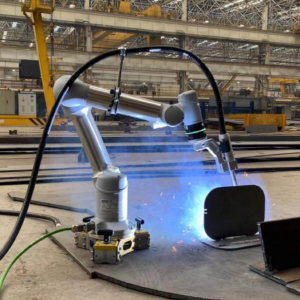
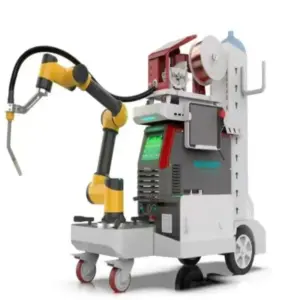
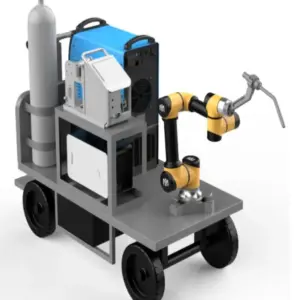
Industrial Application of Heavy-Duty Beam Laser
2. Dynamic Beam Shaping: By modulating the intensity distribution of the beam—moving from a Gaussian profile to a “ring” or “donut” shape—the system can stabilize the keyhole during welding, significantly reducing spatter and porosity in aluminum joints.
3. Real-Time Monitoring: Integrated sensors detect back-reflection levels in microseconds. If the reflected energy exceeds a safety threshold, the system automatically adjusts the pulse frequency or power modulation to protect the optical isolation hardware.
Optimizing Copper and Aluminum Fabrication for Global Supply Chains
Belo Horizonte serves as a strategic hub for the production of electrical busbars and battery enclosures, components that are vital to the global Electric Vehicle (EV) supply chain. Processing these parts requires more than just raw power; it requires a nuanced approach to the Heat Affected Zone (HAZ). Excessive heat input in aluminum can lead to structural softening, while in copper, it can result in oxidation that compromises electrical conductivity.
The implementation of heavy-duty beam technology allows for higher feed rates. Increased velocity reduces the time the laser beam dwells on any single point, thereby narrowing the HAZ. In the specialized manufacturing facilities of Minas Gerais, this precision ensures that components meet the rigorous ISO and ASTM standards required for international export. Furthermore, the ability to weld dissimilar metals—such as joining copper tabs to aluminum terminals—is made possible by the high peak power and rapid modulation capabilities of these advanced laser sources.
Operational Reliability in High-Dust Environments
Industrial operations in Belo Horizonte often face environmental challenges, including high ambient temperatures and particulate matter from nearby mining activities. A Heavy-Duty Beam Laser is not merely defined by its optical output but also by its physical enclosure. These systems utilize NEMA 12 or IP65-rated cabinets with closed-loop refrigeration. This prevents the ingress of metallic dust which could otherwise cause dielectric breakdown in high-voltage power supplies or contaminate the sensitive delivery optics.
The maintenance protocols for these systems have also evolved. Predictive maintenance algorithms now analyze beam quality data in real-time, alerting technicians to potential degradation in the protective window or the delivery fiber before it impacts production quality. This data-driven approach is essential for maintaining the competitive edge of Brazilian manufacturers in a globalized B2B market.
Industry Insight: The Future of High-Power Photonics in South America
The concentration of technical expertise and industrial infrastructure in Belo Horizonte is positioning the region as a leader in South American non-ferrous metallurgy. As the global energy transition accelerates, the demand for copper and aluminum processing will only increase. The move toward heavy-duty laser systems represents a decoupling from traditional mechanical machining and toward a digital, photonics-based manufacturing model.
The critical insight for global stakeholders is that the regional success in Brazil is not merely a result of resource abundance, but of the strategic adoption of anti-reflection technologies. By solving the fundamental physics problem of back-reflection, manufacturers are now able to treat copper and aluminum with the same reliability once reserved for steel. We anticipate that the next five years will see a surge in high-kilowatt laser installations across the region, driven by the need for higher throughput and the integration of AI-driven process control. The Heavy-Duty Beam Laser is no longer an optional upgrade; it is the foundational technology for the next generation of industrial infrastructure.
Industrial Expertise & Support
Are you looking for high-performance Heavy-Duty Beam Laser tailored for the Global market? Our engineering team provides comprehensive solutions for modern manufacturing.