Accelerating Structural Steel Fabrication: A Technical Case Study in Valparaíso
The industrial sector in Valparaíso, Chile, serves as a critical hub for maritime logistics, mining infrastructure, and seismic-resistant construction. Within this demanding environment, the efficiency of structural steel fabrication directly dictates project lead times and overall profitability. Traditionally, the processing of heavy H-beams—involving layout, cutting, drilling, and coping—has been a labor-intensive bottleneck. This article examines the technical transition of a prominent Valparaíso fabrication facility that successfully reduced its production cycle time for complex structural assemblies from 72 hours to a mere 3 hours through the implementation of an advanced H-Beam Plasma Cutter.
The 72-Hour Constraint: Limitations of Manual Fabrication
Before the integration of automated systems, the fabrication of H-beams relied on manual layout and oxygen-fuel cutting methods. This traditional workflow involved several discrete stages, each prone to human error and cumulative delays. First, engineers produced 2D drawings that shop floor technicians translated onto the steel surface using manual marking tools. This layout phase for a complex series of beams could consume 12 to 16 hours alone.
Following layout, manual torch cutting was employed for coping, mitering, and flange thinning. Because manual thermal cutting lacks the precision of computer-controlled systems, significant secondary grinding was required to meet the tolerances necessary for high-integrity welding. Furthermore, hole-making required separate magnetic drills or stationary drill presses, necessitating multiple material handling cycles with overhead cranes. In a region like Valparaíso, where structural components must adhere to strict seismic standards (such as NCh433), the rework required to fix manual inaccuracies often pushed the total cycle time for a standard batch of processed beams to 72 hours.
Technical Specifications of the Automated Solution
The solution implemented was a multi-axis CNC system designed specifically for long-form structural profiles. Central to this system is 8-axis robotic profiling, which allows the plasma torch to move with high degrees of freedom around the stationary or indexed workpiece. Unlike traditional 2D plasma tables, this system utilizes a robotic arm capable of reaching the web and both sides of the flanges in a single program sequence.
The system utilizes high-definition plasma power sources capable of maintaining a stable arc through varying material thicknesses. This is particularly critical for H-beams, where the transition from the flange to the web involves a radius (the k-area) that presents challenges for standard cutting heads. The integrated sensors provide real-time surface detection, allowing the machine to compensate for any inherent deviations in the raw steel mill profiles, such as camber or sweep, ensuring that every cut is referenced from the actual material position rather than a theoretical CAD model.
The Role of CAD/CAM Integration in Process Optimization
The primary driver behind the reduction to a 3-hour cycle time is the seamless CAD/CAM integration. The facility moved away from manual layout by adopting software that imports 3D models directly from structural detailing programs like Tekla Structures or SDS/2. The software converts these models into DSTV or NC1 files, which the H-Beam Plasma Cutter interprets to generate toolpaths automatically.
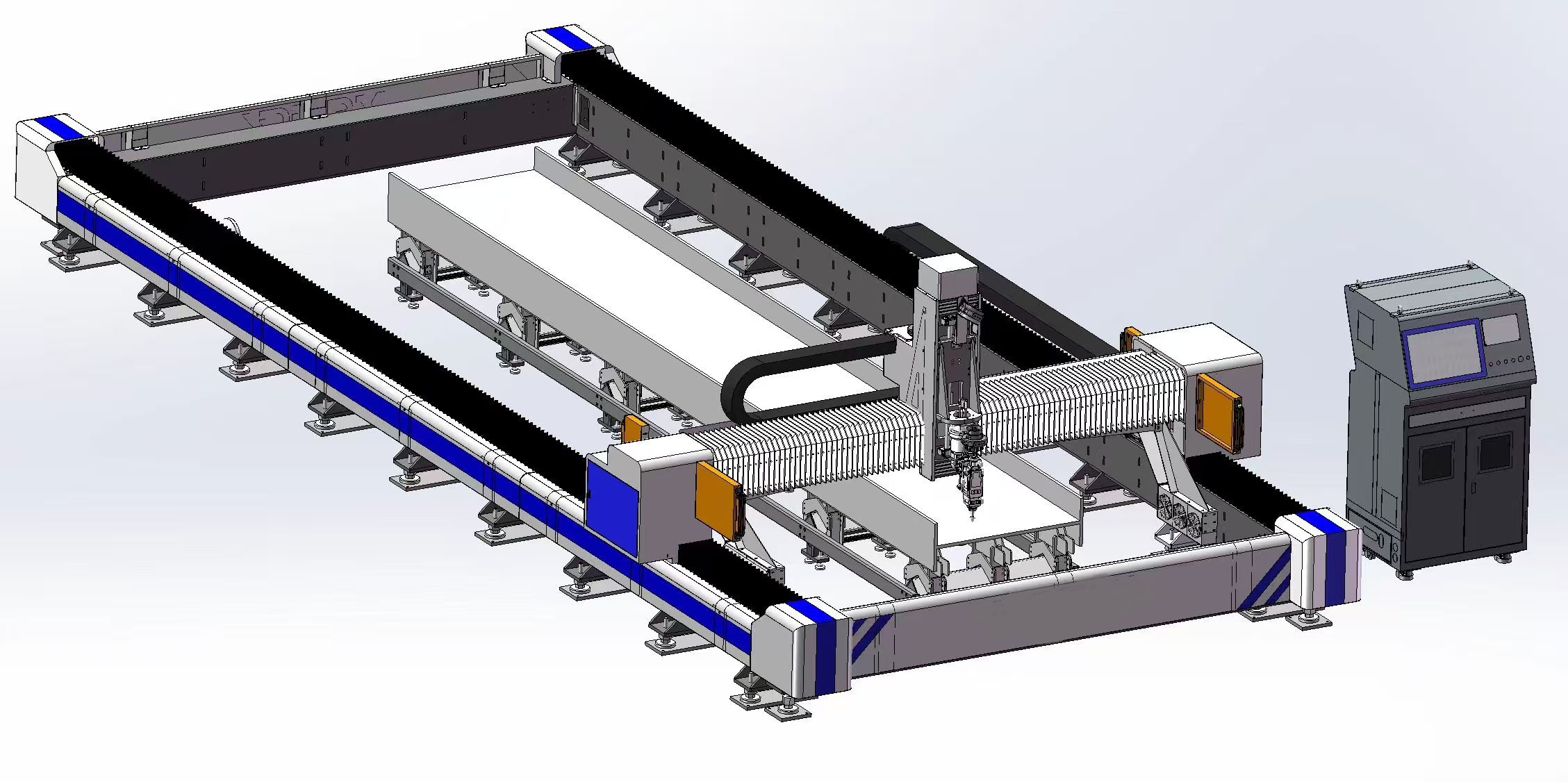
Industrial Application of H-Beam Plasma Cutter
This digital thread eliminates the 16-hour manual layout phase entirely. The machine marks the layout lines, part numbers, and weld symbols directly onto the steel using the plasma arc at a low-amperage setting or a specialized marking head. By consolidating layout, cutting, hole-making (via plasma piercing or high-speed drilling units), and marking into a single workstation, the facility eliminated the “stop-and-go” nature of manual production. The material is loaded once, and the finished, bolt-ready component is unloaded 3 hours later.
Managing Thermal Dynamics and Accuracy
A critical technical challenge in high-speed plasma cutting of large structural members is thermal distortion management. The intense heat generated by the plasma arc can induce localized expansion, leading to warping or dimensional inaccuracy in the finished beam. The automated system in Valparaíso mitigates this through optimized cutting sequences programmed by the nesting software.
By intelligently sequencing cuts—for example, alternating between flanges or distributing heat across the length of the beam—the system ensures the structural integrity of the H-beam remains uncompromised. The precision of the robotic arm allows for “bolt-hole quality” plasma cutting, where the taper of the hole is minimized to within industry-standard tolerances (ISO 9013). This level of precision ensures that when the beams arrive at the construction site in the Valparaíso hills or the port expansions, the fit-up is perfect, requiring zero field modifications.
Quantifiable Productivity Gains and ROI
The transition from 72 hours to 3 hours represents a 2,300 percent increase in throughput efficiency. However, the technical benefits extend beyond mere speed. The reduction in “man-hours per ton” allows the facility to reallocate skilled labor to complex assembly and specialized welding tasks rather than repetitive layout and grinding.
Data collected over the first six months of operation in Valparaíso indicated a 15% reduction in raw material waste due to more efficient nesting of parts on the beam lengths. Additionally, the consistency of the plasma-cut bevels for weld preparation resulted in a 20% reduction in weld volume required, as the tight tolerances eliminated the need to fill large gaps caused by imprecise manual cuts.
Concluding Industry Insight: The Future of Structural Fabrication
The case study in Valparaíso highlights a broader shift in the global structural steel industry: the transition from “manual-centric” to “data-centric” manufacturing. As urban infrastructure projects become more complex and timelines more aggressive, the ability to compress cycle times is no longer a competitive advantage but a baseline requirement for survival. The integration of H-Beam Plasma Cutter technology represents the democratization of high-end CNC capabilities, allowing regional fabricators to compete on a global scale by achieving “lights-out” levels of efficiency. Industry leaders must recognize that the bottleneck is rarely the speed of the tool itself, but rather the friction in the data transfer between design and execution. By neutralizing this friction through 3D robotic automation, the industry is moving toward a future where the physical fabrication of steel is as fluid and precise as the digital models that define them.
Industrial Expertise & Support
Are you looking for high-performance H-Beam Plasma Cutter tailored for the Global market? Our engineering team provides comprehensive solutions for modern manufacturing.





