Strategic Integration of H-Beam Plasma Cutting in the Valencia Industrial Corridor
Valencia, Venezuela, specifically within the Carabobo State industrial zone, has long served as the primary hub for metallurgical and heavy engineering production in the region. As global mining operations demand higher throughput and reduced lead times for structural components, the implementation of advanced H-Beam Plasma Cutter technology has become a critical factor in maintaining supply chain resilience. The intersection of structural steel fabrication and high-wear mining applications requires a level of precision that traditional mechanical sawing and manual oxy-fuel cutting cannot achieve. By utilizing multi-axis plasma systems, fabricators in Valencia are now capable of executing complex geometries on large-scale profiles, facilitating the rapid production of wear-resistant components and structural frameworks essential for the extraction and processing of iron ore, bauxite, and gold.
Technical Specifications of Multi-Axis Plasma Systems for Structural Steel
The core of modern H-beam processing lies in the kinematics of the cutting head. Unlike standard 2D plasma tables, an H-Beam Plasma Cutter designed for industrial mining applications typically employs a 5-axis or 6-axis robotic arm or a specialized gantry with tilting torch capabilities. This allows for the simultaneous processing of the web and flanges of the beam without the need for manual repositioning. The integration of high-definition plasma power sources, often ranging from 200A to 400A, ensures that the system can penetrate thick-walled structural members while maintaining a stable arc.
The precision of these cuts is governed by advanced CNC controllers that manage Kerf Compensation in real-time. This is particularly vital when preparing beams for bolted connections or complex weld preparations such as “rat holes” and bevels. In the context of Valencia’s fabrication shops, these machines are calibrated to handle ASTM A36 and A572 Grade 50 steel, which are standard in mining infrastructure. The ability to automate the layout marking, hole drilling, and coping processes within a single workstation significantly reduces the cumulative error associated with multi-stage manual fabrication.
Wear-Plate Customization and Material Hardness Challenges
Mining operations in the Guyana Shield and the Orinoco Mining Arc subject equipment to extreme abrasive forces. Consequently, there is a constant demand for customized wear-plates, typically composed of quenched and tempered steel such as AR400, AR450, and AR500. These materials present significant challenges for traditional machining due to their high Brinell hardness. The application of plasma cutting technology in Valencia allows for the rapid profiling of these plates into liners for chutes, hoppers, and crusher housings.
A critical technical consideration during the cutting of high-strength wear-plates is the Heat-Affected Zone (HAZ). Excessive heat input can lead to localized softening of the material, compromising its abrasive resistance at the edges. Modern plasma systems mitigate this through high-speed travel rates and optimized gas chemistry (often utilizing oxygen or nitrogen/hydrogen mixes). By controlling the thermal gradient, fabricators ensure that the structural integrity and hardness specifications of the wear-plate are maintained within the tolerances required for heavy-duty mining service.
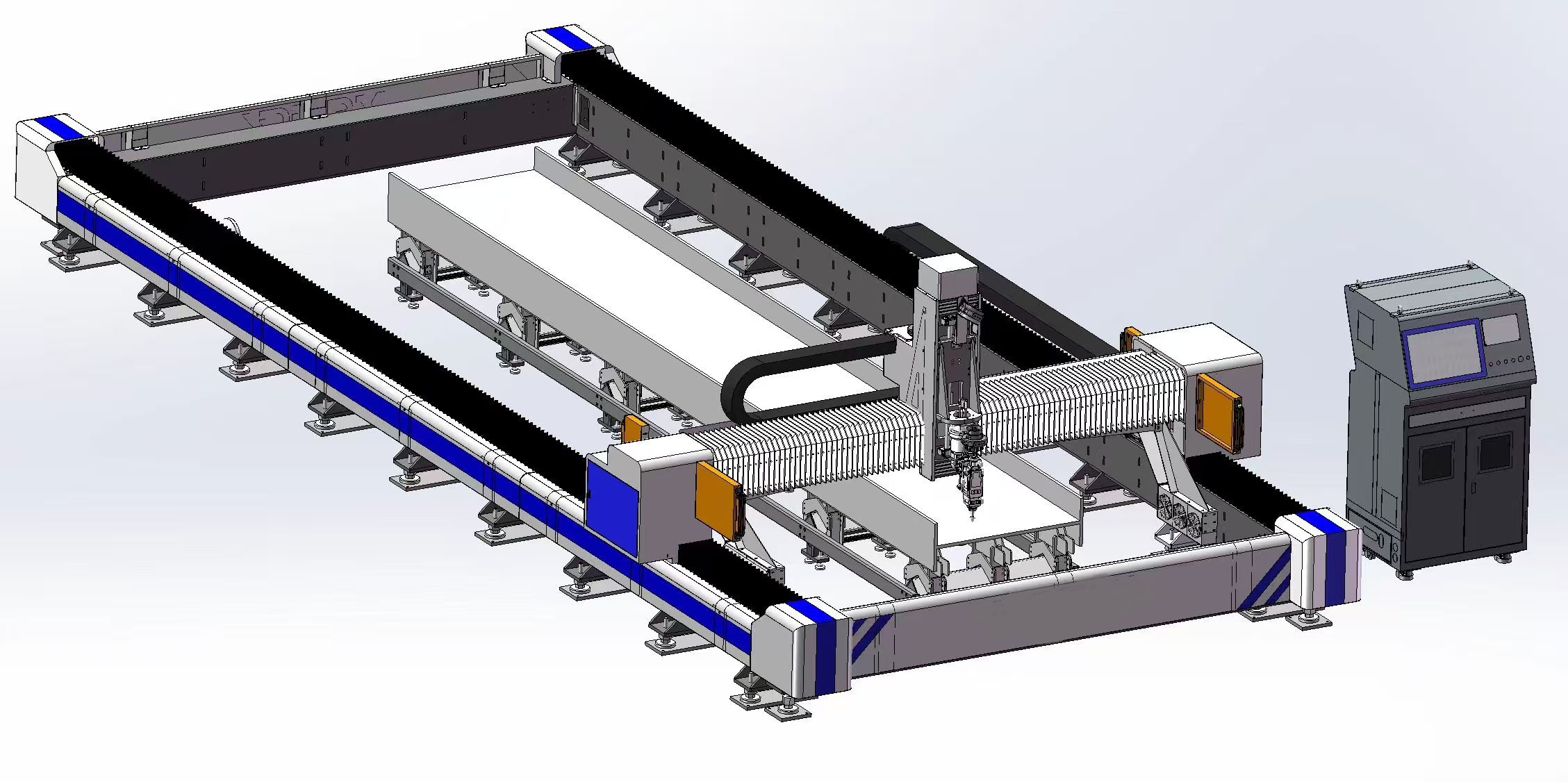
Industrial Application of H-Beam Plasma Cutter
Optimizing Production Through Automated Nesting Software
The economic viability of mining fabrication in Valencia is heavily dependent on material utilization rates. The use of Automated Nesting Software integrated with the plasma cutting system allows for the strategic placement of parts on a single sheet or beam profile to minimize scrap. For H-beams, this involves complex algorithms that account for the structural orientation of the beam and the required lead-in/lead-out paths for the plasma torch. In plate processing, nesting ensures that irregular shapes for chute liners are tightly packed, which is essential given the high cost of imported wear-resistant alloys.
Furthermore, these software solutions provide detailed data logging, allowing for the tracking of material certifications and heat numbers—a requirement for international mining safety standards. The digital workflow from CAD/CAM to the machine interface eliminates the discrepancies often found in manual templating, ensuring that every component produced in the Valencia facility meets the exact specifications of the global mining site it is destined for.
Logistical Advantages of the Valencia Industrial Hub
The geographical and infrastructural positioning of Valencia provides a distinct advantage for B2B mining suppliers. Proximity to the Port of Puerto Cabello allows for the efficient import of raw steel and the export of finished structural assemblies. When a mining operation in the Caribbean or South American interior faces a critical failure, the ability of a Valencia-based facility to utilize an H-Beam Plasma Cutter for immediate customization of replacement parts is a significant value proposition. The reduction in downtime for a mining operation can be measured in thousands of dollars per hour; therefore, the speed of plasma-based fabrication over traditional methods is not merely a technical preference but a financial necessity.
Concluding Industry Insight: The Shift Toward Automated Metallurgical Ecosystems
The evolution of the mining sector is increasingly defined by the transition from generic equipment to site-specific, high-performance components. In Valencia, Venezuela, the adoption of specialized plasma cutting technology represents a broader trend toward the decentralization of high-tech manufacturing. As mining environments become more demanding, the reliance on Torsional Rigidity in structural supports and the precision of wear-resistant interfaces will only intensify.
The industry insight for the coming decade points toward the total integration of BIM (Building Information Modeling) with CNC fabrication. We expect to see a shift where the H-beam and plate components are not just cut, but also digitally “twinned” during the fabrication process. For the global mining market, this means that a component fabricated in Valencia can be verified against a digital model in real-time, ensuring a perfect fit upon arrival at remote mine sites. The focus will move beyond simple cutting speeds to the “smart” management of thermal inputs and material properties, cementing the role of advanced plasma technology as the backbone of resilient mining infrastructure.
Industrial Expertise & Support
Are you looking for high-performance H-Beam Plasma Cutter tailored for the Global market? Our engineering team provides comprehensive solutions for modern manufacturing.





