Introduction: The Industrial Landscape of Valencia and the Necessity of Climate Resilience
Valencia, the capital of Carabobo State, stands as the primary industrial hub of Venezuela. It hosts a significant concentration of automotive, construction, and heavy engineering firms that rely heavily on structural steel fabrication. However, the geographical positioning of Valencia presents a specific set of environmental challenges for high-precision machinery. With an average relative humidity that frequently exceeds 80% and a tropical savanna climate, the degradation of electronic components and mechanical surfaces is accelerated. In this context, the deployment of an H-Beam Plasma Cutter requires more than just standard operational specifications; it demands a specialized IP54+ climate adaptation strategy to ensure longitudinal reliability and precision.
For global manufacturers and local contractors, the intersection of high-output fabrication and environmental stressors necessitates a shift toward ruggedized CNC (Computer Numerical Control) solutions. Standard machinery designed for temperate climates often fails prematurely in tropical zones due to electrolytic corrosion, sensor fogging, and dielectric breakdown within the plasma power source. This article examines the technical requirements for operating heavy-duty plasma cutting systems in high-humidity zones, focusing on the IP54+ standard and the engineering modifications required for the Valencia industrial sector.
The Physics of Humidity in Plasma Cutting Operations
In a high-humidity environment like Valencia, the air used in plasma gas systems carries a higher moisture content. When this air is compressed, the moisture condenses, leading to several technical failures. First, moisture in the plasma gas stream destabilizes the arc, resulting in increased dross formation and poor cut quality on the H-beam flanges and webs. Second, and more critically, the internal electronics of the H-Beam Plasma Cutter are susceptible to “micro-condensation.”
Micro-condensation occurs when the internal temperature of the control cabinet fluctuates, causing water droplets to form on the Printed Circuit Boards (PCBs). This leads to Electrolytic Corrosion, where conductive paths are formed between traces, causing short circuits or intermittent signal failures. To mitigate this, the IP54+ adaptation involves not only sealing the unit but also integrating active thermal management systems that maintain the internal environment above the dew point.
Understanding the IP54+ Standard for Tropical Zones
The Ingress Protection (IP) rating is a global standard for defining the sealing effectiveness of electrical enclosures. An IP54 rating signifies that the equipment is protected against dust ingress (to a level that does not interfere with operation) and protected against water splashing from any direction. However, in the context of Valencia’s industrial zones, the “+” in “IP54+” refers to additional protective layers beyond the basic standard.
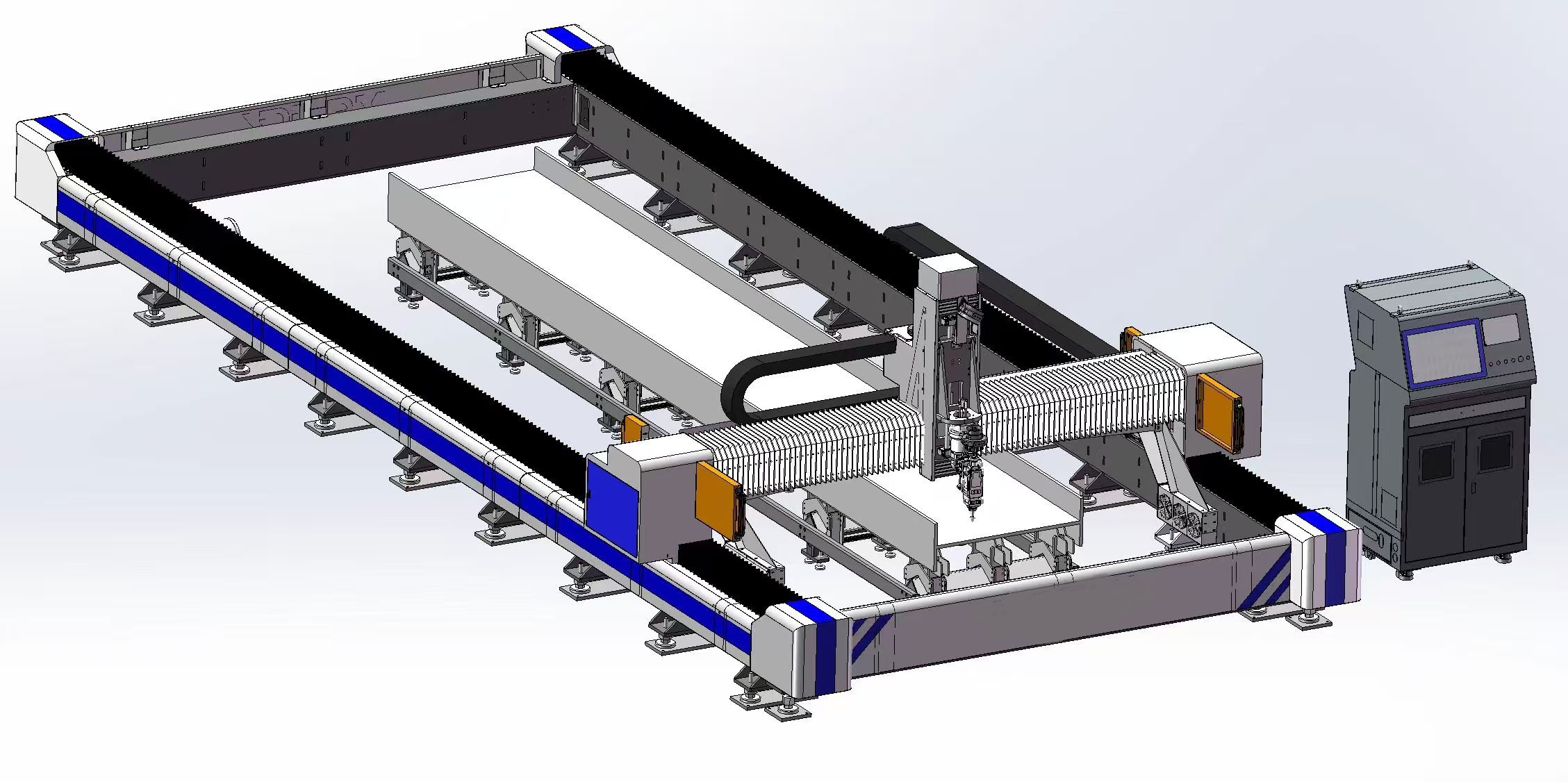
Industrial Application of H-Beam Plasma Cutter
These enhancements include conformal coating on all electronic assemblies, the use of stainless steel fasteners to prevent galvanic corrosion, and the implementation of Thermal Management systems such as closed-loop heat exchangers. Unlike traditional fan-and-filter cooling, which pulls humid, particulate-laden air into the cabinet, a closed-loop system recirculates internal air, cooling it via a heat exchanger without exposing sensitive components to the external atmosphere.
Mechanical Adaptation: Protecting the Structural Integrity of the Gantry
The H-Beam Plasma Cutter utilizes a complex multi-axis gantry to navigate the geometry of structural steel. In high-humidity zones, the linear guides and rack-and-pinion drives are prone to surface oxidation. This oxidation increases friction, which in turn leads to servo motor strain and a decrease in positioning accuracy. Adaptation for the Valencia market includes the use of automated lubrication systems that provide a continuous protective film over all moving parts. Furthermore, bellows and covers are upgraded to high-grade synthetic materials that resist mold growth and UV degradation, which are common issues in tropical industrial settings.
Power Source Stability and High-Frequency Interference
The plasma power source is the heart of the cutting system. In humid conditions, the high-frequency (HF) starting circuit—responsible for initiating the pilot arc—can experience leakage. High humidity increases the conductivity of the air, allowing the HF energy to dissipate before it reaches the torch head. To counter this, IP54+ rated units utilize specialized insulation for the high-voltage leads and hermetically sealed power modules. This ensures that the CNC Plasma Coping process remains consistent, regardless of the ambient moisture levels.
Operational Efficiency and Maintenance Protocols in Carabobo
Deploying an adapted H-Beam Plasma Cutter in Valencia also requires a shift in maintenance protocols. Preventive maintenance must prioritize the inspection of seals and the replenishment of desiccant systems within the pneumatic lines. Because the air density in tropical regions differs from that in cooler climates, the gas pressure settings for oxygen and nitrogen must be calibrated to compensate for the higher ambient temperature. This ensures that the kerf width remains within the tight tolerances required for structural steel assembly in large-scale infrastructure projects.
Integration with Global Supply Chains
For global firms operating in Venezuela, the ability to source machinery that meets these rigorous standards is vital for maintaining project timelines. An H-Beam Plasma Cutter that is not climate-adapted will inevitably face higher downtime, leading to bottlenecks in the fabrication of warehouses, bridges, and oil refinery components. By insisting on IP54+ specifications, firms ensure that their capital investment is protected against the specific environmental stressors of the region, thereby aligning local production capabilities with international quality standards.
Concluding Industry Insight: The Future of Resilient Manufacturing
The industrial sector is witnessing a significant shift toward decentralized manufacturing, where production facilities are increasingly located in emerging markets with challenging climates. The case of Valencia, Venezuela, serves as a blueprint for the necessity of climate-resilient engineering. The traditional approach of “one-size-fits-all” machinery is no longer viable in a globalized B2B landscape. As structural steel requirements become more complex, the machinery used to process it must evolve to handle not just the physical workload, but the environmental context in which it operates.
The adoption of IP54+ standards for an H-Beam Plasma Cutter represents a move toward “Environmental Intelligence” in machine design. This involves using sensor data to predict when humidity levels might compromise cut quality and automatically adjusting parameters or activating internal dehumidifiers. For the global fabrication industry, the insight is clear: durability is not just about the thickness of the steel frame, but about the sophistication of the protective measures that shield the machine’s “brain” from the elements. Investing in climate-adapted technology is not merely a localized necessity for Valencia; it is a strategic imperative for any global operation seeking to minimize risk and maximize uptime in tropical industrial zones.
Industrial Expertise & Support
Are you looking for high-performance H-Beam Plasma Cutter tailored for the Global market? Our engineering team provides comprehensive solutions for modern manufacturing.





