Industrial Integration: The H-Beam Plasma Cutter in Valencia’s Manufacturing Sector
Valencia, Venezuela, serves as the primary industrial axis for the nation, housing a dense concentration of metallurgical and structural steel fabrication facilities. In the context of global supply chains, the adoption of advanced thermal cutting solutions has become a prerequisite for maintaining competitive throughput. The implementation of the H-Beam Plasma Cutter within this regional hub represents a shift from manual layout processes to automated, high-precision structural processing. This transition is not merely mechanical; it is driven by the convergence of robotic kinematics and sophisticated digital infrastructure.
The structural steel industry requires the processing of large-format profiles, including I-beams, H-beams, and channels. Traditional methods involved separate stations for marking, drilling, and sawing. Modern plasma systems consolidate these operations into a single robotic cell. In Valencia’s industrial zones, the deployment of these systems is increasingly focused on the interoperability between the physical hardware and the digital environment, specifically through Enterprise Resource Planning (ERP) and specialized nesting platforms. This technical report examines the architecture of this connectivity and its impact on production efficiency.
The Architecture of Automated Structural Fabrication
At the core of the modern fabrication facility is the multi-axis robotic plasma system. Unlike flat-bed plasma tables, the H-Beam Plasma Cutter utilizes a 5-axis or 6-axis robotic arm capable of maneuvering around the stationary or moving workpiece. This allows for complex beveling, cope cuts, and bolt hole piercing across all faces of the beam without manual repositioning. The mechanical precision of these units is typically within tolerances of +/- 0.5mm, which is essential for ensuring fit-up accuracy in large-scale construction projects.
The efficiency of the hardware is contingent upon the data it receives. The digital workflow begins in the engineering department, where 3D modeling software generates the structural designs. For a facility in Valencia to remain integrated with global engineering standards, the ability to interpret DSTV data protocols is critical. DSTV files (Deutscher Stahlbau-Verband) serve as the industry standard for describing structural members, providing the machine with geometric coordinates, hole locations, and marking instructions. This eliminates the risk of human error during manual data entry and ensures that the physical output matches the digital twin exactly.
ERP Integration and Real-Time Data Synchronization
For large-scale manufacturers in Carabobo State, the ERP integration layer acts as the central nervous system of the operation. Modern ERP systems, such as SAP or Microsoft Dynamics, are no longer isolated to financial or inventory management. In a digitally connected fabrication shop, the ERP system communicates directly with the shop floor management software. When a project is initiated, the ERP system tracks the raw material inventory, identifying specific H-beam lengths and grades available in the warehouse.
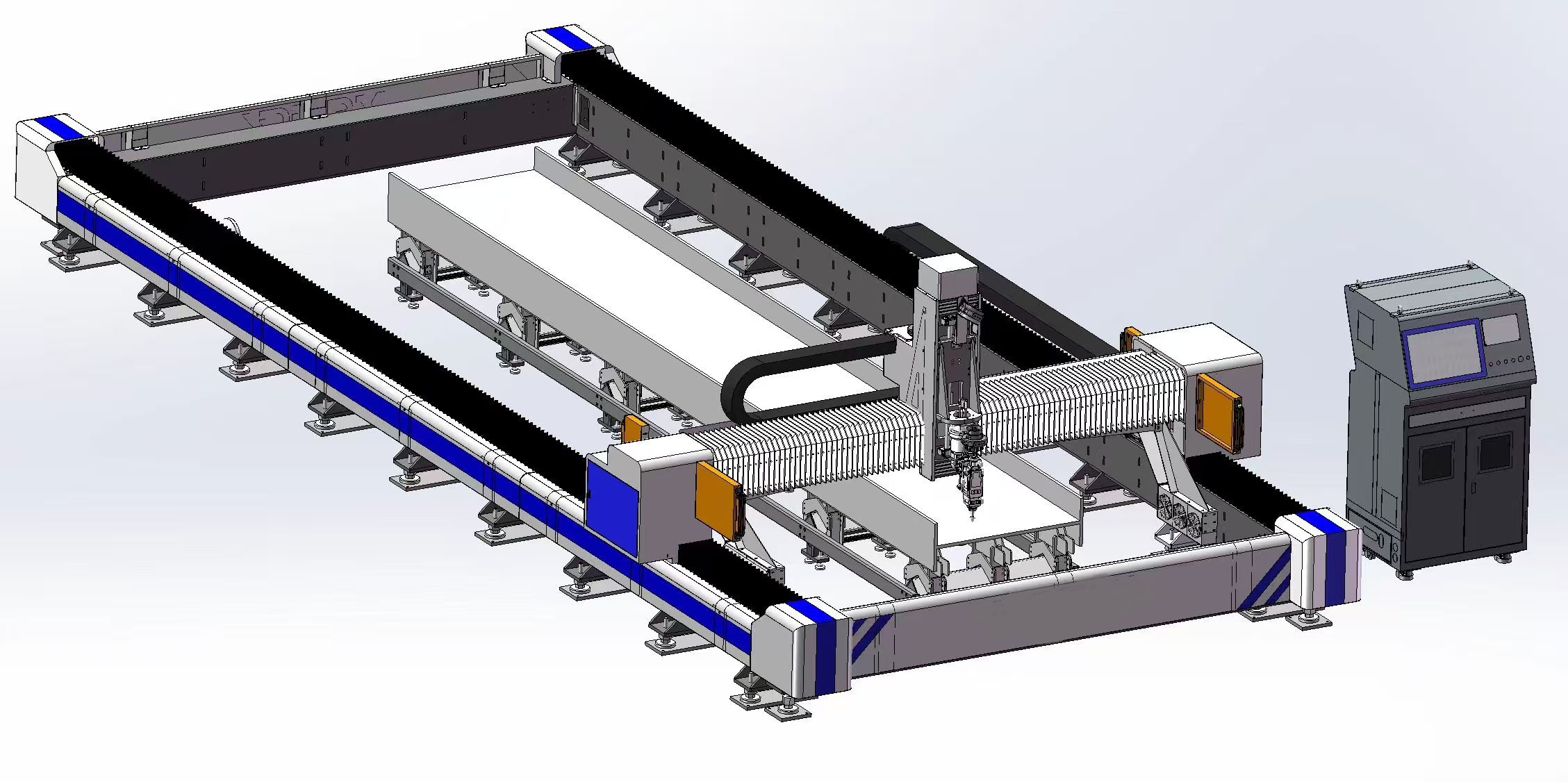
Industrial Application of H-Beam Plasma Cutter
The connectivity between the ERP and the plasma cutter allows for real-time status updates. As the machine completes a cut sequence, the data is fed back into the ERP, automatically updating the project timeline and deducting the material from the inventory. This bidirectional flow of information provides management with precise metrics on gas consumption, torch on-time, and labor allocation. In the high-stakes environment of global steel procurement, this level of data granularity allows Valencia-based firms to provide accurate lead times and cost estimates to international clients.
Optimization Through Advanced Nesting Software
Material waste is one of the most significant overhead costs in structural steel fabrication. To mitigate this, Nesting Software is employed to calculate the most efficient arrangement of parts on a given length of steel. In the context of H-beam processing, nesting is more complex than flat plate nesting because it must account for the structural integrity of the beam and the specific requirements of the robotic torch’s lead-in and lead-out paths.
The software analyzes the entire project’s requirements and “nests” different parts from various assemblies onto a single stock beam. This process, often referred to as linear nesting or multing, significantly reduces “drop” or scrap material. Advanced algorithms also consider the sequence of cuts to minimize the heat-affected zone (HAZ) and prevent thermal distortion of the profile. By integrating this software with the ERP, the system can automatically suggest the use of “remnants” or off-cuts from previous jobs, further optimizing material utilization and reducing the environmental footprint of the fabrication process.
Technical Challenges in Digital Connectivity
Implementing a fully connected system in Valencia involves addressing specific technical challenges. Network stability and data latency are critical factors. For the H-Beam Plasma Cutter to operate without interruption, the local area network (LAN) within the facility must be robust enough to handle large file transfers and real-time telemetry data. Furthermore, the integration of legacy ERP systems with modern CAD/CAM software often requires the use of middleware or custom APIs to ensure seamless communication.
Cybersecurity is another consideration for globalized B2B operations. As machines become nodes on a network, they are susceptible to external threats. Fabrication shops must implement secure protocols for data transmission, ensuring that proprietary designs and production schedules remain protected. The use of cloud-based nesting platforms also necessitates high-speed internet connectivity, which has seen significant investment and improvement in Venezuela’s industrial corridors over the last decade.
Operational Benefits and Quality Control
The primary benefit of digital connectivity in plasma cutting is the drastic reduction in the “art-to-part” cycle time. In a traditional setup, the transition from an engineering drawing to a cut beam could take days. With a connected H-Beam Plasma Cutter, this process is reduced to hours. The elimination of manual layout not only speeds up production but also removes the primary source of fabrication errors. Each hole, notch, and bevel is executed according to the 3D model, ensuring that when the beams arrive at the construction site, they bolt together with zero field rework.
Quality control is also digitized. Many modern plasma systems are equipped with sensors that monitor arc voltage, gas flow, and consumable wear in real-time. If the system detects a deviation that could compromise the cut quality, it can pause the operation or alert the technician. This data is logged and can be exported as a quality assurance report, providing a digital paper trail for every component produced. For Valencia’s exporters, this documentation is vital for meeting international ISO and AISC standards.
Concluding Industry Insight
The evolution of structural steel fabrication in Valencia, Venezuela, mirrors a broader global trend: the transformation of the workshop into a data-driven ecosystem. The H-Beam Plasma Cutter is no longer an isolated tool but a critical component of a digital thread that runs from the initial architectural concept to the final erected structure. For manufacturers, the path to long-term viability lies in the depth of their digital integration. As we move toward Industry 4.0, the distinction between “software companies” and “manufacturing companies” continues to blur. The ability to synchronize ERP data with real-time machine performance and optimized nesting logic is the ultimate differentiator in an increasingly automated global market. Facilities that fail to bridge the gap between their physical hardware and digital management systems will find it difficult to compete with the precision and efficiency offered by fully connected fabrication environments.
Industrial Expertise & Support
Are you looking for high-performance H-Beam Plasma Cutter tailored for the Global market? Our engineering team provides comprehensive solutions for modern manufacturing.





