Introduction to Automated Structural Fabrication in Valencia
Valencia, Venezuela, serves as a primary industrial axis, demanding high-output solutions for structural steel fabrication. As the region continues to support infrastructure, oil and gas, and heavy manufacturing sectors, the integration of high-precision machinery becomes a logistical necessity. The implementation of an H-Beam Plasma Cutter in this region represents a significant transition from manual mechanical processing to automated, multi-axis thermal cutting. This transition is not merely about speed; it is governed by rigorous international safety frameworks, specifically the CE (Conformité Européenne) and NR-12 (Norma Regulamentadora 12) standards. These certifications ensure that high-energy plasma systems operate within parameters that protect both the workforce and the integrity of the structural components produced.
Technical Specifications of the H-Beam Plasma Cutter
Modern H-Beam Plasma Cutter systems utilize robotic 3D spatial positioning to execute complex cuts across the web and flanges of structural profiles. Unlike traditional 2D plate cutters, these systems employ a 6-axis or 7-axis robotic arm, allowing for the processing of H-beams, I-beams, channels, and hollow structural sections (HSS). The plasma power source, typically ranging from 130A to 400A, utilizes high-definition oxygen or nitrogen-based plasma to achieve high-tolerance finishes.
In the industrial environment of Valencia, where humidity and power fluctuations can impact electronic sensitivity, these machines are equipped with advanced voltage compensation and heavy-duty filtration systems. The integration of robotic profile cutting technology allows for the execution of bolt holes, cope cuts, and weld preparations in a single pass, significantly reducing the Total Cost of Ownership (TCO) by eliminating secondary handling operations.
CE Compliance: European Safety and Quality Benchmarks
The CE marking is a mandatory requirement for machinery sold or operated within the European Economic Area, but it serves as a global benchmark for quality and safety in Venezuela’s industrial sector. For an H-Beam Plasma Cutter, CE compliance dictates adherence to the Machinery Directive 2006/42/EC. This involves comprehensive risk assessments and the implementation of safety measures to mitigate mechanical, electrical, and thermal hazards.
Technical documentation for CE-certified cutters includes the Declaration of Conformity, which verifies that the equipment meets standards for Electromagnetic Compatibility (EMC). This is critical in Valencia’s dense industrial zones, where high-frequency noise from plasma arc ignition could potentially interfere with other sensitive CNC machinery or local telecommunications infrastructure. Furthermore, CE standards mandate specific noise emission limits and the inclusion of standardized technical files that detail the machine’s lifecycle safety protocols.
NR-12: The Brazilian Standard in the Venezuelan Context
NR-12 is one of the most stringent safety standards in South America, originating from Brazil but widely recognized by multinational firms operating in Valencia, Venezuela. It focuses on the “Safety in Machinery and Equipment” throughout their entire lifecycle, from design to decommissioning. For heavy-duty robotic structural steel processing, NR-12 compliance requires the installation of physical barriers, optoelectronic sensors (light curtains), and interlocking safety switches that prevent operation if a person enters the cutting zone.
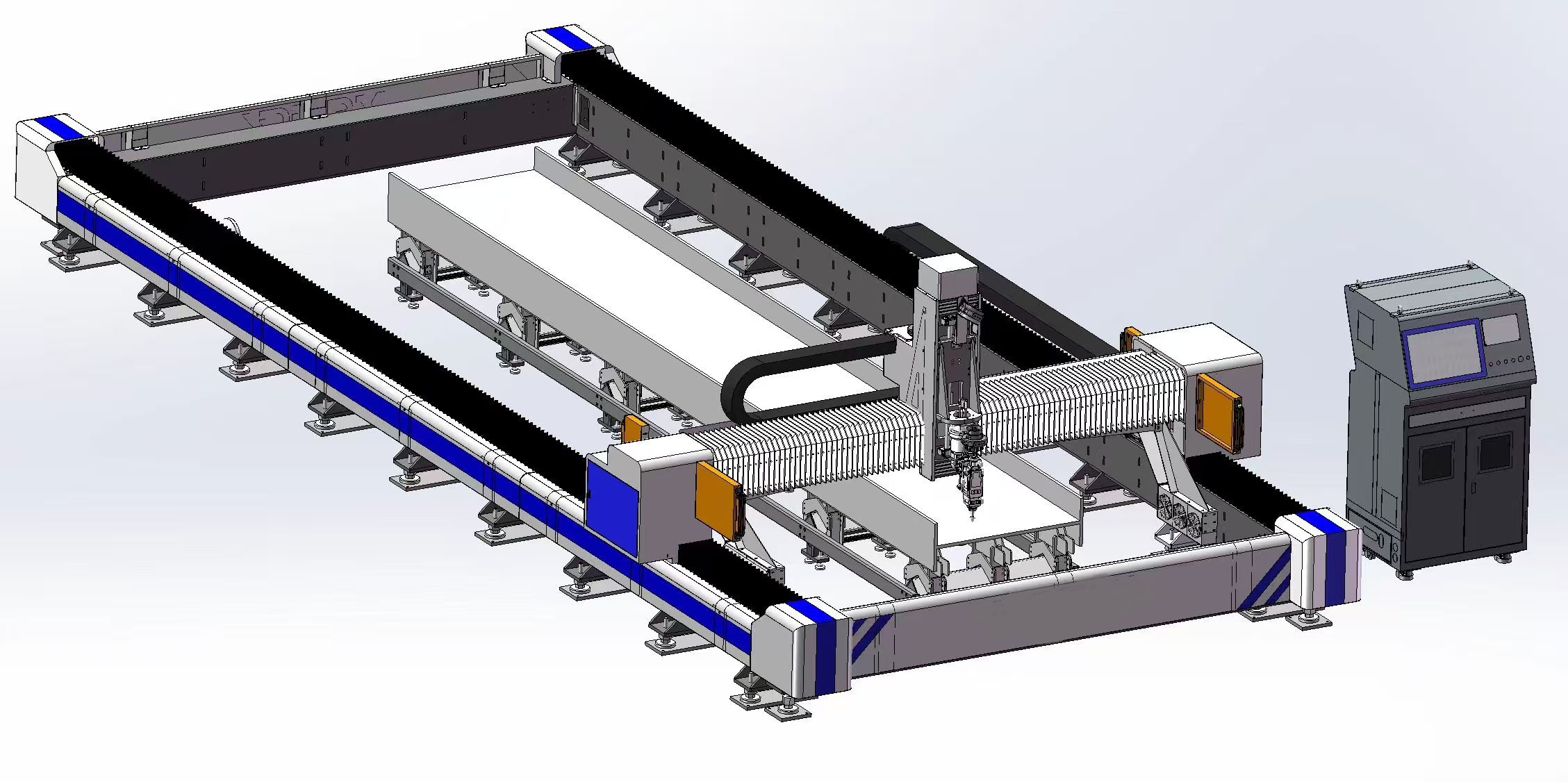
Industrial Application of H-Beam Plasma Cutter
Under NR-12, the H-Beam Plasma Cutter must feature redundant safety circuits. This means that a single component failure will not lead to the loss of the safety function. Control systems must be monitored by safety relays or safety PLCs (Programmable Logic Controllers). In the context of Valencia’s industrial safety audits, NR-12 compliance provides a robust framework for preventing workplace accidents, which is essential for maintaining operational continuity and reducing insurance liabilities.
Integration of Safety Control Systems
The convergence of CE and NR-12 standards in a single plasma cutting system results in a multi-layered safety architecture. Emergency stop buttons must be strategically located around the machine perimeter, and they must be of the “positive action” type. For the robotic arm handling the plasma torch, “dead-man” switches on the teach pendant are required to ensure that the operator has active control during manual positioning or programming.
Furthermore, fume extraction is a critical component of safety compliance. Plasma cutting of galvanized or primed steel beams releases hazardous particulates and gases. Compliant systems in Valencia must be integrated with high-efficiency particulate air (HEPA) filtration units that activate automatically with the plasma arc. This ensures that the air quality within the fabrication facility remains within permissible exposure limits (PEL), protecting the respiratory health of the technical staff.
Operational Efficiency and Precision in Valencia
Beyond safety, the technical advantage of deploying a compliant H-Beam Plasma Cutter in Valencia lies in its precision. Utilizing CAD/CAM software, engineers can import BIM (Building Information Modeling) files directly into the machine’s interface. This eliminates manual layout errors and ensures that every beam is cut to sub-millimeter accuracy. In large-scale projects such as bridge construction or industrial warehouse expansion, this precision translates to faster assembly times on-site, as the need for field corrections is virtually eliminated.
The use of automated plasma technology also optimizes material nesting. By calculating the most efficient way to cut multiple parts from a single length of raw material, the system minimizes scrap rates. In a market where raw steel prices are subject to global volatility, the ability to maximize material yield is a significant competitive advantage for Venezuelan fabricators.
Concluding Industry Insight
The industrial landscape in Valencia, Venezuela, is at a crossroads where legacy manual processes are no longer sufficient to meet the demands of globalized supply chains. The adoption of an H-Beam Plasma Cutter that adheres to both CE and NR-12 standards is not merely a capital investment in machinery; it is a strategic commitment to operational excellence and workforce protection.
As the global structural steel industry shifts toward “Industry 4.0” principles, the integration of safety-certified, software-driven fabrication tools becomes the baseline for participation in large-scale international contracts. Fabricators in Valencia who prioritize these high-compliance systems will find themselves better positioned to navigate the complexities of modern engineering requirements, ensuring that their output meets the rigorous mechanical and safety benchmarks demanded by the global market. The future of regional manufacturing lies in the synergy between high-energy precision and uncompromising safety protocols.
Industrial Expertise & Support
Are you looking for high-performance H-Beam Plasma Cutter tailored for the Global market? Our engineering team provides comprehensive solutions for modern manufacturing.





