Industrial Context: The Rise of Precision Fabrication in Santa Cruz, Bolivia
Santa Cruz de la Sierra has emerged as the primary industrial engine of Bolivia, driven by an expansion in the hydrocarbon, agricultural, and heavy infrastructure sectors. As the demand for complex structural steel increases, the regional manufacturing sector is transitioning from manual fabrication to automated systems. The deployment of the H-Beam Plasma Cutter in this region represents a significant shift toward high-throughput production. This transition is not merely about speed; it is about the ability to process diverse materials, including non-ferrous metals like copper and aluminum, which have historically presented challenges for thermal cutting processes due to their high thermal conductivity and reflective properties.
In the context of Santa Cruz’s industrial growth, the integration of advanced plasma technology allows for the localized production of structural components that were previously imported. This localized capability reduces lead times for major projects, such as natural gas processing plants and large-scale industrial warehouses. However, the technical barriers associated with cutting highly conductive and reflective materials require a sophisticated approach to power modulation and torch design.
Technical Challenges of Cutting Copper and Aluminum
Copper and aluminum are classified as non-ferrous metals with distinct physical properties that complicate standard plasma cutting. Copper, in particular, possesses a thermal conductivity significantly higher than carbon steel. During the cutting process, heat is rapidly dissipated away from the kerf, requiring a higher energy density to maintain a molten state. Aluminum, while having a lower melting point, forms a tenacious oxide layer that requires specific gas chemistries to penetrate effectively.
The primary concern in these applications is the feedback mechanism between the material and the plasma torch. In laser cutting, this is referred to as back-reflection, which can destroy optical components. In plasma cutting, the challenge is Reflective Metal Processing stability. Highly conductive materials can interfere with the arc’s pilot phase or cause “double-arcing,” where the current seeks an alternative path through the nozzle rather than the workpiece. This results in premature consumable failure and inconsistent edge quality. Advanced systems now utilize specific inverter-based power sources that can modulate the arc frequency to compensate for these material variables.
Anti-Reflection Technology and Arc Stability
To address the nuances of copper and aluminum, modern H-Beam Plasma Cutter units are equipped with specialized anti-reflection and arc-stabilization protocols. These systems utilize high-frequency (HF) shielding and digital signal processing (DSP) to monitor the voltage-current relationship in real-time. By maintaining a constant arc gap through sophisticated Arc Voltage Control (AVC), the system prevents the fluctuations that typically occur when the torch traverses the varying surface geometries of an H-beam.
The anti-reflection technology in this context refers to the suppression of electromagnetic interference (EMI) and the management of the reflected heat load. When cutting thick-walled copper or aluminum sections, the radiant heat can exceed the cooling capacity of standard air-cooled torches. Therefore, liquid-cooled torch leads and specialized nozzle geometries are employed. These nozzles are designed to constrict the plasma arc into a narrower, more coherent column, increasing the energy density and ensuring that the energy is absorbed by the material rather than reflected into the surrounding atmosphere or back toward the torch head.
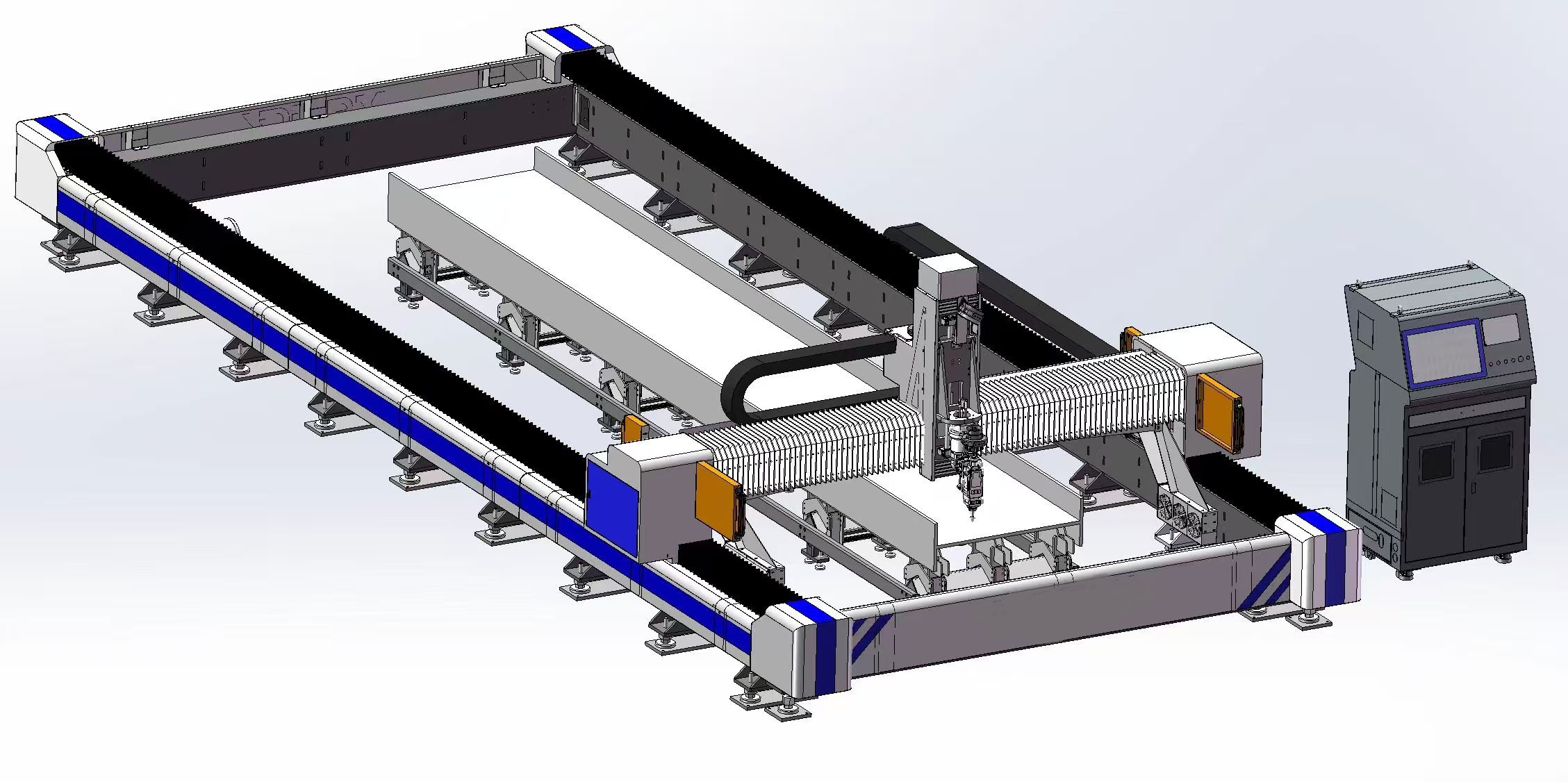
Industrial Application of H-Beam Plasma Cutter
Multi-Axis Kinematics for H-Beam Profiling
The structural integrity of an H-beam depends on the precision of its flanges and web. Standard 2D plasma tables are insufficient for the complex intersections required in modern structural engineering. The latest systems utilized in Santa Cruz feature Multi-Axis CNC Profiling capabilities, allowing the torch to rotate and tilt around the beam. This 3D movement is essential for creating weld-ready bevels, bolt holes, and cope cuts in a single pass.
The integration of the plasma power source with a robotic arm or a gantry-style multi-axis head allows for the processing of all four sides of the H-beam without manual repositioning. This is critical when dealing with aluminum or copper alloys used in specialized electrical busbar structures or heat exchange frames. The CNC software calculates the optimal path to minimize heat-affected zones (HAZ), which is vital for maintaining the mechanical properties of the alloy. For aluminum, minimizing the HAZ prevents the softening of heat-treated grades like 6061-T6, ensuring the structural component meets the required safety factors.
Gas Chemistry and Kerf Management
The selection of plasma and secondary gases is a critical variable in Thermal Conductivity Management. For carbon steel, oxygen is the standard plasma gas. However, for copper and aluminum, inert or reducing gases are required to prevent excessive oxidation. Nitrogen is often used for aluminum to achieve a clean, dross-free edge. For thicker copper sections, an Argon-Hydrogen mixture (H35) is frequently employed. The hydrogen component provides a high-energy, high-temperature arc that overcomes the thermal dissipation of the copper.
Kerf management is also more complex with non-ferrous metals. The high fluidity of molten aluminum can lead to “bottom dross” if the cutting speed and gas pressure are not perfectly synchronized. The CNC system must adjust the feed rate dynamically as the torch moves from the flange to the web of the H-beam, as the heat sink capacity changes with the material thickness and geometry. Modern cutters use look-ahead algorithms to decelerate into corners and accelerate on straightaways, maintaining a consistent kerf width across the entire profile.
Operational Efficiency and ROI in the Bolivian Market
Implementing a high-end plasma system in Santa Cruz offers a distinct competitive advantage. The reduction in secondary grinding and fit-up time directly translates to lower labor costs per ton of steel or alloy processed. Furthermore, the precision of CNC-driven plasma cutting reduces material waste, a significant factor when dealing with expensive raw materials like copper or high-grade aluminum. The ability to perform marking, hole-drilling, and beveling on a single machine eliminates the need for multiple workstations, optimizing the floor space of the fabrication facility.
From a maintenance perspective, the use of anti-reflection technology and advanced arc control extends the life of consumables (electrodes and nozzles). In remote industrial hubs, the cost of replacement parts and downtime is magnified. By utilizing systems that protect the torch from thermal feedback and electrical instability, operators can achieve higher duty cycles and more predictable production schedules.
Concluding Industry Insight
The shift toward automated structural fabrication in South America is indicative of a broader global trend where precision and versatility are becoming the primary drivers of industrial investment. As Santa Cruz, Bolivia, continues to modernize its infrastructure, the demand for specialized processing of reflective metals will only increase. The integration of Plasma Arc Stability technologies within H-beam profiling systems represents the pinnacle of current thermal cutting capabilities. The future of the industry lies in the fusion of robotics and real-time sensor feedback, allowing machines to adapt to the metallurgical properties of the workpiece on the fly. For global manufacturers, investing in equipment that can handle the thermal demands of copper and aluminum while maintaining the structural tolerances of H-beams is no longer a niche requirement but a fundamental necessity for staying competitive in a high-stakes engineering environment.
Industrial Expertise & Support
Are you looking for high-performance H-Beam Plasma Cutter tailored for the Global market? Our engineering team provides comprehensive solutions for modern manufacturing.





