Optimization of Structural Steel Fabrication: The Integration of Zero-Tailing H-Beam Plasma Cutting in Quito
The industrial landscape of Quito, Ecuador, particularly within the Pichincha province, is undergoing a significant transition toward automated structural steel processing. As infrastructure projects in the Andean region demand higher precision and lower overhead, the adoption of advanced CNC thermal cutting solutions has become a necessity. Central to this evolution is the H-Beam Plasma Cutter, a specialized multi-axis system designed to handle the complexities of structural profiles including H-beams, I-beams, and channels. The primary challenge historically faced by Ecuadorian fabricators has been material waste, often resulting in 10% to 15% scrap rates due to tailing requirements in traditional feeding systems. The introduction of Zero-tailing technology addresses this inefficiency directly, pushing material utilization rates to a documented 95%.
Technical Architecture of Zero-Tailing Systems
To understand the leap to 95% utilization, one must examine the mechanical kinematics of the zero-tailing feeder mechanism. Conventional plasma cutters require a specific length of material to remain clamped within the feeding rollers or chucks to ensure stability during the final cuts. This “tail” often becomes unusable scrap. In contrast, modern CNC structural steel processing units utilized in Quito’s high-altitude fabrication shops employ a dual-chuck or a synchronized pass-through gripper system.
This architecture allows the machine to maintain a rigid hold on the beam even as the cutting torch approaches the absolute end of the workpiece. By utilizing a secondary support carriage that takes over the positioning duties once the primary feeder reaches its limit, the system eliminates the dead zone. The software calculates the precise transition point, ensuring that the plasma arc remains stable and the dimensional accuracy of the final cut—often a bolt hole or a miter cut at the very edge—remains within a +/- 0.5mm tolerance range.
Material Utilization Dynamics and Economic Impact
In the context of global steel price volatility, a 5% to 10% increase in material yield represents a substantial impact on the bottom line for B2B enterprises. For a medium-scale fabrication facility in Quito processing 500 tons of structural steel monthly, moving from 85% to 95% utilization saves approximately 50 tons of raw material. At current market rates for ASTM A36 or high-strength low-alloy steels, the ROI on the H-Beam Plasma Cutter is accelerated by these material savings alone, independent of labor reductions.
The 95% utilization rate is achieved through sophisticated nesting algorithms. These algorithms do not merely arrange parts linearly; they analyze the 3D geometry of the H-beam to allow for interlocking cuts. For instance, the web and flange cope of one beam can be nested into the scrap profile of the preceding piece. When combined with zero-tailing hardware, the gap between consecutive workpieces is reduced to the width of the plasma kerf, typically between 2.0mm and 4.0mm depending on the amperage and gas mixture used.
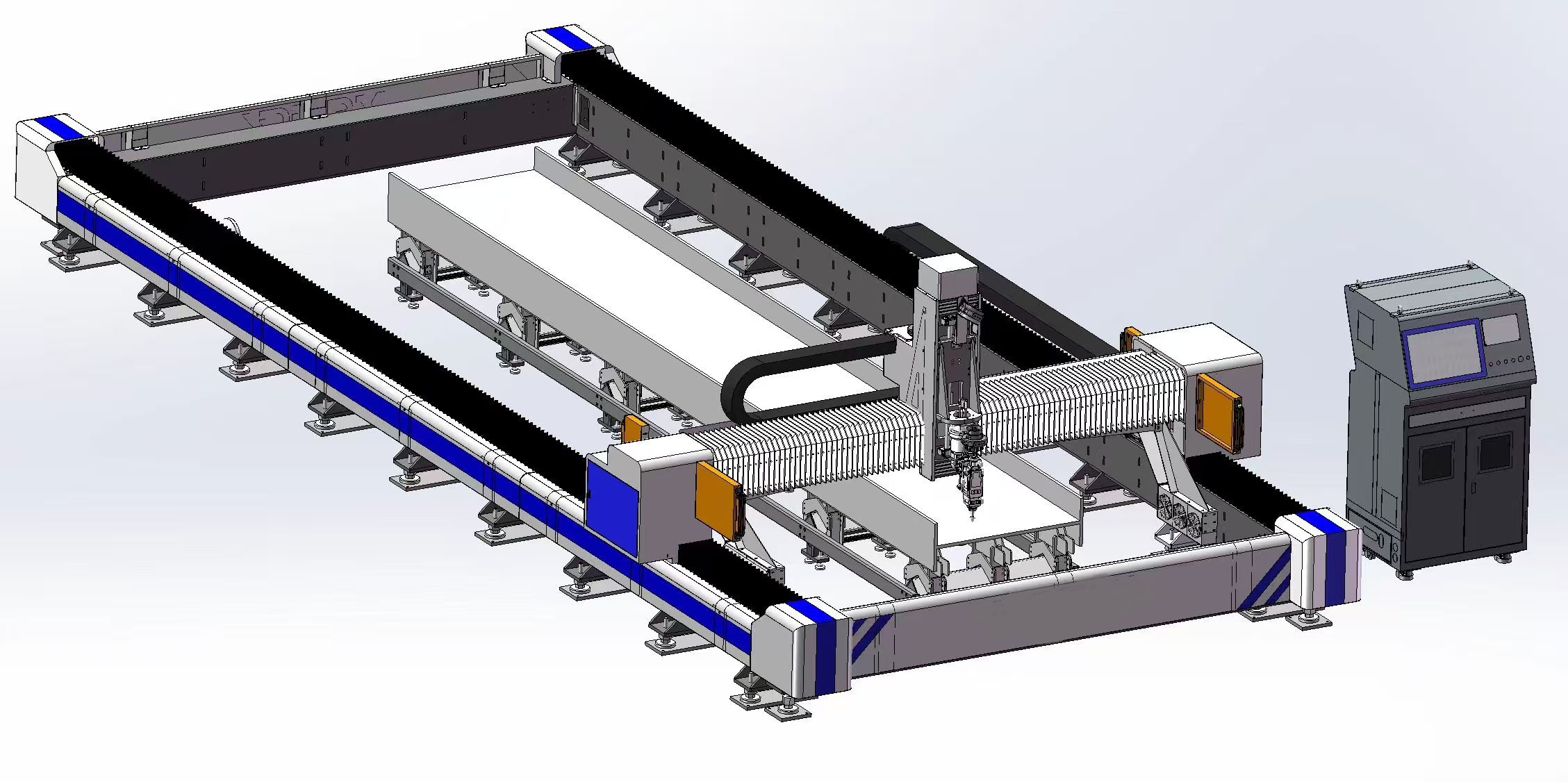
Industrial Application of H-Beam Plasma Cutter
Atmospheric Considerations for Plasma Cutting in Quito
Operating a plasma system at Quito’s elevation (approximately 2,850 meters above sea level) introduces specific variables into the plasma arc voltage control parameters. Lower atmospheric pressure affects the ionization of gases (Oxygen, Nitrogen, or H35) and the cooling rate of the plasma torch. High-end H-beam cutters integrated into the Ecuadorian market feature automated pressure compensation systems. These systems adjust the flow rate and arc voltage to maintain a constricted, high-energy plasma column, preventing the dross formation that typically occurs when cutting in thinner air.
Furthermore, the zero-tailing tech must account for the physical properties of the steel at these altitudes, where temperature fluctuations between day and night can influence thermal expansion. The CNC controllers utilize real-time laser profiling to scan the beam’s actual dimensions before the first piercing, compensating for any camber or twist in the raw material, ensuring that the 95% utilization target does not compromise the structural integrity of the components.
Multi-Axis Kinematics and Processing Versatility
The H-Beam Plasma Cutter is typically equipped with a 6-axis or 8-axis robotic arm or a specialized gantry with a rotating torch head. This allows for complex geometries including:
- Weld preparation (V, Y, and K-type bevels) on both flanges and the web.
- Precision bolt hole cutting that meets or exceeds AISC (American Institute of Steel Construction) standards.
- Complex notches and copes for interlocking structural joints.
- Marking and layout lines for secondary attachments, performed by the same plasma head at a lower amperage.
By integrating these processes into a single pass within a zero-tailing environment, the workpiece does not need to be removed, flipped, or repositioned manually. This single-setup execution is critical for maintaining the tight tolerances required in seismic-resistant steel frames, which are a standard requirement for construction in the Quito region due to local geological conditions.
Software Integration: From BIM to Finished Beam
The efficiency of the zero-tailing hardware is dependent on the data input. Most units in operation interface directly with Building Information Modeling (BIM) software via DSTV or STEP file formats. This digital workflow eliminates manual data entry errors. The software calculates the optimal cutting sequence to minimize heat-affected zones (HAZ) and ensures that the zero-tailing sequence is prioritized. This ensures that the most complex cuts are performed while the beam has maximum structural rigidity within the machine’s clamping system.
Industry Insight: The Future of Automated Fabrication
The transition toward 95% material utilization via zero-tailing technology marks a shift from “volume-based” fabrication to “precision-based” manufacturing in the structural steel sector. As global markets move toward more sustainable building practices, the reduction of industrial waste is no longer just an economic incentive but a regulatory requirement. In high-altitude industrial hubs like Quito, the ability to overcome atmospheric challenges through advanced plasma arc voltage control while simultaneously eliminating material tailing provides a significant competitive advantage.
The next phase of this evolution will likely involve the integration of AI-driven predictive maintenance, where the H-Beam Plasma Cutter monitors its own consumable wear and gas consumption in relation to the specific altitudes and material grades. For B2B stakeholders, investing in zero-tailing capability is a strategic move toward “Lean Manufacturing” in structural steel, ensuring that the highest possible percentage of purchased raw material is converted into a billable, finished product. The elimination of the “tail” is not merely a technical fix; it is a fundamental optimization of the steel fabrication value chain.
Industrial Expertise & Support
Are you looking for high-performance H-Beam Plasma Cutter tailored for the Global market? Our engineering team provides comprehensive solutions for modern manufacturing.





