Technical Integration of Automated Structural Steel Fabrication in Montevideo
The industrial landscape of Montevideo, Uruguay, has undergone a significant transition toward high-precision automated manufacturing. As a primary logistics hub for the Southern Cone, the region’s demand for structural steel components—specifically H-beams, I-beams, and channels—has necessitated the adoption of advanced thermal cutting solutions. The implementation of the H-Beam Plasma Cutter within this market represents a shift from manual mechanical processing to high-velocity, automated CNC profiling. This transition is not merely a matter of throughput; it is a response to rigorous international Environment, Health, and Safety (EHS) standards that prioritize air quality and operator protection in heavy industrial environments.
In Montevideo’s expanding industrial parks and free trade zones, the focus has shifted toward “clean” fabrication. Traditional plasma cutting processes are notorious for generating high concentrations of metallic dust, ozone, and nitrogen oxides. For modern facilities, the integration of a H-Beam Plasma Cutter must be accompanied by sophisticated filtration and extraction technology to ensure that the operational environment remains within the permissible exposure limits (PEL) defined by global occupational health frameworks.
Robotic Kinematics and Precision Profiling
The core of the modern H-beam processing unit lies in its Multi-Axis Robotic Kinematics. Unlike traditional 2D plasma tables, H-beam systems utilize a 6-axis or 8-axis robotic arm capable of traversing the complex geometry of structural sections. This allows for the execution of weld preparations, bolt holes, coping, and miter cuts in a single pass. The technical advantage of this system is the elimination of secondary handling. In a standard workflow, a beam would move from a drill line to a band saw and then to a manual grinding station. The automated plasma cutter consolidates these operations into a single CNC-controlled cell.
The plasma power source, typically ranging from 130A to 400A, utilizes high-definition oxygen or nitrogen-shielded arcs to achieve a narrow kerf width and minimal heat-affected zones (HAZ). In the specific context of Montevideo’s construction sector—which often supports port infrastructure and large-scale warehouse framing—the accuracy of these cuts is critical for structural integrity and ease of assembly at the job site. High-definition plasma technology ensures that the metallurgical properties of the steel remain stable, preventing micro-cracking during the cooling phase.
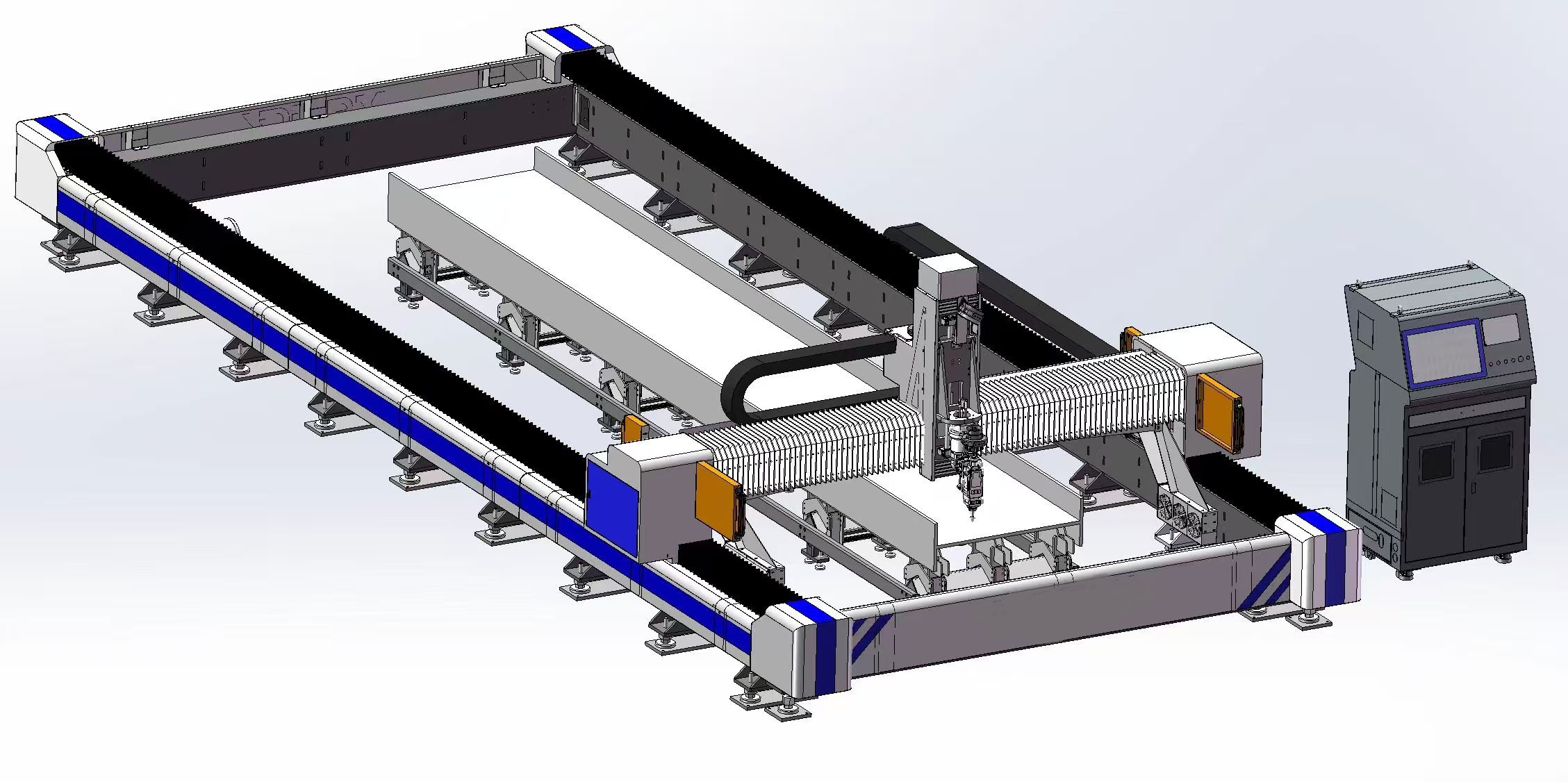
Industrial Application of H-Beam Plasma Cutter
Dust-Free Operation: The Engineering Behind Extraction
To achieve dust-free operation, the H-beam plasma system utilizes an integrated source-capture extraction mechanism. Thermal cutting of carbon steel produces particulate matter (PM2.5 and PM10) that poses severe respiratory risks. Modern systems in Uruguay are now being equipped with Pulse-Jet Dust Collection units. These units operate on the principle of high-volume airflow directed through a specialized extraction hood that follows the robotic torch head.
The extraction process involves several stages of filtration. First, a spark trap or cyclonic separator removes larger, glowing embers to prevent fire hazards within the filter media. The remaining fine dust is then drawn into a cartridge filter chamber. The pulse-jet mechanism uses compressed air to periodically “shock” the filter cartridges, dislodging the accumulated dust cake into a collection hopper. This ensures constant static pressure and prevents the degradation of suction performance during long production shifts. For facilities operating under the highest EHS standards, these systems often incorporate High-Efficiency Particulate Air (HEPA) Filtration as a final stage, allowing the cleaned air to be recirculated into the factory floor, thereby reducing HVAC energy costs.
Compliance with Modern EHS Standards in Uruguay
Uruguayan industrial regulations are increasingly aligning with ISO 14001 (Environmental Management) and ISO 45001 (Occupational Health and Safety). For a fabrication shop in Montevideo, the installation of a plasma cutter without adequate dust control is no longer a viable operational strategy. The metallic dust generated during H-beam processing contains iron oxide, manganese, and, in the case of stainless steel, hexavalent chromium. These substances are strictly regulated due to their carcinogenic and neurotoxic potential.
The technical implementation of dust-free operation serves three primary EHS objectives:
1. Reduction of Ambient Particulates: Maintaining air quality below the threshold of 5 mg/m³ for total dust.
2. Noise Attenuation: Modern extraction enclosures serve a dual purpose by acting as acoustic barriers, dampening the high-frequency noise generated by the plasma arc.
3. Waste Management: The automated collection of dry dust allows for easier disposal or recycling of metallic waste compared to the “wet” sludge produced by older water-table systems.
Operational Efficiency and Maintenance of Clean Systems
Beyond health and safety, dust-free operation is a prerequisite for the longevity of the machinery itself. Metallic dust is conductive and abrasive. If left unmanaged, it infiltrates the CNC controller cabinets, optical sensors, and precision gear racks of the H-Beam Plasma Cutter. This leads to premature component failure and costly downtime. In the competitive industrial sector of Montevideo, where uptime is a critical KPI, the investment in a high-quality filtration system is justified by the reduction in maintenance overhead.
Furthermore, the automation of the cutting process reduces the human error associated with manual layout and cutting. By utilizing BIM (Building Information Modeling) data directly exported to the machine’s software, fabricators can ensure that every beam is cut to exact specifications. This digital workflow, combined with a clean working environment, attracts a higher caliber of technical operators who are increasingly hesitant to work in traditional “dirty” fabrication shops.
Concluding Industry Insight: The Future of Structural Fabrication
The adoption of dust-free H-beam plasma cutting technology in Montevideo is a microcosm of a larger global trend: the professionalization of the steel service center. As infrastructure projects become more complex and delivery timelines tighten, the industry is moving away from fragmented processing toward integrated, automated cells. The future of this sector lies in the convergence of “Green Manufacturing” and “Industry 4.0.”
We anticipate that the next generation of plasma systems will feature real-time air quality monitoring sensors that communicate directly with the CNC unit, automatically adjusting extraction flow rates based on the thickness of the material being cut and the volume of fumes generated. For stakeholders in Uruguay and the wider global market, the focus will remain on balancing high-output productivity with an uncompromising commitment to environmental and occupational standards. The H-Beam Plasma Cutter is no longer just a tool for shaping steel; it is a critical component of a sustainable industrial ecosystem that values both the precision of the product and the health of the producer.
Industrial Expertise & Support
Are you looking for high-performance H-Beam Plasma Cutter tailored for the Global market? Our engineering team provides comprehensive solutions for modern manufacturing.





