The Strategic Integration of Precision Steel Fabrication in Montevideo
The industrial landscape of Montevideo, Uruguay, has undergone a significant transformation, positioning itself as a pivotal hub for high-end furniture exports. Central to this evolution is the adoption of advanced thermal cutting technologies. As global demand for industrial-aesthetic furniture and large-scale structural displays increases, the requirement for precision-engineered components has become a non-negotiable standard. The implementation of the H-Beam Plasma Cutter within local fabrication facilities has addressed the critical need for dimensional accuracy and aesthetic finish, particularly for products destined for rigorous international markets.
Montevideo’s proximity to major shipping lanes via its deep-water port necessitates a manufacturing output that meets global ISO standards. Furniture exporters in the region are no longer competing solely on labor costs; they are competing on technical superiority. By utilizing high-definition plasma systems, these manufacturers can process heavy structural steel profiles with a level of repeatability that was previously unattainable with manual or mechanical sawing methods. This shift is not merely about speed but about the fundamental metallurgical quality of the finished cut.
Technical Architecture of the H-Beam Plasma Cutter
The H-Beam Plasma Cutter operates through a sophisticated interplay of high-velocity ionized gas and localized electrical arcs. Unlike traditional flat-bed plasma tables, the H-beam variant utilizes a CNC multi-axis synchronization system. This allows the cutting torch to rotate and tilt around the stationary or indexed beam, facilitating complex geometries such as cope cuts, miter joints, and bolt holes across the flanges and the web of the beam in a single pass.
For furniture exporters, this multi-axis capability is essential. Modern structural furniture often requires interlocking steel frames where tolerances are measured in fractions of a millimeter. The integration of Kerf compensation software ensures that the plasma arc’s width is accounted for during the toolpath generation, resulting in parts that require zero manual adjustment during assembly. This level of automation reduces the margin of error inherent in multi-stage processing, ensuring that every beam processed in a Montevideo facility adheres to the exact specifications of the architectural design.
Achieving Burr-Free Quality for Export Standards
A primary challenge in thermal cutting is the formation of dross or burrs—re-solidified oxidized metal that adheres to the bottom edge of the cut. For furniture exporters, burrs represent a significant bottleneck, requiring intensive secondary grinding and polishing. The high-definition plasma systems currently deployed in Montevideo utilize optimized gas flow dynamics to achieve Dross-free cutting. By balancing the amperage, voltage, and gas pressure (typically oxygen or nitrogen), the system ensures that the molten metal is completely ejected from the kerf before it can solidify.
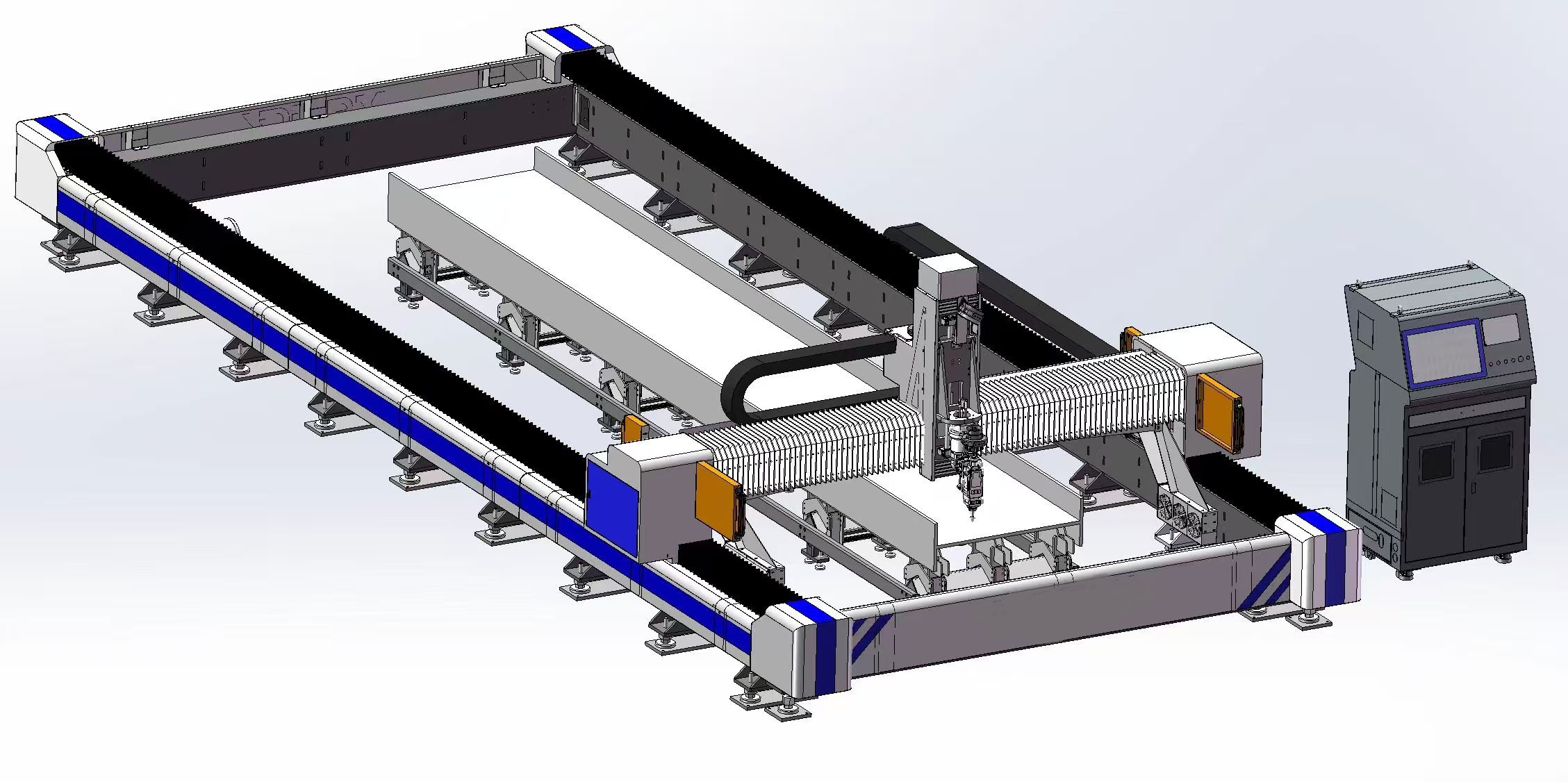
Industrial Application of H-Beam Plasma Cutter
Eliminating the need for secondary finishing is a critical economic driver. In a B2B export context, the “burr-free” designation translates directly to reduced lead times and lower overhead costs. When the steel leaves the H-Beam Plasma Cutter, the edges are smooth enough for immediate powder coating or painting. This is particularly vital for the “industrial chic” furniture segment, where the raw edges of the steel are often left visible as a design element. Any irregularity in the cut would compromise the visual integrity of the final product and potentially lead to rejection by international quality controllers.
Material Integrity and Heat-Affected Zone Management
Structural furniture must maintain its load-bearing capacity, which can be compromised by excessive heat during the cutting process. The Heat-Affected Zone (HAZ) is the area of the base metal that has not been melted but has had its microstructure and properties altered by the heat of the cutting arc. High-definition plasma technology minimizes the HAZ by concentrating the energy density of the arc and increasing the cutting speed. This rapid transit of the heat source prevents the deep penetration of thermal energy into the surrounding steel.
In Montevideo’s fabrication centers, the management of the HAZ is monitored through precise control of the plasma chemistry. By narrowing the HAZ, the structural integrity of the H-beam is preserved, ensuring that the welded joints remain strong and the metal does not become brittle. This is a technical requirement often mandated by commercial furniture contracts in the European and North American markets, where safety certifications depend on the metallurgical consistency of the steel frames.
Economic Impact on the Montevideo Furniture Supply Chain
The transition to automated H-beam processing has streamlined the supply chain for Uruguayan exporters. Traditionally, structural steel components were imported as semi-finished goods or processed using outdated mechanical methods that resulted in high waste margins. The precision of modern plasma cutting allows for optimal nesting of parts, significantly reducing scrap rates. For a furniture exporter, the ability to maximize material yield from a single H-beam directly impacts the competitive pricing of the final unit.
Furthermore, the digital nature of CNC plasma cutting allows for seamless integration with CAD/CAM software used by international designers. A furniture designer in London or New York can send a digital file to a manufacturer in Montevideo, and the H-Beam Plasma Cutter can execute the design with absolute fidelity. This digital bridge eliminates the geographical barriers typically associated with heavy manufacturing, allowing Montevideo to function as a high-tech satellite workshop for global brands.
Concluding Industry Insight: The Future of Automated Fabrication
The adoption of H-beam plasma technology in Montevideo is indicative of a broader trend in global manufacturing: the move toward localized, high-precision centers of excellence. As shipping costs and environmental regulations make the transport of bulky, low-value goods less viable, the value proposition shifts toward high-quality, pre-finished structural components. The “burr-free” standard is no longer a luxury but a baseline requirement for entering the global B2B furniture market.
Looking forward, the integration of artificial intelligence in plasma power supplies will likely further refine the cutting process, allowing for real-time adjustments to gas pressure and torch height based on material density variations. For Montevideo, staying at the forefront of this technical curve is essential. By maintaining a focus on technical data-driven production and minimizing secondary labor through superior initial cuts, Uruguayan exporters are well-positioned to dominate the niche market of high-end structural furniture. The synergy between advanced machinery and strategic geographic positioning ensures that the steel processed in Uruguay meets the most stringent demands of the global industrial landscape.
Industrial Expertise & Support
Are you looking for high-performance H-Beam Plasma Cutter tailored for the Global market? Our engineering team provides comprehensive solutions for modern manufacturing.





