Introduction: The Industrial Transformation of Medellín
The industrial landscape of Medellín, Colombia, specifically within the Antioquia department, has undergone a significant transition from traditional manufacturing to high-precision structural steel fabrication. As the region solidifies its position as a logistical hub for South American infrastructure, the demand for structural steel components—specifically H-beams, I-beams, and channels—has surged. To meet international quality standards and maintain competitive pricing, local industrial parks in areas such as Girardota, Itagüí, and Rionegro are increasingly adopting automated 3D profiling technologies. At the center of this technological shift is the H-Beam Plasma Cutter, a system designed to replace multiple manual processes with a single, high-efficiency automated workflow. This article examines the technical specifications and the proven return on investment (ROI) associated with implementing these systems within the Colombian industrial sector.
Technical Specifications and Operational Efficiency
Traditional H-beam processing involves a fragmented workflow: manual layout, mechanical sawing, and magnetic base drilling. Each stage introduces cumulative dimensional errors and increases the total man-hours per ton of steel. An automated H-Beam Plasma Cutter integrates these processes into a continuous operation. Utilizing multi-axis robotic arms—often 6 to 8 axes of movement—the system can execute complex cuts, including bolt holes, copes, slots, and weld preparations, on all four sides of a beam without requiring the workpiece to be flipped or repositioned.
The core of this efficiency lies in the CAD/CAM Integration. Modern plasma systems interface directly with Tekla, Revit, or AutoCAD files. This digital continuity eliminates manual data entry errors and allows for the application of advanced Nesting Algorithms. By optimizing the arrangement of parts on a single length of raw material, fabricators in Medellín’s industrial parks have reported a reduction in scrap rates from 12% down to less than 4%. In a market where raw steel prices are subject to global volatility, a 8% increase in material utilization significantly impacts the bottom line.
Thermal Management and Dimensional Accuracy
A critical technical challenge in structural steel fabrication is Thermal Distortion. When applying high-temperature plasma arcs to heavy-gauge steel, the localized heat can cause the beam to warp or deviate from its longitudinal axis. High-end plasma cutters utilized in Medellín solve this through sophisticated sensing systems. Laser profilers and mechanical probes measure the actual dimensions of the beam in real-time, adjusting the cutting path to account for mill tolerances and camber.
This level of precision ensures that the Kerf Compensation is handled automatically by the CNC controller. For industrial parks serving the oil and gas or high-rise construction sectors, this accuracy is non-negotiable. Bolt holes must align perfectly across multi-ton assemblies to avoid costly field corrections. The transition from manual drilling to plasma-cut holes, when executed by a high-definition plasma power source, meets the stringent requirements of AISC (American Institute of Steel Construction) and equivalent Colombian NSR-10 standards.
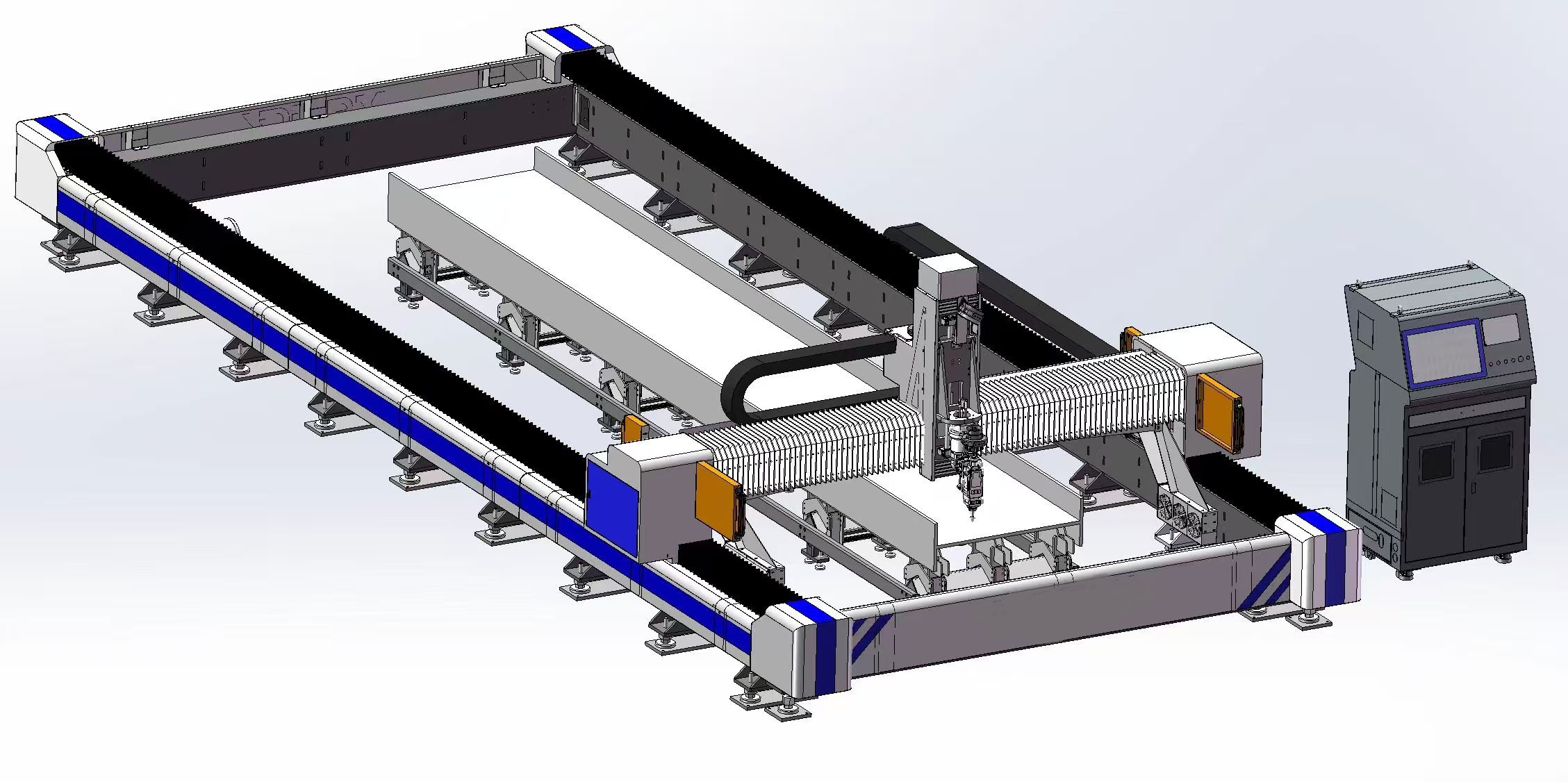
Industrial Application of H-Beam Plasma Cutter
Quantifying ROI in the Medellín Industrial Context
The return on investment for an H-Beam Plasma Cutter in Medellín is calculated through three primary vectors: labor reduction, throughput increase, and secondary process elimination. In a typical fabrication shop in Antioquia, processing 500 tons of structural steel per month manually requires a significant workforce and multiple workstations.
Labor and Throughput Metrics
Data from local implementations indicate that a robotic plasma system can perform the work of approximately five to seven manual operators. This does not necessarily lead to workforce reduction but allows for the reallocation of skilled labor to high-value assembly and welding tasks. Furthermore, the “arc-on” time is significantly higher compared to manual methods. A robotic system can maintain a consistent cutting speed of 60 to 120 inches per minute depending on material thickness, operating with a duty cycle that manual labor cannot sustain.
Reduction in Lead Times
For industrial parks in Rionegro, proximity to the Jose Maria Cordova International Airport and major highway arteries makes lead time a competitive advantage. An automated cutter reduces the fabrication cycle for a standard H-beam assembly from hours to minutes. This rapid turnaround allows local firms to bid on larger international contracts, knowing they can meet tight delivery schedules without incurring overtime costs.
Integration with Local Infrastructure and Power Grids
Medellín’s industrial parks are well-equipped with the electrical infrastructure required for high-capacity plasma power units (often ranging from 130A to 400A). Modern systems are designed with high-efficiency inverters that reduce kVA requirements compared to older transformer-based models. Additionally, the integration of dust collection and fume extraction systems ensures compliance with local environmental regulations (Area Metropolitana del Valle de Aburrá), protecting worker health and reducing the facility’s environmental footprint.
Maintenance and Technical Support in the Region
A common concern for B2B stakeholders in Colombia is the availability of technical support for specialized machinery. The growth of the Medellín industrial sector has led to an influx of authorized service providers and local spare parts inventory. ROI is preserved by minimizing downtime through preventative maintenance schedules facilitated by the software’s onboard diagnostics, which alert operators to consumable wear (nozzles, electrodes) before cut quality degrades.
Concluding Industry Insight: The Future of Andean Steel
The adoption of the H-Beam Plasma Cutter in Medellín is not merely a localized trend but a response to the global commoditization of structural steel fabrication. As regional free trade agreements and infrastructure projects like the “Vias del Nus” and various “4G/5G” highway initiatives continue to expand, the demand for precision-engineered steel will grow.
The strategic insight for industrial park developers and fabrication firm owners is clear: the competitive delta between manual and automated fabrication is widening. Firms that continue to rely on mechanical sawing and manual layout will find their margins eroded by rising labor costs and material waste. Conversely, those integrating robotic plasma technology are positioning themselves as Tier-1 suppliers capable of serving not just the Colombian market, but the broader Pan-American corridor. The proven ROI in Medellín serves as a blueprint for industrial modernization across the Andean region, where technical precision and operational efficiency are the primary drivers of long-term solvency.
Industrial Expertise & Support
Are you looking for high-performance H-Beam Plasma Cutter tailored for the Global market? Our engineering team provides comprehensive solutions for modern manufacturing.





