Precision Structural Fabrication: The Role of H-Beam Plasma Technology in Manaus
The global demand for high-durability agricultural machinery has necessitated a shift in structural steel processing. In the industrial hub of Manaus, Brazil, the integration of advanced H-Beam Plasma Cutter systems is redefining the standards for heavy-equipment longevity. Manaus, strategically positioned within the Free Trade Zone (ZFM), has evolved into a critical center for metallurgical innovation, serving the massive agribusiness corridors of South America and beyond. The technical focus in this region has shifted toward minimizing thermal damage during the fabrication of structural components, directly impacting the lifecycle of machinery subjected to extreme mechanical stress.
Agricultural equipment, such as harvesters, large-scale irrigation systems, and heavy-duty seeders, relies on the structural integrity of H-beams and I-beams. Traditional mechanical sawing or oxy-fuel cutting methods often fall short in terms of speed and precision. However, the primary challenge in thermal cutting is the Heat Affected Zone (HAZ). By utilizing high-definition plasma systems in the Manaus manufacturing clusters, engineers are achieving a Small Heat Affected Zone (HAZ), which is essential for maintaining the grain structure of the base metal. This article examines the technical parameters of these systems and their implications for global agri-machinery manufacturing.
Technical Specifications of the H-Beam Plasma Cutter
An H-Beam Plasma Cutter utilized in heavy industrial applications typically employs a multi-axis robotic arm, often featuring 6 to 8 axes of motion. This allows for complex profiling, including bolt holes, notches, and weld preparations (bevels) on all four sides of the beam in a single pass. The technical superiority of these machines lies in their ability to maintain a constant torch-to-workpiece distance, even when dealing with structural steel that may have slight dimensional variances or surface irregularities.
The power supplies used in these systems are generally High-Definition Plasma Power Supply units ranging from 130 to 400 amps. These units utilize secondary gases, such as oxygen or nitrogen, to constrict the plasma arc. This constriction results in a higher energy density, which allows for faster cutting speeds and a significantly narrower kerf width. In the context of Manaus-based production, the use of high-definition plasma ensures that the edges are perpendicular and free of dross, reducing the need for secondary grinding operations, which can introduce further mechanical stresses into the material.
The Physics of Small HAZ and Material Integrity
The Heat Affected Zone (HAZ) is the area of the base metal that has not been melted but has had its microstructure and mechanical properties altered by the intense heat of the cutting process. In structural H-beams used for agricultural machinery, a large HAZ is a precursor to fatigue failure. When steel is heated above its critical temperature and then cooled, it undergoes phase transformations. If the cooling rate is not controlled or if the heat input is too high, the material can become brittle, leading to crack initiation under the cyclic loading conditions typical of field operations.
By optimizing the cutting speed and gas flow, the H-Beam Plasma Cutter minimizes the time the base metal is exposed to elevated temperatures. Technical data suggests that high-definition plasma systems can reduce the HAZ width by up to 50 percent compared to conventional plasma or oxy-fuel cutting. This reduction preserves the yield strength and toughness of the steel. In the Manaus industrial sector, where humidity and ambient temperatures are high, controlling the thermal gradient during the cutting process is vital to prevent hydrogen-induced cracking and other metallurgical defects.
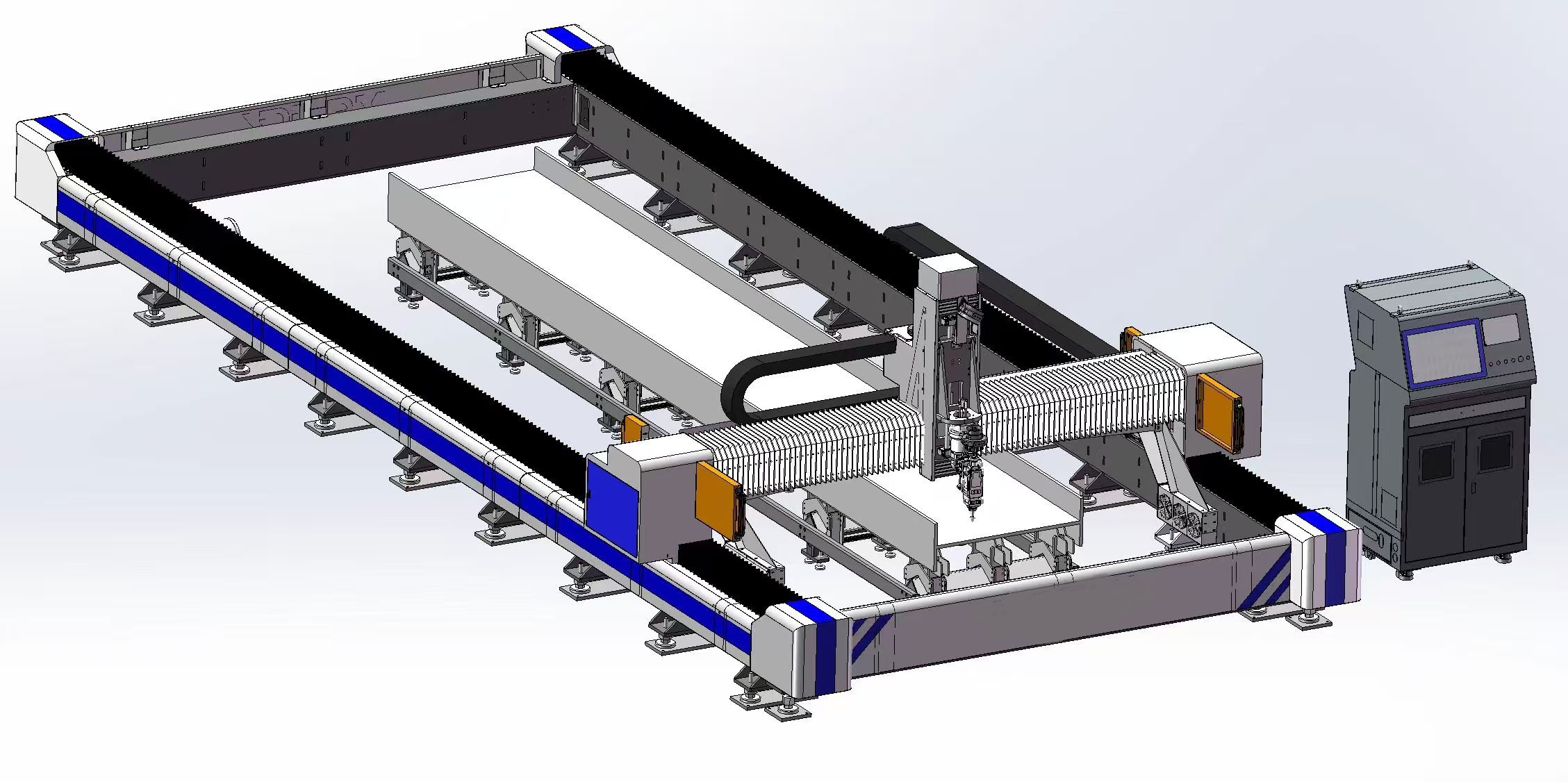
Industrial Application of H-Beam Plasma Cutter
Application in Agricultural Machinery Longevity
Agri-machinery operates in environments characterized by high vibration, corrosive soil contact, and massive torque requirements. The chassis of a harvester, for instance, must withstand multi-axial loads. If the H-beams used in the chassis have been compromised by excessive thermal input during fabrication, the risk of structural deformation increases. The implementation of CNC Robotic Profiling ensures that every cut is executed with a tolerance of +/- 0.5mm, which is critical for the alignment of the entire assembly.
Furthermore, the ability to cut precise weld preparations (A, V, K, and Y-bevels) directly on the plasma table ensures superior weld penetration. A smaller HAZ means that the weld pool interacts with a more stable base metal, resulting in a joint that is less prone to fatigue. For global distributors sourcing machinery components from Brazil, this translates to lower warranty claims and a higher resale value for the equipment. The longevity of the machinery is directly proportional to the precision of its primary structural members.
Strategic Advantages of the Manaus Industrial Hub
Manaus offers a unique intersection of logistics and technology. As a Free Trade Zone, it allows for the duty-free import of high-end components, such as German-engineered plasma torches and Japanese robotic arms, which are then integrated into locally manufactured specialized machinery. This allows for a competitive price point on the global market without sacrificing the technical standards required by international agricultural OEMs (Original Equipment Manufacturers).
The concentration of technical expertise in Manaus has led to the development of localized software configurations for H-Beam Plasma Cutter systems. These configurations are optimized for the specific grades of structural steel commonly used in South American agriculture, such as ASTM A36 or high-strength low-alloy (HSLA) steels. By calibrating the plasma arc parameters to these specific alloys, manufacturers achieve a level of consistency that is difficult to replicate in less specialized industrial zones.
Concluding Industry Insight: The Shift Toward Automated Precision
The evolution of structural steel fabrication in Manaus signals a broader trend in the B2B industrial sector: the transition from “bulk manufacturing” to “precision engineering at scale.” The reliance on small HAZ technology is no longer an optional upgrade but a fundamental requirement for any manufacturer targeting the high-end agricultural market. As global food demand increases, the pressure on machinery to perform longer hours with zero downtime will intensify.
The integration of the H-Beam Plasma Cutter into the production workflow represents a critical investment in metallurgical stability. The industry is moving toward a future where “smart” fabrication centers, like those in Manaus, will utilize real-time sensor feedback to adjust plasma intensity based on material thickness and thermal conductivity variations. For stakeholders in the global agri-machinery supply chain, the focus must remain on the microscopic integrity of the steel. A machine is only as durable as its most vulnerable heat-affected zone; therefore, the adoption of high-precision thermal cutting is the most effective safeguard against structural obsolescence in the field.
Industrial Expertise & Support
Are you looking for high-performance H-Beam Plasma Cutter tailored for the Global market? Our engineering team provides comprehensive solutions for modern manufacturing.





