Strategic Integration of Automated Structural Fabrication in the Amazon Basin
The Polo Industrial de Manaus (PIM) represents one of the most significant industrial concentrations in South America, housing over 600 companies across the electronics, chemical, and heavy manufacturing sectors. Operating within the Free Trade Zone of Manaus (ZFM) presents unique logistical challenges, primarily due to the region’s geographic isolation and reliance on fluvial and aerial transport. For industrial parks in this region, the cost of raw material transit and the scarcity of specialized technical labor necessitate high-efficiency manufacturing solutions. The adoption of the H-Beam Plasma Cutter has emerged as a critical catalyst for optimizing structural steel fabrication, providing a quantifiable Return on Investment (ROI) through the reduction of lead times and material waste.
In the context of Manaus, where the “Amazon Cost” (Custo Amazônia) impacts operational overhead, structural steel processors must transition from traditional manual layout and mechanical drilling to automated thermal cutting. This transition is not merely a technological upgrade but a strategic imperative to maintain competitiveness in global supply chains. By integrating automated plasma technology, local fabricators can achieve tolerances and throughput rates that were previously unattainable with conventional methods.
Technical Architecture of the H-Beam Plasma Cutter
The modern H-Beam Plasma Cutter utilizes 6-axis robotic kinematics to perform complex cuts on structural profiles, including I-beams, H-beams, channels, and angles. Unlike traditional three-axis machines, a six-axis system allows the plasma torch to rotate and tilt, facilitating precise cope cuts, miter cuts, and bolt hole perforations in a single pass. This eliminates the need for secondary processing stations, which is essential for maximizing the limited floor space within the Manaus industrial district.
The core of this technology lies in the integration of a high-definition plasma power supply. This component ensures that the arc density is sufficient to maintain a narrow kerf width and a minimal heat-affected zone (HAZ). For structural steel applications in Manaus, where humidity and ambient temperature can influence metal oxidation rates, the precision of a high-definition arc ensures that the metallurgical integrity of the beam is preserved. Furthermore, the use of plasma arc voltage control allows the system to automatically adjust the torch height in real-time, compensating for any material deviations or warping inherent in large structural members.
Quantifying ROI: Labor and Throughput Analysis
The primary driver of ROI for industrial parks in Brazil is the drastic reduction in man-hours required per ton of steel. Manual fabrication of an H-beam involves multiple stages: measuring, marking, center-punching, drilling, and oxy-fuel cutting. This process is prone to human error, which in the Manaus market, results in expensive rework due to the high cost of importing replacement steel from southern Brazilian ports like Santos or Paranaguá.
Data from local implementations indicate that an automated plasma system can process a standard 12-meter H-beam with complex bolt patterns and copes in approximately 15 to 20 minutes. In contrast, manual methods typically require 3 to 4 hours for the same output. This represents a throughput increase of over 800 percent. When factoring in the reduction of layout errors—which the CNC software virtually eliminates—the savings on material scrap alone can contribute 5 to 8 percent to the annual bottom line. For high-volume industrial park operators, the capital expenditure (CAPEX) of the machinery is often recouped within 18 to 24 months based on labor savings and increased capacity.
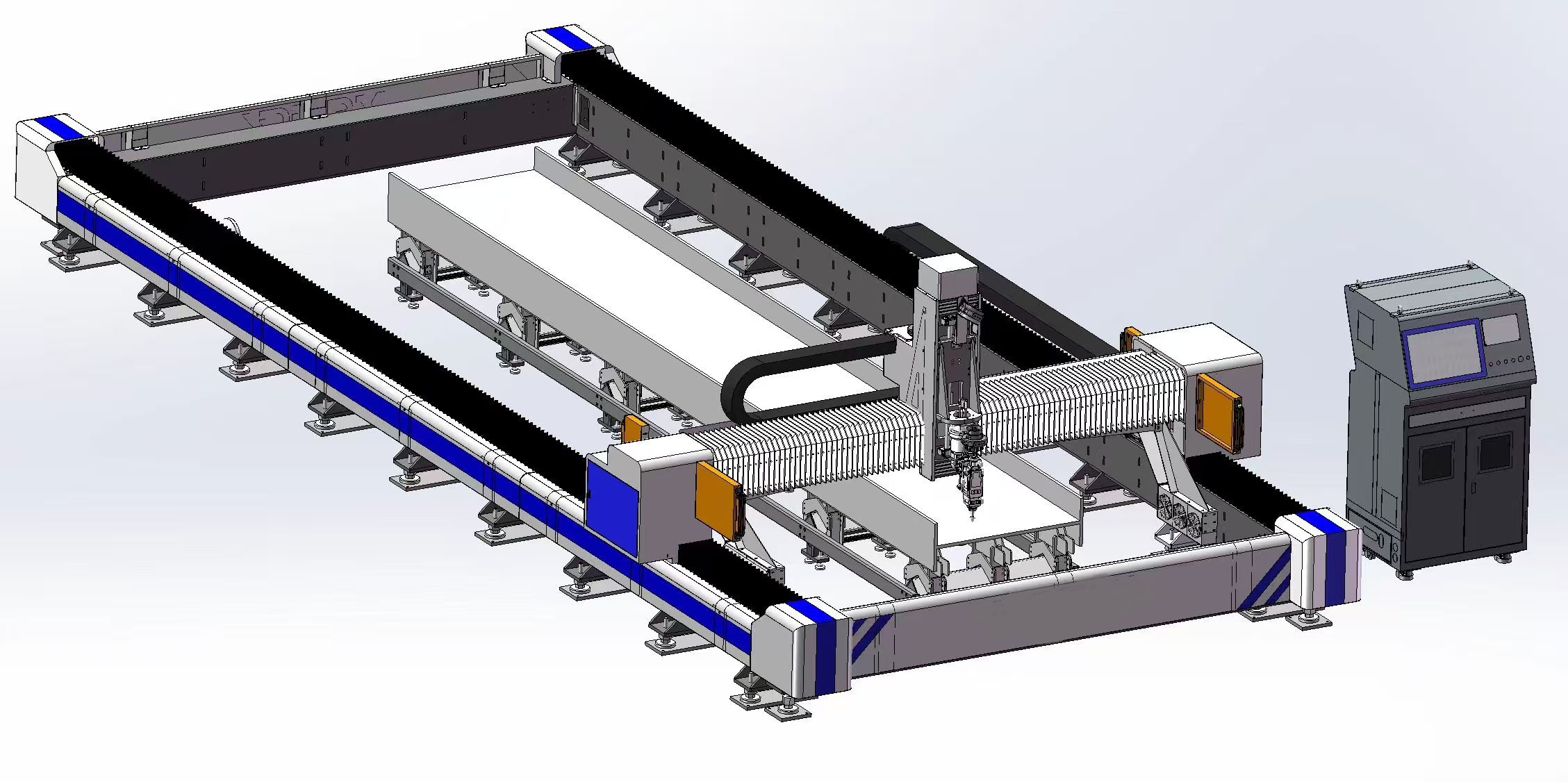
Industrial Application of H-Beam Plasma Cutter
Mitigating Logistical Constraints through Precision
Logistics in Manaus are dictated by the seasonal variations of the Amazon River levels. Delays in raw material delivery are a constant risk. Consequently, industrial parks must maximize the utility of every ton of steel that arrives at their docks. The H-Beam Plasma Cutter utilizes advanced nesting algorithms that optimize the arrangement of cuts on a single beam, significantly reducing “short-end” waste.
Furthermore, the precision of CNC plasma cutting ensures that structural components manufactured in Manaus meet international standards, such as those set by the American Institute of Steel Construction (AISC). This precision is vital for the modular construction projects prevalent in the mining and oil and gas sectors of northern Brazil. When components are fabricated with high-tolerance plasma systems, the “fit-up” at the construction site is seamless, reducing the need for field welding and grinding. This reliability enhances the reputation of Manaus-based industrial parks, allowing them to compete for federal and international infrastructure contracts.
Maintenance and Operational Sustainability in Tropical Environments
The environmental conditions in Manaus—characterized by high humidity and consistent temperatures exceeding 30 degrees Celsius—require industrial equipment to be robust. Modern H-beam cutters designed for global markets feature enclosed electronics and specialized cooling systems to prevent component failure. The ROI is further protected by the transition from mechanical consumables (drill bits and saw blades) to plasma consumables (electrodes and nozzles). While plasma consumables require regular replacement, their cost per cut is significantly lower than the cost of sharpening or replacing high-speed steel (HSS) tooling in a remote location where specialized sharpening services may be unavailable.
Additionally, the integration of CAD/CAM software allows engineers in Manaus to receive design files digitally from anywhere in the world, convert them into machine code (G-code), and begin production immediately. This digital workflow minimizes the need for physical blueprints and manual data entry, further insulating the production cycle from local labor shortages in the specialized drafting field.
Concluding Industry Insight
The industrial landscape is shifting toward a “distributed manufacturing” model where regional hubs must possess the same technological capabilities as centralized industrial powerhouses. For Manaus, the adoption of automated structural steel fabrication is not merely an incremental improvement but a fundamental shift in economic viability. As global supply chains continue to seek resilience, industrial parks that invest in high-precision, low-waste technologies like the H-beam plasma system will move from being simple assembly points to becoming sophisticated manufacturing centers. The future of the Polo Industrial de Manaus lies in this transition to Industry 4.0, where automation offsets geographical isolation, and precision becomes the primary currency of trade. Structural steel fabricators who fail to automate will likely find themselves marginalized by the rising costs of manual labor and the stringent quality requirements of modern infrastructure projects.
Industrial Expertise & Support
Are you looking for high-performance H-Beam Plasma Cutter tailored for the Global market? Our engineering team provides comprehensive solutions for modern manufacturing.





