Industrial Evolution: The Role of H-Beam Plasma Cutting in Lima’s Export Sector
The industrial landscape of Lima, Peru, has undergone a significant transition toward high-precision manufacturing, particularly within the metal-framed furniture export sector. As global demand for industrial-style furniture and structural architectural elements increases, the necessity for precision-engineered components has prioritized the adoption of advanced thermal cutting solutions. Central to this shift is the H-Beam Plasma Cutter, a specialized CNC system designed to handle complex structural profiles with dimensional accuracy that exceeds traditional mechanical sawing or manual oxy-fuel methods.
For furniture exporters operating out of Lima, the competitive advantage is no longer found solely in labor costs but in the technical capacity to deliver components that require zero secondary processing. The integration of high-definition plasma technology into structural steel fabrication allows for the execution of intricate geometries, bolt-hole patterns, and aesthetic notches directly onto heavy-gauge H-beams and I-beams. This article examines the technical parameters of plasma cutting within the Peruvian manufacturing context and the mechanical variables that ensure burrs-free quality for high-end international markets.
Technical Specifications of the H-Beam Plasma Cutter
Modern H-Beam Plasma Cutter systems utilized in Lima’s industrial zones are typically configured with multi-axis robotic arms or specialized 5-axis torch heads. Unlike plate cutters, these machines must account for the structural flanges and webs of the beam simultaneously. The precision of the cut is governed by the High-Definition Plasma Power Supply, which stabilizes the plasma arc through a combination of swirl gas and secondary shielding gas.
The primary technical challenge in beam processing is maintaining a consistent torch-to-workpiece distance across varying thicknesses. High-definition systems utilize automated Torch Height Control (THC) that responds to voltage fluctuations in milliseconds. This ensures that the arc remains focused, minimizing the Kerf width and preventing the rounding of top edges—a critical requirement for furniture components where visible joints must remain flush. For exporters in Lima, utilizing a system with a 400-ampere capacity allows for the clean piercing and cutting of beams up to 50mm in thickness, covering the entire spectrum of furniture-grade structural steel.
The Physics of Burrs-Free Cutting
A “burrs-free” or dross-free finish is the benchmark for quality in the export market. Dross, the re-solidified oxidized metal that adheres to the bottom of a cut, is the result of suboptimal thermal parameters. In the context of Lima’s furniture manufacturing, removing dross manually adds significant labor hours and increases the risk of surface abrasion on the base material. Achieving a clean cut requires the precise synchronization of three variables: cutting speed, gas pressure, and arc current.
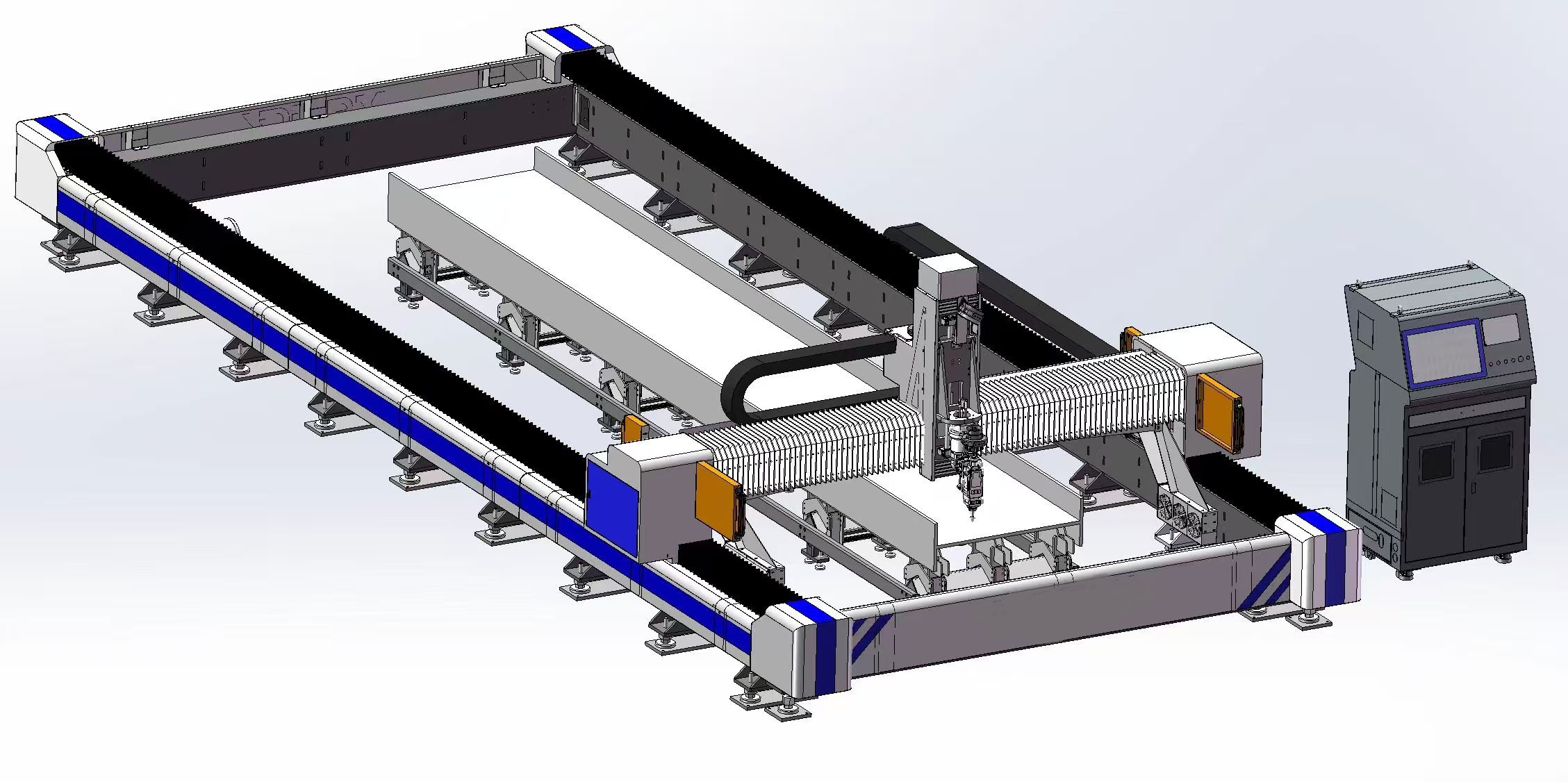
Industrial Application of H-Beam Plasma Cutter
When the H-Beam Plasma Cutter operates at the “optimal speed window,” the plasma jet ejects the molten metal completely from the bottom of the kerf before it can adhere. If the speed is too low, low-speed dross forms—a thick, bubbly accumulation that is difficult to remove. If the speed is too high, high-speed dross forms—a thin, tenacious bead. By utilizing CNC controllers with integrated nesting software and material databases, Peruvian fabricators can pre-set parameters for specific steel grades, ensuring that every flange and web cut meets the ISO 9013 Grade 3 or 4 standard for surface roughness.
Minimizing the Heat-Affected Zone (HAZ)
In high-end furniture design, the structural integrity and aesthetic uniformity of the steel are paramount. Excessive heat input during the cutting process can lead to the formation of a wide Heat-Affected Zone (HAZ). This region of the metal undergoes metallurgical changes that increase hardness and brittleness, which can complicate subsequent drilling or welding operations. Furthermore, a wide HAZ can cause visible discoloration that is difficult to mask with powder coating or clear-coat finishes.
Advanced plasma cutters in Lima mitigate this by using narrow-gap technology. By constricting the plasma arc through a smaller nozzle orifice and using high-velocity shielding gas, the thermal energy is concentrated into a smaller area. This results in a narrower HAZ and reduced thermal distortion. For furniture exporters, this means that long H-beams remain straight and true to their longitudinal axis, preventing the “bowing” effect often seen with lower-quality oxy-fuel cutting.
Operational Efficiency and CAD/CAM Integration
The transition from manual layout to fully automated H-beam processing in Lima has drastically reduced lead times. Modern cutters are equipped with laser scanning systems that measure the actual dimensions of the beam before cutting begins. This is necessary because structural steel often has slight mill tolerances in flange height or web thickness. The CNC system compensates for these deviations in real-time, ensuring that every bolt hole and miter cut is positioned relative to the actual center-line of the beam.
Integration with CAD/CAM software allows Lima-based designers to export 3D models directly to the cutting station. This digital workflow eliminates manual marking errors and allows for complex nesting. Nesting optimizes the layout of parts on a single beam to minimize scrap—a vital factor for exporters dealing with the fluctuating costs of imported steel. The ability to execute bevel cuts and 3D contours in a single pass further reduces the need for secondary milling or grinding, directly contributing to a lower per-unit cost for the international buyer.
Lima as a Strategic Hub for Steel Furniture Export
The geographic location of Lima, coupled with the proximity to the Port of Callao, positions the city as a strategic manufacturing hub for the Americas and the Pacific Rim. Furniture exporters in the region have specialized in “Industrial Luxury,” a segment that utilizes heavy structural sections like H-beams in residential and commercial interiors. The ability to process these beams locally using high-definition plasma technology allows for the rapid prototyping and mass production of frames that meet North American and European quality standards.
Furthermore, the Peruvian industrial sector has benefited from a skilled workforce capable of operating sophisticated CNC machinery. By investing in H-Beam Plasma Cutter technology, local firms are able to bypass the limitations of traditional fabrication, offering products that are characterized by precision joinery, clean edges, and structural reliability. This technological maturity is essential for maintaining long-term contracts with global furniture retailers who demand consistent tolerances across thousands of units.
Concluding Industry Insight
The future of metal fabrication in the B2B furniture sector is moving toward total process integration. As the industry in Lima continues to mature, the distinction between “raw structural steel” and “finished architectural component” is blurring. The H-Beam Plasma Cutter is the catalyst for this convergence. The industry insight for global procurement officers is clear: the technical capability of a fabrication partner is now defined by their ability to eliminate secondary finishing through thermal precision.
As automation becomes more accessible, the value proposition will shift from the act of cutting to the intelligence of the cut. We anticipate that the next phase of development in Lima will involve the integration of AI-driven predictive maintenance and real-time kerf monitoring. For furniture exporters, this means even higher levels of “first-time-right” manufacturing, ensuring that Peruvian-made steel components remain at the forefront of the global design and construction markets. The elimination of burrs is not merely an aesthetic choice; it is a technical requirement that signifies a sophisticated, lean manufacturing ecosystem capable of meeting the most rigorous international standards.
Industrial Expertise & Support
Are you looking for high-performance H-Beam Plasma Cutter tailored for the Global market? Our engineering team provides comprehensive solutions for modern manufacturing.





