Introduction: The Industrial Mandate for Precision in Joinville
Joinville, located in the state of Santa Catarina, stands as the largest industrial hub in southern Brazil. The region’s manufacturing sector is characterized by heavy metalworking, automotive assembly, and structural steel fabrication. For enterprises operating within this competitive corridor, the adoption of advanced automated fabrication tools is not merely an upgrade but a requirement for maintaining global export standards. Among these tools, the H-Beam Plasma Cutter has emerged as a critical asset for structural steel processing. However, the integration of such high-capacity machinery into local industrial grids presents specific electrical challenges. High-power plasma systems are sensitive to fluctuations in input voltage, which are common in rapidly expanding industrial zones. This article analyzes the technical architecture of H-beam plasma cutting systems in Joinville, focusing specifically on built-in voltage regulation mechanisms designed to ensure grid stability and operational consistency.
Electrical Infrastructure Challenges in Expanding Industrial Zones
Industrial grids in manufacturing centers like Joinville often experience significant load variance. As multiple heavy-duty machines—such as induction furnaces, large-scale milling centers, and hydraulic presses—cycle on and off, the local distribution network undergoes transient voltage surges and sags. For a standard plasma system, these fluctuations are detrimental. A drop in voltage can lead to arc instability, resulting in incomplete cuts or excessive dross formation. Conversely, voltage spikes can damage sensitive control electronics and shorten the lifespan of the inverter components.
The H-Beam Plasma Cutter units deployed in this region are increasingly equipped with sophisticated power management systems. These systems are designed to decouple the internal operating voltage from the external grid supply. By utilizing a multi-stage rectification and filtering process, the equipment maintains a constant DC bus voltage, ensuring that the plasma torch receives a steady stream of energy regardless of external grid behavior.
The Role of Insulated Gate Bipolar Transistor (IGBT) Technology
Modern plasma cutting systems utilize Insulated Gate Bipolar Transistor (IGBT) technology to manage high-frequency switching. In the context of the Joinville industrial sector, these components serve as the primary defense against power instability. The IGBT modules allow the cutter to convert incoming AC power into a high-frequency AC, which is then rectified into a stable DC output for the plasma arc.
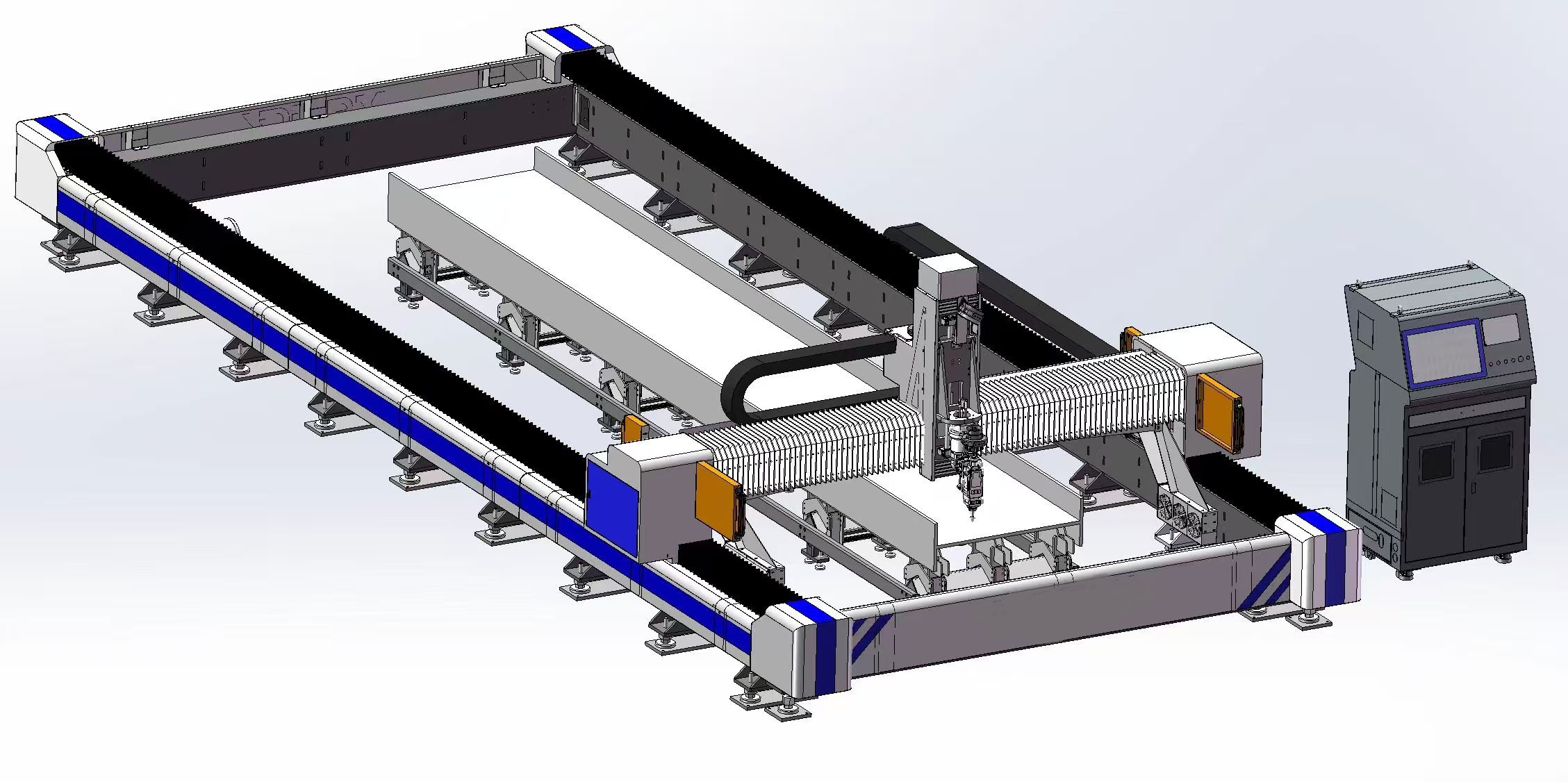
Industrial Application of H-Beam Plasma Cutter
The voltage regulation circuitry monitors the input line 240 times per second. If a voltage drop is detected, the Pulse Width Modulation (PWM) controller adjusts the duty cycle of the switching transistors to compensate. This rapid response ensures that the arc density remains uniform. For structural steel fabricators, this translates to a consistent Heat Affected Zone (HAZ), which is vital for maintaining the structural integrity of H-beams used in high-rise construction and bridge engineering.
Mechanical Integration and 3D Cutting Precision
Processing an H-beam requires significantly more complex movement than flat-plate cutting. The H-Beam Plasma Cutter utilizes a multi-axis robotic arm or a specialized gantry system to navigate the flanges and the web of the beam. To achieve precise beveling and coping, the motion control system must be perfectly synchronized with the plasma power source.
Built-in voltage regulation plays a secondary but equally important role here: protecting the CNC (Computer Numerical Control) unit. The CNC governs the 5-axis or 6-axis movements required for complex geometries. If the power supply to the control logic fluctuates, it can cause micro-stuttering in the servo motors. In Joinville’s fabrication shops, where throughput is high, even a millimeter of deviation caused by a power surge can result in a rejected component. By integrating Transient Voltage Suppression (TVS) diodes and high-capacity capacitor banks, these machines isolate the logic circuits from the power circuits, ensuring that the mechanical path remains fluid and accurate.
Optimizing Consumable Longevity through Arc Stability
The operational cost of plasma cutting is largely dictated by the lifespan of consumables, specifically the electrode and the nozzle. In an unregulated electrical environment, arc “flicker” causes uneven wear on the electrode’s hafnium insert. Each time the voltage dips, the arc loses pressure, and the cooling system (often liquid-cooled in high-amperage H-beam systems) may not compensate correctly for the change in thermal output.
Systems utilized in Joinville’s heavy industry incorporate a Real-time Feedback Loop between the torch head and the power supply. This loop monitors the arc voltage—the actual voltage between the electrode and the workpiece. By keeping this voltage within a narrow tolerance (often +/- 1 volt), the system prevents “double-arcing,” a phenomenon where the arc strikes the nozzle instead of the workpiece. This precision extends the life of consumables by up to 30%, significantly reducing the Total Cost of Ownership (TCO) for Brazilian fabricators who must account for the high cost of imported high-performance spare parts.
Grid Stability and Electromagnetic Interference (EMI)
A technical concern often overlooked in B2B procurement is the “noise” the machine returns to the grid. High-frequency plasma starting (HF start) can generate significant Electromagnetic Interference (EMI), which can disrupt neighboring equipment, such as PLC-controlled assembly lines or sensitive measuring instruments.
The H-beam cutters engineered for stable grid environments include advanced EMI filtering and Galvanic Isolation. These features prevent high-frequency noise from feeding back into the factory’s main power distribution block. In the dense industrial districts of Joinville, where factories are located in close proximity, this “good neighbor” electrical design prevents regional grid degradation and avoids penalties from local utility providers like CELESC (Centrais Elétricas de Santa Catarina) regarding power factor and harmonic distortion levels.
Data-Driven Maintenance and Power Analytics
The latest generation of H-Beam Plasma Cutter units in the Brazilian market features integrated data logging. These systems record every instance of voltage regulation. Plant managers can extract this data to perform a “grid health” analysis. If the machine’s internal logs show constant compensation for undervoltage between 2:00 PM and 4:00 PM, the facility management can identify a departmental overload or a recurring external grid sag.
This diagnostic capability transforms the plasma cutter from a simple fabrication tool into a sensor node for the entire facility. Technical teams can use this information to balance loads across different phases of the industrial power supply, further stabilizing the environment for other sensitive machinery.
Concluding Industry Insight: The Shift Toward Autonomous Power Management
As the global structural steel industry moves toward Industry 4.0, the definition of “machine quality” is shifting from mechanical speed to electrical resilience. In emerging industrial powerhouses like Joinville, Brazil, the ability of a H-Beam Plasma Cutter to operate autonomously from the instabilities of the local grid is a primary competitive advantage. The future of heavy fabrication lies in “smart” power supplies that do not merely consume energy but actively manage it.
We anticipate a trend where voltage regulation becomes increasingly predictive rather than reactive. By utilizing AI-driven algorithms, future power units will likely anticipate grid drops based on historical patterns and preemptively adjust internal capacitance levels. For B2B stakeholders, investing in equipment with robust, built-in regulation is no longer a luxury—it is a strategic hedge against infrastructure variability. Ensuring that the plasma arc remains constant in an inconstant environment is the cornerstone of modern metallurgical precision, ensuring that the steel fabricated in Joinville meets the rigorous demands of the global infrastructure market.
Industrial Expertise & Support
Are you looking for high-performance H-Beam Plasma Cutter tailored for the Global market? Our engineering team provides comprehensive solutions for modern manufacturing.





