Introduction: The Industrial Landscape of Guayaquil and Structural Steel Fabrication
Guayaquil, Ecuador, serves as a critical maritime and industrial hub, facilitating the majority of the nation’s international trade and heavy manufacturing. As the city expands its infrastructure, the demand for structural steel fabrication—specifically H-beams and I-beams—has surged. Central to this production capacity is the H-Beam Plasma Cutter, a multi-axis CNC machine designed to automate the complex profiling, coping, and hole-cutting required for large-scale construction. However, the industrial zones in Guayaquil often face challenges regarding electrical grid consistency. Voltage fluctuations, transients, and harmonic distortions can severely compromise the precision of high-amperage thermal cutting processes. To address this, modern plasma cutting systems integrated into the Ecuadorian market now prioritize built-in voltage regulation technologies to ensure operational continuity and dimensional accuracy.
Technical Challenges of Grid Stability in Coastal Industrial Hubs
The electrical infrastructure in rapidly developing industrial sectors, such as those found in Guayaquil’s outskirts or the Duran industrial corridor, is frequently subjected to heavy inductive loads. When large-scale industrial motors or secondary manufacturing plants cycle on and off, the resulting voltage sags and surges create an unstable environment for precision electronics. For an H-Beam Plasma Cutter, which relies on a stable pilot arc and consistent secondary current, these fluctuations can result in dross formation, kerf width variation, and unintended arc extinction.
Furthermore, the high humidity and salinity of a coastal port environment like Guayaquil can exacerbate electrical conductivity issues within the shop floor environment. Without robust internal regulation, the power supply unit (PSU) of a plasma system is forced to compensate for input variances, leading to thermal stress on internal components and reducing the Mean Time Between Failures (MTBF).
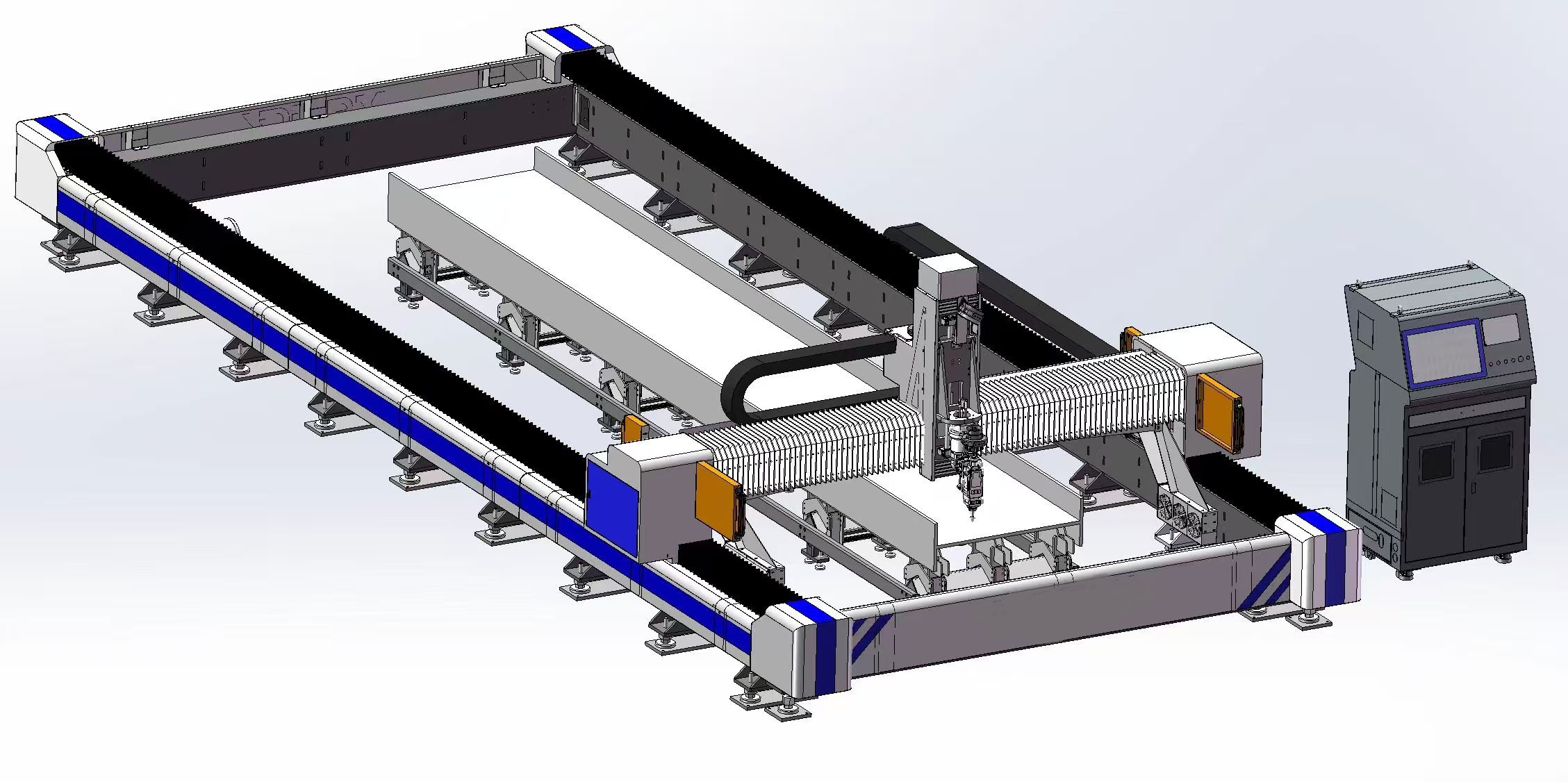
Industrial Application of H-Beam Plasma Cutter
Mechanisms of Built-in Voltage Regulation
To mitigate the risks associated with an unstable grid, high-end plasma cutting systems utilize sophisticated Insulated Gate Bipolar Transistor (IGBT) technology. These components act as high-speed switches that can modulate the power output with microsecond precision. The integration of an Automatic Voltage Regulator (AVR) within the plasma power source allows the machine to accept a wide range of input voltages—often varying by as much as fifteen to twenty percent—while maintaining a constant output current to the torch head.
This regulation is achieved through a multi-stage rectification and inversion process. The incoming AC power is first rectified to DC, filtered through a capacitor bank to remove ripple, and then inverted back to high-frequency AC. This high-frequency signal is then stepped down and rectified again to produce the stable DC cutting current. By decoupling the output arc from the input line via this high-frequency link, the system effectively shields the cutting process from grid-borne anomalies.
Power Factor Correction (PFC) and Efficiency
A critical component of voltage regulation in the H-Beam Plasma Cutter is Power Factor Correction (PFC). In industrial environments, a low power factor results in higher current draw for the same amount of work, increasing the load on the facility’s transformers and cabling. Systems equipped with active PFC ensure that the current waveform follows the voltage waveform, minimizing Total Harmonic Distortion (THD).
For fabricators in Guayaquil, this technology provides two primary benefits. First, it allows the plasma cutter to operate on smaller circuit breakers or longer extension leads without the risk of nuisance tripping. Second, it reduces the heat generated within the machine’s power supply, which is vital for maintaining performance in the tropical climate of Ecuador. By optimizing the draw from the grid, the machine contributes to overall facility grid stability, preventing the plasma cutter itself from becoming a source of electrical noise for other sensitive CNC equipment on the same network.
Impact on Consumable Longevity and Cut Quality
The precision of an H-Beam Plasma Cutter is measured by its ability to maintain a consistent arc gap and plasma density. When the input voltage drops, an unregulated system may see a corresponding drop in arc pressure. This results in an incomplete melt, leading to heavy dross on the bottom of the H-beam flange. Conversely, a voltage surge can cause the arc to become overly aggressive, prematurely eroding the hafnium insert in the electrode and the copper orifice of the nozzle.
By utilizing built-in regulation, the system ensures that the energy density of the plasma stream remains constant regardless of external conditions. This stability is essential for the 6-axis or 7-axis robotic arms typically found in H-beam processors, which must maintain precise feed rates while navigating the complex geometry of the beam’s web and flanges. Consistent power delivery ensures that the thermal kerf remains predictable, allowing for the tight tolerances required in bolted structural connections.
Data-Driven Reliability in the Ecuadorian Market
Field data from industrial applications in South America indicates that machines equipped with wide-voltage tolerance and internal regulation see a thirty percent reduction in unscheduled maintenance compared to standard units. In Guayaquil, where specialized technician support for high-end CNC components may involve lead times, this built-in resilience is a critical factor in Total Cost of Ownership (TCO). The ability to withstand a “brownout” or a transient spike without blowing a fuse or damaging the control PC allows for continuous production cycles during peak industrial hours.
Integration with CNC Control Systems
Modern H-beam processors do not operate in isolation. They are integrated into a broader BIM (Building Information Modeling) workflow. The voltage regulation system often communicates directly with the CNC controller. If the input power deviates beyond the threshold where the regulation hardware can safely compensate, the controller can execute a controlled pause in the cutting program. This prevents the “scrapping” of expensive structural steel members by ensuring that the machine never attempts a cut when it cannot guarantee arc integrity.
Concluding Industry Insight: The Future of Resilient Fabrication
The transition toward localized, resilient manufacturing in South American hubs like Guayaquil represents a broader shift in the global B2B landscape. As industrial grids face increasing pressure from both rising demand and the integration of intermittent renewable energy sources, the burden of stability is shifting from the utility provider to the equipment manufacturer. For the structural steel industry, the H-Beam Plasma Cutter is no longer just a mechanical tool; it is a sophisticated electrical load-management system.
The future of heavy fabrication lies in “grid-agnostic” machinery—systems capable of delivering aerospace-grade precision while operating on fluctuating industrial power. For stakeholders in the Guayaquil region, investing in built-in voltage regulation is not merely a safeguard against downtime; it is a strategic requirement for competing in a global market that demands shorter lead times and higher structural certifications. As automation continues to penetrate the Ecuadorian market, the intersection of power electronics and robotic thermal cutting will be the primary driver of manufacturing throughput.
Industrial Expertise & Support
Are you looking for high-performance H-Beam Plasma Cutter tailored for the Global market? Our engineering team provides comprehensive solutions for modern manufacturing.





