Precision Structural Fabrication: The Integration of H-Beam Plasma Technology in Guayaquil
The industrial sector in Guayaquil, Ecuador, serves as a critical hub for maritime construction and large-scale civil engineering projects across the Pacific coast of South America. As structural demands increase, the transition from manual layout and mechanical drilling to automated thermal cutting has become a necessity for maintaining global competitiveness. The implementation of the H-Beam Plasma Cutter in this region represents a shift toward high-throughput manufacturing, where the primary barrier—operator expertise—is being dismantled by advanced Artificial Intelligence (AI) and intuitive Human-Machine Interfaces (HMI).
In traditional structural steel environments, mastering a multi-axis CNC system typically requires months of specialized training, encompassing G-code proficiency, material science, and complex nesting logic. However, the latest generation of plasma systems deployed in Guayaquil utilizes AI-driven Human-Machine Interface protocols that compress this learning curve into a 48-hour window. This article examines the technical architecture of these systems and the logistical advantages they provide to the Ecuadorian industrial landscape.
The Architecture of the 8-Axis Robotic Kinematics
At the core of the high-performance H-beam cutting system is a sophisticated motion control array. Unlike standard 3-axis tables, the units utilized in Guayaquil’s heavy industry sectors often employ 8-axis robotic kinematics. This configuration allows the plasma torch to maintain a perpendicular or specific bevel angle relative to the workpiece across all surfaces of the H-beam, including the interior of the flanges and the central web.
The synchronization of these axes is managed by a real-time controller that calculates the torch path based on 3D CAD data. By utilizing a robotic arm mounted on a linear rail, the system achieves a degree of reach and flexibility that ensures clean cope cuts, bolt holes, and weld preparations without the need to flip the beam. This reduces material handling time by approximately 60 percent compared to traditional methods.
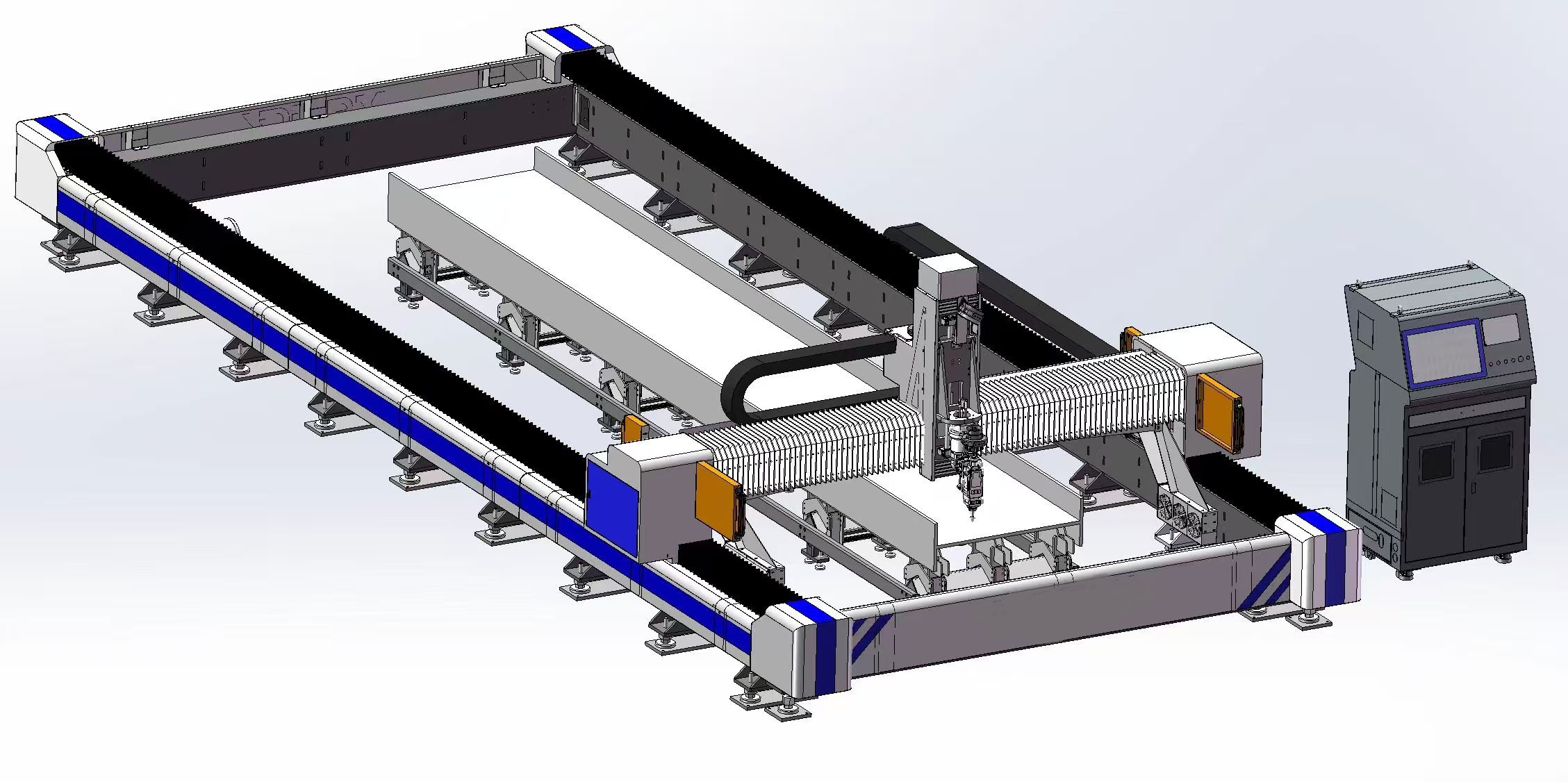
Industrial Application of H-Beam Plasma Cutter
AI HMI: Bridging the Skill Gap in 48 Hours
The most significant advancement in these systems is the departure from traditional command-line interfaces. The AI HMI functions as an intermediary layer that translates complex engineering requirements into executable machine paths. For operators in Guayaquil, the 2-day learning curve is structured to maximize immediate operational output.
On the first day, the operator focuses on the digital twin environment. The AI HMI allows for the direct import of TEKLA or AutoCAD files. The software automatically identifies the beam profile, detects potential collisions, and suggests optimal cutting parameters based on material thickness and grade. Because the AI manages the thermal compensation algorithms, the operator does not need to manually calculate the heat-affected zone (HAZ) or adjust for kerf width; the system performs these adjustments dynamically.
On the second day, the training transitions to real-time monitoring and maintenance. The AI system provides predictive diagnostics, alerting the operator to consumable wear (nozzles and electrodes) before cut quality degrades. This proactive approach ensures that the facility maintains a high OEE (Overall Equipment Effectiveness) rating from the outset.
Technical Specifications and Cutting Precision
The H-beam cutters deployed in this region are engineered to handle structural profiles up to 1200mm in height. The integration of high-definition plasma power sources allows for dross-free cuts that require zero secondary grinding. This is particularly vital for Guayaquil’s shipbuilding industry, where weld integrity is non-negotiable.
Key technical benchmarks include:
Positioning Accuracy: Plus or minus 0.05mm across the entire rail length.
Repeatability: 0.03mm, ensuring that modular components for large-scale infrastructure fit perfectly during site assembly.
Cutting Speed: Up to 6000mm per minute depending on material thickness, significantly outpacing oxy-fuel alternatives.
The use of CAD/CAM nesting software within the HMI ensures that scrap rates are minimized. The AI analyzes the production queue and nests various parts—including base plates and stiffeners—into the remaining sections of the H-beam, maximizing material utilization in a region where steel import costs are a significant factor in project margins.
Operational Reliability in Tropical Environments
Guayaquil’s coastal climate presents specific challenges for high-precision electronics and plasma stability. High humidity and ambient salt content can lead to corrosion and electrical interference. The H-beam systems installed here feature pressurized electrical cabinets and specialized filtration systems for the compressed air supply used in the plasma arc.
The AI HMI contributes to reliability by monitoring the internal environment of the machine. Sensors track humidity levels and temperature within the control console, automatically adjusting cooling cycles or notifying the operator if environmental conditions exceed operational thresholds. This level of automated oversight is what allows a technician with only two days of training to operate the machine safely and effectively without risking damage to the high-value components.
Economic Impact on the Guayaquil Industrial Hub
The port of Guayaquil is the gateway for Ecuadorian trade. By localizing advanced fabrication capabilities through easy-to-operate H-beam cutters, local firms can bid on international contracts that were previously outsourced to foreign fabricators. The ability to take a worker and turn them into a proficient CNC operator in 48 hours solves the primary bottleneck of labor shortages in the high-tech manufacturing sector.
Furthermore, the reduction in “Time-to-Floor” for new projects is substantial. When the software handles the heavy lifting of pathing and error-checking, the transition from architectural drawing to physical steel component happens in a fraction of the time. This agility is crucial for the rapid infrastructure development currently seen in the expansion of Guayaquil’s logistics and transit corridors.
Industry Insight: The Democratization of Advanced Fabrication
The deployment of AI-enhanced H-beam plasma cutting technology in Guayaquil signals a broader trend in the global B2B manufacturing sector: the democratization of high-precision engineering. Historically, the “knowledge moat” surrounding structural steel automation was deep, requiring years of institutional experience. Today, the intelligence is being embedded directly into the machine’s operating system.
As we look toward the next decade, the focus of structural steel fabrication will shift further away from manual dexterity and toward data management. The operator’s role is evolving from a manual laborer to a system supervisor. For markets like Ecuador, this means the ability to leapfrog traditional industrial evolution stages, moving directly into Industry 4.0 standards. The 2-day learning curve is not just a convenience; it is a strategic catalyst that allows emerging industrial hubs to compete on the global stage with the same precision and efficiency as established Western European or North American facilities. The integration of AI into the HMI is the definitive factor that ensures technology is an asset rather than a complication.
Industrial Expertise & Support
Are you looking for high-performance H-Beam Plasma Cutter tailored for the Global market? Our engineering team provides comprehensive solutions for modern manufacturing.





