Industrial Evolution in the Southern Cone: The H-Beam Plasma Cutter in Córdoba
The industrial landscape of Córdoba, Argentina, serves as a critical nexus for South American structural steel fabrication and heavy machinery manufacturing. As the region scales its infrastructure projects, the demand for precision-engineered structural components has shifted from traditional mechanical sawing and drilling to advanced thermal cutting solutions. The implementation of the H-Beam Plasma Cutter in this territory represents a significant leap in throughput capacity. However, the geographical reality of Argentina—characterized by vast distances between industrial hubs and technical service centers—necessitates a paradigm shift in how these machines are maintained and optimized. The integration of remote cloud diagnostics is no longer an optional feature but a foundational requirement for operational continuity in the Southern Cone.
Technical Specifications and Kinematic Requirements
Processing H-beams, I-beams, and channels requires a multi-axis approach to accommodate the complex geometry of structural steel. Modern systems utilized in the Córdoba region typically employ 6-Axis Robotic Kinematics to allow the plasma torch to reach all faces of the workpiece, including the interior of the flanges and the web, in a single pass. This eliminates the need for manual flipping of heavy profiles, which can weigh several tons.
The cutting process is governed by high-definition plasma power sources capable of delivering up to 400 amps. These systems must manage the transition between different material thicknesses—for instance, moving from a 12mm web to a 20mm flange—without losing arc stability. This requires real-time adjustment of gas pressures and current levels, a process managed by the CNC controller through sophisticated look-ahead algorithms. In the context of Córdoba’s varied climate, thermal compensation systems are also integrated to ensure that the mechanical tolerances of the gantry remain within specified limits, typically +/- 0.5mm over a 12-meter rail.
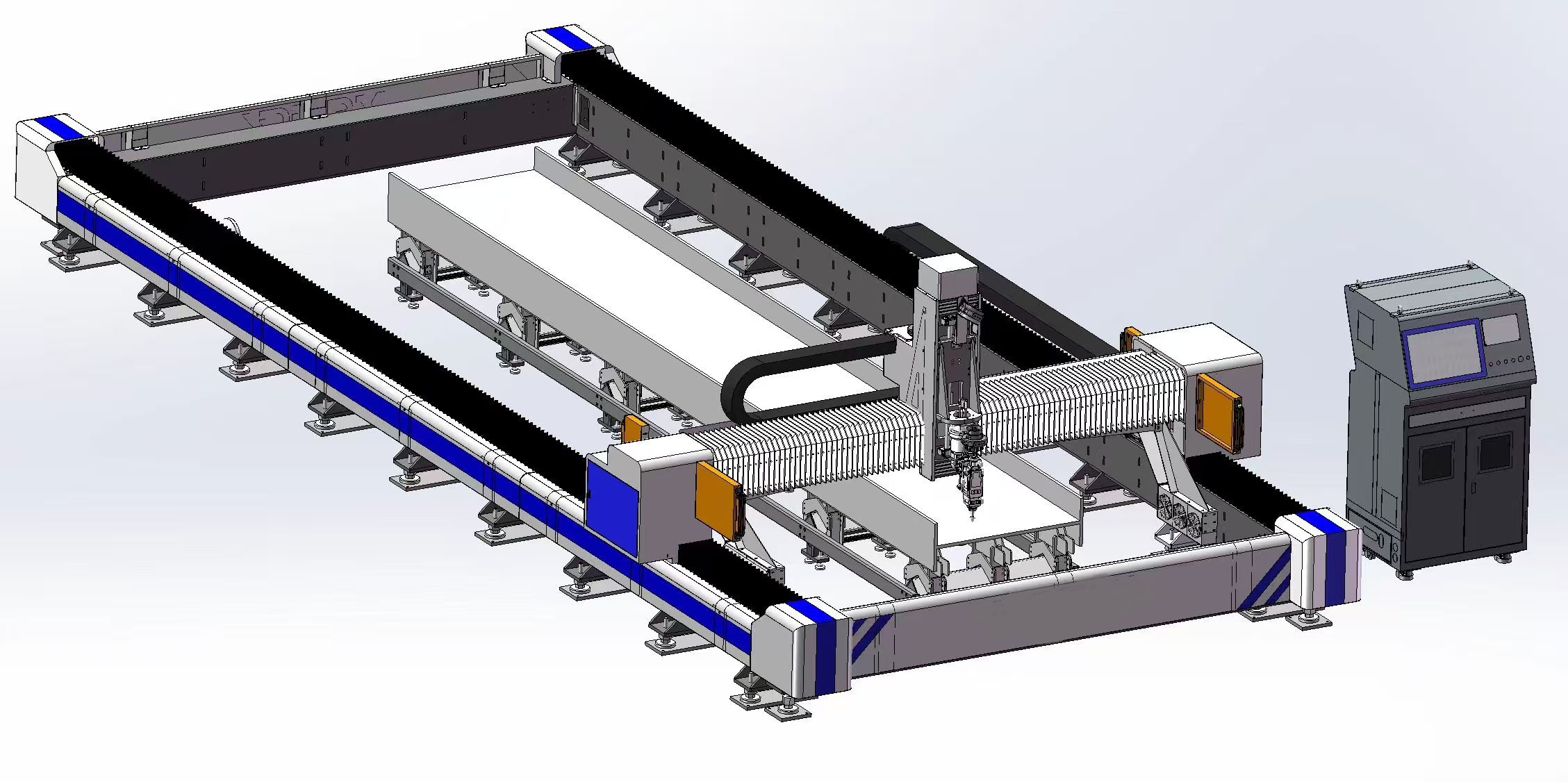
Industrial Application of H-Beam Plasma Cutter
The Challenge of Geographical Dispersion
Argentina is the eighth-largest country in the world by land area. A fabrication facility located in the industrial outskirts of Córdoba may be thousands of kilometers away from the original equipment manufacturer’s (OEM) primary technical support base. Traditional service models involve dispatching a field engineer, which results in significant downtime and high travel expenditures. For a high-output structural steel facility, 48 hours of downtime can equate to a loss of several hundred tons of processed steel, disrupting the entire supply chain for construction or mining projects.
To mitigate these risks, the deployment of IIoT (Industrial Internet of Things) frameworks has become the standard. By connecting the CNC of the plasma cutter to a secure cloud environment, the physical distance between the machine and the technician is effectively neutralized. This connectivity allows for a level of oversight that was previously impossible in the remote regions of the Pampas or the Andean foothills.
Remote Cloud Diagnostics: Architecture and Implementation
The remote diagnostic architecture consists of three primary layers: the edge data acquisition layer, the cloud processing layer, and the visualization interface. At the machine level in Córdoba, sensors monitor critical parameters such as coolant flow rate, gas inlet pressures, servo motor torque, and arc voltage. This data is buffered and transmitted via encrypted protocols to a centralized cloud server.
Real-Time Telemetry and Error Logging
When a fault occurs, the system does not merely report a generic error code. The cloud diagnostic tool provides a high-resolution snapshot of the machine state five seconds prior to the event. Technicians can analyze the Hypertherm X-Definition Plasma parameters or the specific robotic joint angles to determine if the failure was mechanical, electrical, or software-based. In many instances, the issue can be resolved through remote configuration changes or by guiding the local operator through a specific component replacement, bypassing the need for an on-site visit.
Predictive Maintenance and Consumable Tracking
Beyond reactive troubleshooting, cloud diagnostics enable predictive maintenance. By analyzing the wear patterns of electrodes and nozzles, the system can predict the remaining life of consumables. In Córdoba, where logistics chains for specialized parts can be subject to delays, having a 10-day lead time on replacement parts based on actual usage data rather than arbitrary schedules is a significant competitive advantage. The system tracks the “arc-on” time and compares it against historical degradation curves to alert procurement teams before a failure occurs.
Integration with BIM and ERP Systems
The H-Beam Plasma Cutter does not operate in isolation. In modern B2B workflows, the machine is the physical execution point for digital designs. Building Information Modeling (BIM) files, typically in DSTV or STEP formats, are uploaded to the cloud and processed by nesting software. The remote diagnostic link also facilitates the bidirectional flow of production data. Management in Córdoba can monitor the real-time progress of a project, viewing how many beams have been cut, the total linear meters processed, and the percentage of scrap material generated. This data is fed directly into the company’s Enterprise Resource Planning (ERP) system, providing an accurate reflection of project timelines and costs.
Security Protocols in Remote Connectivity
A primary concern for industrial operators in Argentina is the security of their operational technology (OT) networks. Remote cloud diagnostics utilize outbound-only connections to prevent unauthorized access to the local network. Using VPN tunnels with multi-factor authentication, the OEM can access the machine’s PLC (Programmable Logic Controller) for deep-level debugging without exposing the factory’s internal infrastructure to the public internet. This ensures that intellectual property, such as proprietary nesting patterns or production schedules, remains protected.
Operational Efficiency and ROI
The return on investment (ROI) for a cloud-connected plasma system in Córdoba is realized through three main channels. First, the reduction in mean time to repair (MTTR) ensures that the machine maintains a high OEE (Overall Equipment Effectiveness) rating. Second, the optimization of cutting parameters via remote tuning reduces gas and electricity consumption per ton of steel. Third, the ability to perform remote software and firmware updates ensures that the machine always operates with the latest motion control algorithms, extending the physical lifespan of the gantry and robotic components.
Industry Insight: The Future of Autonomous Fabrication
The convergence of robotic plasma cutting and cloud-based intelligence is a precursor to fully autonomous structural steel fabrication. As we look toward the next decade, the role of the machine operator will transition from manual control to system oversight. In regions like Córdoba, which act as industrial bridges for the Southern Cone, the ability to leverage global technical expertise through the cloud will be the determining factor in local manufacturing competitiveness.
The industry is moving toward a “digital twin” model where every H-Beam Plasma Cutter has a virtual counterpart in the cloud that simulates wear and performance in real-time. This will allow for “self-healing” systems where the CNC can automatically adjust its feed rates and acceleration curves to compensate for mechanical wear detected by vibration sensors. For companies operating in vast geographical regions, these advancements signify the end of the tyranny of distance, allowing for world-class manufacturing precision regardless of the physical location of the factory.
Industrial Expertise & Support
Are you looking for high-performance H-Beam Plasma Cutter tailored for the Global market? Our engineering team provides comprehensive solutions for modern manufacturing.





