Strategic Implementation of H-Beam Plasma Technology in Córdoba’s Industrial Corridor
The industrial landscape of Córdoba, Argentina, has long served as a critical node for South American manufacturing, particularly within the automotive, agricultural machinery, and heavy structural steel sectors. As global demand for precision-engineered steel components increases, local industrial parks—ranging from the Ferreyra district to the burgeoning zones in Malvinas Argentinas—are transitioning from traditional mechanical fabrication methods to automated thermal cutting solutions. Central to this evolution is the deployment of the H-Beam Plasma Cutter, a system designed to consolidate multiple fabrication stages into a single automated process. This transition is not merely a technological upgrade but a calculated financial strategy aimed at optimizing Return on Investment (ROI) through the reduction of man-hours per ton and the elimination of secondary processing cycles.
Technical Architecture of Automated Structural Processing
The operational efficiency of an H-Beam Plasma Cutter is derived from its multi-axis capability, typically utilizing a 6-Axis Robotic Arm to navigate the complex geometries of structural profiles. Unlike traditional drill lines or band saws, these systems execute coping, miter cutting, bolt hole piercing, and marking in a continuous sequence. In the context of Córdoba’s heavy industry, where H-beams, I-beams, and channels are foundational to large-scale infrastructure projects, the ability to maintain tolerances within +/- 0.5mm is paramount.
The integration of high-definition plasma power sources allows for a narrowed Heat Affected Zone (HAZ), preserving the metallurgical integrity of the steel. This is particularly critical for structural components destined for seismic zones or high-load industrial environments. By utilizing sophisticated sensor arrays for material detection, the system compensates for physical deviations in the raw steel, such as camber or twist, ensuring that the finished geometry aligns perfectly with the digital twin provided by the CAD/CAM software.
Quantifying ROI: Labor Reduction and Throughput Velocity
For industrial operators in Córdoba, the primary driver of ROI is the radical reduction in total fabrication time. Traditional methods require a beam to be measured, marked, moved to a saw, moved again to a drill line, and finally processed by a manual welder for coping or layout marking. Each movement introduces the risk of measurement error and increases overhead costs associated with material handling.
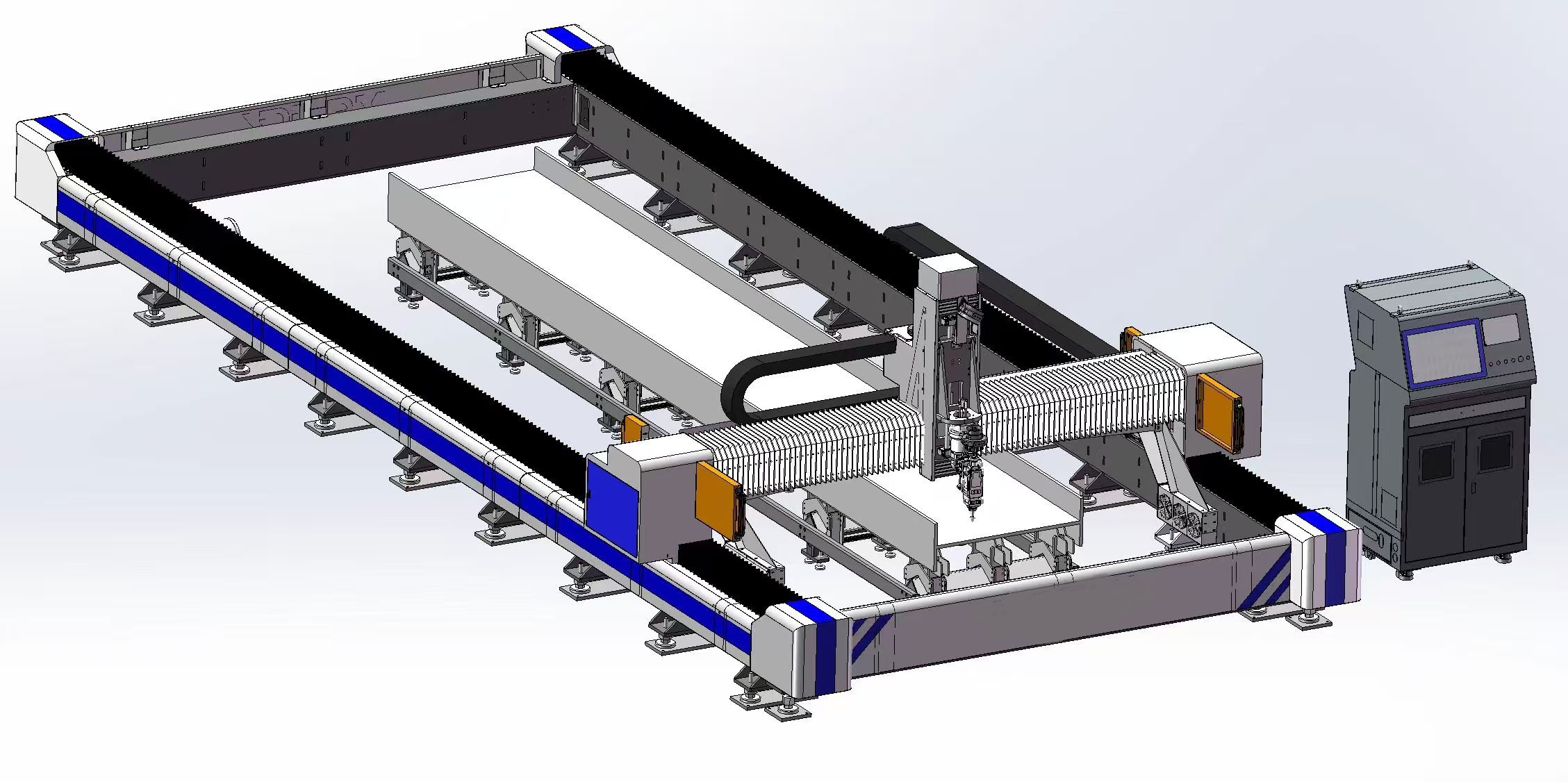
Industrial Application of H-Beam Plasma Cutter
An automated plasma system reduces these touchpoints. Data from local implementations suggest that a structural steel facility can achieve a 60 percent to 75 percent reduction in labor costs per processed ton. When the H-Beam Plasma Cutter performs layout marking directly onto the steel, it eliminates the need for manual fit-up measurements during the assembly phase. This “downstream” ROI is often greater than the “upstream” savings, as it accelerates the welding and assembly departments, which are traditionally the most significant bottlenecks in a fabrication plant.
Material Utilization and Nesting Optimization
Material costs represent the largest variable expense in structural steel fabrication. Advanced plasma systems utilize Nesting Optimization algorithms to minimize scrap rates. In Córdoba’s industrial parks, where raw material logistics can be influenced by fluctuating import costs and regional supply chain dynamics, maximizing the yield of every linear meter of steel is essential for maintaining competitive margins.
The software controlling the plasma cutter analyzes the entire project’s Bill of Materials (BOM) and identifies the most efficient sequence of cuts. This includes “common line cutting” where applicable and the utilization of remnant pieces that would otherwise be discarded in a manual environment. By reducing scrap rates from a typical 10-12 percent down to 3-5 percent, the system provides a direct, measurable contribution to the bottom line, often recouping the initial capital expenditure within 18 to 24 months of operation.
Precision Engineering and Kerf Compensation
A critical technical factor in the success of plasma cutting is the management of the plasma arc’s physical properties. Modern systems employ automatic Kerf Compensation, which adjusts the tool path in real-time to account for the width of the cut. As the plasma electrode wears, the characteristics of the arc change; the CNC system monitors these variables and adjusts the torch height and offset to maintain dimensional accuracy.
In Córdoba’s agricultural machinery sector, where structural beams must often interface with precision-machined mechanical components, this level of accuracy is non-negotiable. The ability to produce “bolt-ready” holes without the need for secondary reaming or deburring saves significant operational time. Furthermore, the 6-axis movement allows for complex weld preparations, including V-groove, Y-groove, and K-groove bevels, which are essential for high-strength structural joints. This capability eliminates the need for manual grinding, further reducing the exposure of workers to ergonomic hazards and industrial particulates.
Integration with BIM and Digital Workflows
The digital transformation of Córdoba’s industrial parks is heavily reliant on the compatibility between fabrication hardware and Building Information Modeling (BIM) software. The H-Beam Plasma Cutter functions as the physical output of a digital workflow. Direct integration with platforms such as Tekla Structures, SDS/2, or Autodesk Revit allows for the seamless transfer of DSTV or STEP files to the fabrication floor.
This integration eliminates manual data entry, which is a frequent source of error in complex projects. When a design change is made in the engineering office, the updated file can be pushed to the plasma system immediately, ensuring that the fabrication floor is always working with the latest revision. This agility is a significant competitive advantage for Córdoba-based firms bidding on international infrastructure contracts, where strict adherence to digital documentation and traceability is required.
Environmental and Operational Sustainability
Modern plasma cutting systems are designed with high-efficiency dust collection and filtration units, which are vital for maintaining air quality within enclosed industrial facilities. In the urban-adjacent industrial parks of Córdoba, compliance with environmental regulations regarding emissions is an operational necessity. Automated systems provide a more controlled environment for fume extraction compared to manual cutting and grinding stations. Additionally, the energy efficiency of modern inverter-based plasma power supplies reduces the overall carbon footprint of the fabrication process, aligning local industry with global sustainability standards for “Green Steel” processing.
Industry Insight: The Shift Toward Autonomous Fabrication
The industrial sector in Córdoba is at a pivot point where the cost of manual labor and the requirement for higher precision are intersecting. The adoption of the H-Beam Plasma Cutter represents a broader shift toward autonomous fabrication. As regional markets become more integrated, the ability to produce high-quality structural steel at a lower cost per ton will determine which industrial parks remain viable. The proven ROI in Córdoba serves as a blueprint for other emerging industrial hubs: the path to profitability lies in the elimination of process fragmentation. By consolidating sawing, drilling, marking, and coping into a single robotic cell, manufacturers are not just cutting steel; they are re-engineering the economics of production. The future of structural fabrication will be defined by those who can leverage 6-axis precision to minimize waste and maximize throughput, ensuring that the industrial backbone of Argentina remains globally competitive.
Industrial Expertise & Support
Are you looking for high-performance H-Beam Plasma Cutter tailored for the Global market? Our engineering team provides comprehensive solutions for modern manufacturing.





