Digital Integration of Robotic Structural Steel Fabrication in the Biobío Region
The industrial landscape of Concepción, Chile, serves as a critical nexus for the South American mining, forestry, and maritime sectors. As these industries demand increasingly complex structural steel components, the adoption of the H-Beam Plasma Cutter has transitioned from a mechanical upgrade to a digital necessity. Modern fabrication facilities in the Biobío region are now prioritizing the integration of multi-axis thermal cutting hardware with sophisticated Enterprise Resource Planning (ERP) systems and nesting software. This connectivity is essential for maintaining the tight tolerances required by Chilean seismic building codes and the high-volume throughput demanded by international logistics projects.
The transition toward Industry 4.0 in structural steel fabrication involves the synchronization of physical cutting parameters with digital twin data. In Concepción’s heavy manufacturing hubs, the deployment of robotic plasma systems allows for the processing of wide-flange beams, channels, and hollow structural sections (HSS) with a level of precision that manual layout cannot achieve. However, the hardware’s efficiency is fundamentally limited by the quality of the data it receives, making the digital pipeline between the engineering office and the shop floor the primary driver of ROI.
Technical Specifications of Multi-Axis Plasma Systems
A contemporary H-Beam Plasma Cutter utilized in high-output environments typically features a 6-axis or 8-axis robotic arm. These systems utilize high-definition plasma power sources capable of piercing thicknesses up to 50mm and edge-starting on even thicker material. The kinematics of the robotic arm allow for the execution of complex cope cuts, bolt holes, miter cuts, and weld preparations (K, V, Y, and X cuts) in a single pass. By consolidating these operations into one workstation, fabricators in Concepción reduce material handling time by an estimated 40% to 60%.
Precision is maintained through laser scanning systems that measure the actual dimensions of the H-beam before cutting commences. Since structural steel profiles often deviate from theoretical dimensions due to mill tolerances—specifically camber, sweep, and flange tilt—the robotic system must perform real-time compensation. This multi-axis robotic kinematics ensures that every cut is indexed to the actual center line of the beam, ensuring perfect fit-up during site assembly, which is critical for the structural integrity of mining infrastructure in the Andes.
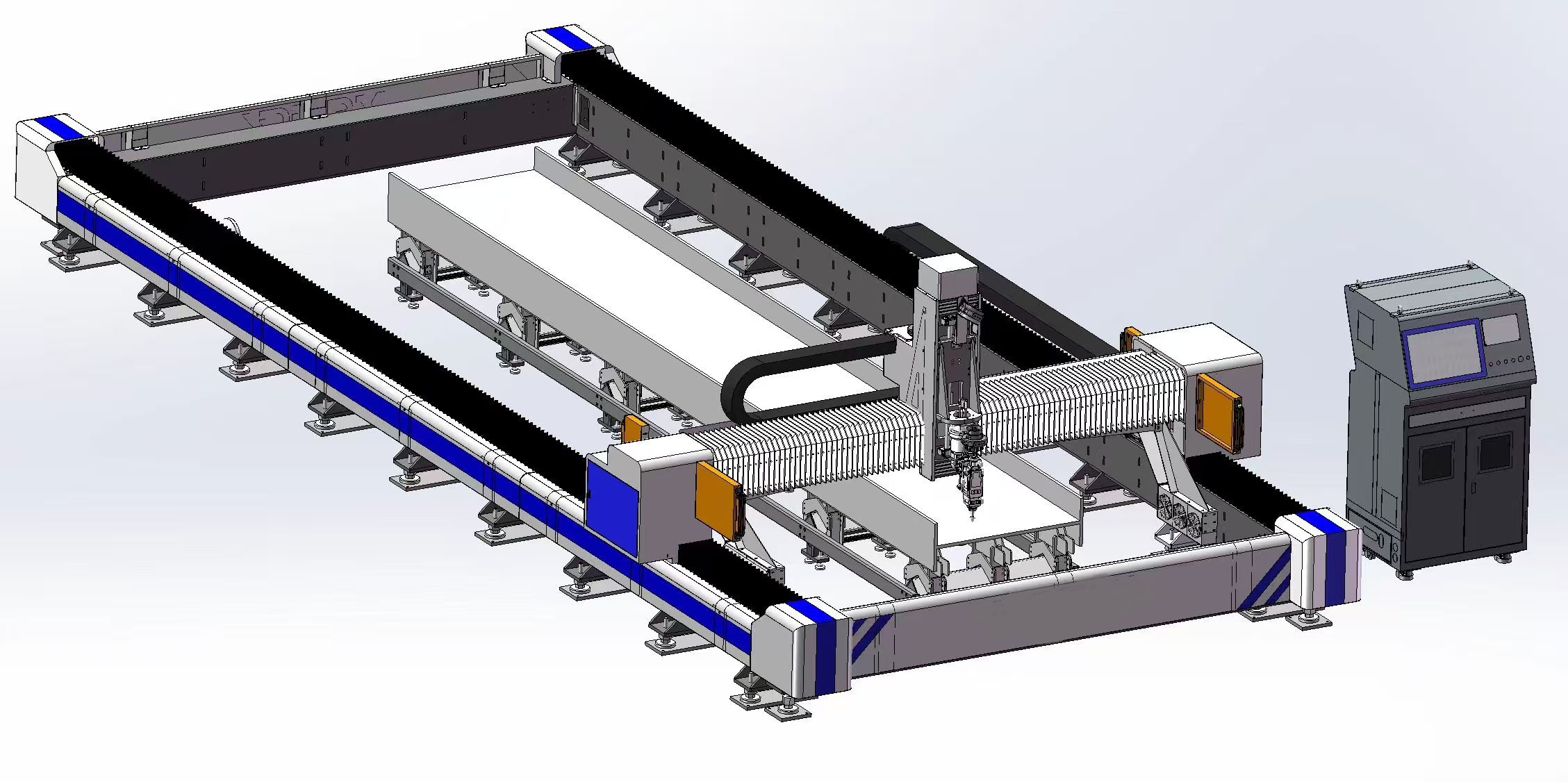
Industrial Application of H-Beam Plasma Cutter
ERP Integration and Bidirectional Data Flow
The integration of the plasma system into the corporate ERP framework eliminates the manual entry of Bill of Materials (BOM). In a typical workflow, the ERP system manages the procurement of raw steel sections and tracks their arrival at the Concepción facility. Once the material is inventoried, the ERP communicates directly with the plasma cutter’s control interface via standardized protocols such as XML or proprietary API links. This ERP bidirectional synchronization allows for real-time tracking of production status, material consumption, and gas usage.
From a technical management perspective, this connectivity enables “just-in-time” fabrication. When a project’s priority changes in the ERP, the production queue on the plasma cutter can be updated remotely without physical intervention. Furthermore, the system feeds back data regarding the time taken for each cut and the remaining life of consumables (nozzles and electrodes). This data allows maintenance departments to move from reactive to predictive maintenance schedules, minimizing unscheduled downtime in high-pressure production environments.
Advanced Nesting Software and Material Optimization
Nesting for linear members like H-beams differs significantly from plate nesting. The software must account for the length of the raw stock, the kerf width of the plasma arc, and the specific requirements for “trim cuts” at the ends of the beams. Advanced CAD/CAM nesting algorithms are employed to maximize material utilization. In Concepción, where the cost of imported high-strength steel can be volatile, reducing scrap rates by even 3% to 5% results in significant annual savings.
The nesting software processes DSTV or STEP files exported from 3D modeling environments like Tekla Structures or Autodesk Revit. The software automatically identifies the necessary toolpaths for holes, slots, and notches. It also manages “multi-part nesting” on a single long beam, determining the optimal sequence of cuts to maintain the structural rigidity of the workpiece as it moves through the machine. This prevents “beam whip” or vibration during the final stages of the cutting process, which could otherwise compromise the accuracy of the last few parts on the stock.
Standardizing Data Formats for Global Interoperability
For fabricators in Concepción to compete globally, they must adhere to international data standards. The use of DSTV (Deutscher Stahlbau-Verband) files is the industry standard for describing the geometry of structural members. The H-Beam Plasma Cutter control system interprets these files to generate G-code automatically. This standardization ensures that an engineering firm in Europe or North America can send digital designs to a fabrication shop in Chile with the certainty that the components will be manufactured to exact specifications without manual re-drawing.
Furthermore, the integration of cloud-based nesting platforms allows for distributed processing. A central engineering office can nest parts for multiple machines across different locations, pushing the optimized cut lists to the specific machine in Concepción that has the available capacity and matching raw material inventory. This level of digital oversight is critical for managing large-scale mining projects that involve thousands of unique structural components.
Concluding Industry Insight: The Shift Toward Autonomous Fabrication
The evolution of structural steel fabrication in Concepción reflects a broader global shift toward autonomous manufacturing. The hardware—the H-Beam Plasma Cutter—is no longer a standalone tool but a physical node in a comprehensive digital network. As machine learning algorithms begin to interface with nesting software, we can expect to see “self-optimizing” production lines that adjust cutting speeds and gas pressures based on real-time sensor feedback to compensate for metallurgical variations in the steel.
For B2B stakeholders, the competitive advantage in the coming decade will not be found in the raw speed of the plasma arc, but in the seamlessness of the data pipeline. Facilities that fail to bridge the gap between their ERP systems and their shop floor equipment will face increasing overheads and higher error rates. Conversely, those who master digital connectivity will achieve a level of operational transparency that transforms structural steel from a commodity-based business into a high-tech service industry, capable of meeting the rigorous demands of the global infrastructure market.
Industrial Expertise & Support
Are you looking for high-performance H-Beam Plasma Cutter tailored for the Global market? Our engineering team provides comprehensive solutions for modern manufacturing.





