The Integration of Advanced H-Beam Plasma Cutter Systems in the Biobío Industrial Sector
The industrial landscape of Concepción, Chile, particularly within the Biobío Region, has long served as the epicenter of South American steel production and structural engineering. As global demand for high-precision structural components increases, the adoption of specialized H-Beam Plasma Cutter technology has become a critical factor for local fabricators aiming to compete on an international scale. This transition from traditional mechanical drilling and sawing to automated plasma profiling represents a significant shift in manufacturing methodology, focusing on the intersection of robotic precision and energy-efficient power sources.
In the context of heavy industry, the H-beam serves as the foundational element for high-rise construction, mining infrastructure, and bridge engineering. Processing these components requires not only high thermal energy but also a sophisticated control system capable of managing the complex geometries of wide-flange beams. The deployment of fiber-enhanced plasma systems in Concepción signifies a move toward sustainable heavy manufacturing, where operational overhead is reduced through superior electrical-to-optical conversion rates.
Technical Architecture of Fiber-Source Plasma Systems
The core innovation in modern structural steel processing is the integration of a Fiber Laser Source or fiber-enhanced plasma power supply. Unlike traditional CO2 or standard high-definition plasma units, fiber-based technology utilizes a solid-state medium to generate the cutting arc or beam. This results in a significantly higher power density, allowing for narrower kerf widths and a reduced Heat Affected Zone (HAZ). For fabricators in Concepción, this technical advantage translates to minimal metallurgical alteration of the steel, which is vital for maintaining the structural integrity required by seismic building codes inherent to the Chilean market.
The energy efficiency of these systems is measured by their wall-plug efficiency. Traditional plasma systems often lose a substantial percentage of input energy to heat dissipation. In contrast, fiber-source technology operates with an efficiency rating often exceeding 30-40%, drastically lowering the kilowatt-hour consumption per meter of cut. This efficiency is not merely an environmental consideration but a direct operational cost reduction strategy for large-scale fabrication facilities.
Precision Engineering and CNC Robotic Profiling
To process an H-beam effectively, the cutting head must navigate multiple planes. Modern systems utilize CNC Robotic Profiling, typically employing 6-axis or 8-axis robotic arms. These arms are programmed to execute complex cuts including bolt holes, coping, notches, and weld preparations (bevels) in a single pass. In the industrial zones of Talcahuano and Concepción, where labor costs and throughput speed are constant variables, the ability to consolidate multiple machining steps into one automated process is paramount.
The control software utilizes sophisticated algorithms to compensate for beam irregularities. Structural steel, particularly large H-sections, can possess slight deviations in flange parallelism or web centering. The integrated sensing systems in an H-beam plasma cutter perform real-time measurements, adjusting the torch trajectory to ensure that every cut meets the precise tolerances specified in the Building Information Modeling (BIM) files. This level of accuracy is essential for the “bolt-up” assembly method used in modern construction, where field welding is minimized in favor of precision-machined bolted connections.
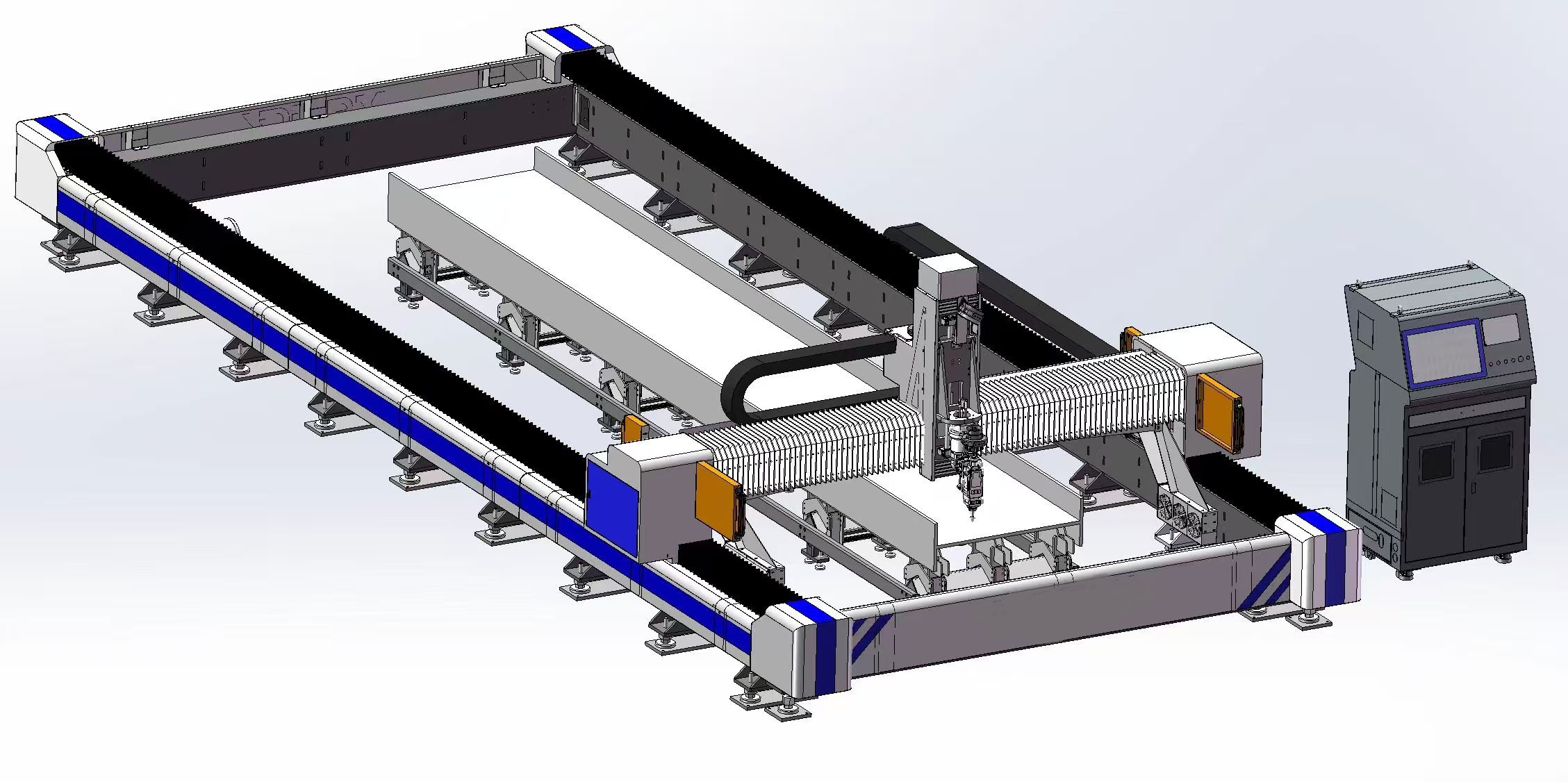
Industrial Application of H-Beam Plasma Cutter
Optimization of Structural Steel Fabrication in Chile
Chile’s position as a leading exporter of minerals and a hub for seismic-resistant architecture demands Structural Steel Fabrication of the highest caliber. The H-beams processed in Concepción must adhere to strict international standards such as ASTM A36 or A572. The implementation of plasma cutting technology allows for the execution of radius corners and complex apertures that are difficult or impossible to achieve with traditional mechanical methods. This capability enables architects and engineers to design more efficient structures that use less material without sacrificing load-bearing capacity.
Furthermore, the environmental conditions in coastal Concepción require that steel be prepared for advanced coating systems. The clean, dross-free cuts produced by high-definition fiber plasma sources reduce the need for secondary grinding or cleaning. This streamlined workflow ensures that the steel can move immediately from the cutting cell to the shot-blasting and painting lines, shortening lead times for major infrastructure projects both domestically and for export to the global market.
Economic Impact and Operational Longevity
The transition to energy-efficient fiber source technology involves a higher initial capital expenditure compared to legacy systems. However, the Total Cost of Ownership (TCO) reveals a different narrative. The reduction in consumable wear—such as nozzles and electrodes—coupled with lower electricity bills, provides a rapid Return on Investment (ROI). In a region like Biobío, where energy costs can fluctuate based on industrial demand, the predictability of a high-efficiency system provides a competitive edge.
Maintenance cycles are also extended in fiber-based systems. The absence of complex gas mixing systems and the reduction in moving parts within the power source lead to higher uptime. For a 24/7 fabrication facility, the reliability of the plasma source is the difference between meeting a project milestone or incurring liquidated damages. The localized technical support in Chile has also matured, ensuring that these high-tech systems are maintained by specialized engineers who understand the nuances of the local power grid and environmental variables.
Concluding Industry Insight: The Shift Toward Green Steel Processing
The global steel industry is currently undergoing a paradigm shift toward “Green Steel,” focusing on reducing the carbon footprint of the entire lifecycle of a structural component. While much of the focus remains on the smelting process, the fabrication stage is a significant contributor to the cumulative energy profile of a building. The adoption of energy-efficient H-beam plasma cutters in hubs like Concepción is a proactive response to this trend. By optimizing material nesting to reduce scrap and utilizing high-efficiency power sources, fabricators are effectively lowering the embodied carbon of their products.
Looking forward, the integration of Artificial Intelligence (AI) with plasma cutting systems will likely be the next frontier. Predictive maintenance and autonomous nesting adjustments will further refine the efficiency of fiber-source technology. For the industrial sector in Chile, staying at the forefront of this technological curve is not merely about operational speed; it is about defining the region’s role in a sustainable, high-precision global supply chain. The synergy between Chilean metallurgical expertise and advanced robotic cutting technology ensures that Concepción remains a vital player in the future of structural engineering.
Industrial Expertise & Support
Are you looking for high-performance H-Beam Plasma Cutter tailored for the Global market? Our engineering team provides comprehensive solutions for modern manufacturing.





