Introduction to Industrial Metalworking in Caxias do Sul
Caxias do Sul, located in the state of Rio Grande do Sul, Brazil, has solidified its position as the second-largest metal-mechanical hub in the country. The region’s industrial ecosystem is characterized by a high concentration of manufacturers specializing in transport equipment, heavy machinery, and structural engineering. As global demand for complex infrastructure increases, local fabricators are transitioning from traditional manual processing to automated 3D structural steel solutions. Central to this evolution is the implementation of the H-Beam Plasma Cutter, a system designed to handle the multi-axis demands of structural profiles. However, as the industry moves beyond carbon steel into more specialized applications involving non-ferrous metals, the technical challenges of reflectivity and thermal conductivity have necessitated the integration of advanced anti-reflection technologies. This article examines the technical specifications and operational advantages of utilizing plasma systems equipped with anti-reflection capabilities for copper and aluminum processing within the Caxias do Sul industrial corridor.
The Mechanics of the H-Beam Plasma Cutter
The H-Beam Plasma Cutter represents a convergence of robotic kinematics and high-definition thermal cutting. Unlike traditional plate cutters, these systems utilize a 6-axis robotic arm or a multi-axis gantry to navigate the flanges and webs of structural steel. In the context of Caxias do Sul’s heavy industry, these machines are required to perform complex bolt-hole configurations, coping cuts, and miter joints with a high degree of repeatability. The integration of a High-Definition Plasma Power Supply allows for narrow kerf widths and minimal heat-affected zones (HAZ). The primary technical advantage lies in the software-driven path planning, which compensates for beam camber and sweep in real-time. When processing standard structural steel, the plasma arc is stable; however, the introduction of copper and aluminum into the fabrication workflow introduces variables that traditional plasma systems are ill-equipped to handle without specific modifications.
Challenges of Reflective Metals: Copper and Aluminum
Copper and aluminum present distinct metallurgical and physical challenges during plasma cutting. Aluminum is characterized by high thermal conductivity and a low melting point relative to its oxide layer. Copper, while also highly conductive, is notoriously reflective in an optical and electromagnetic sense. In high-precision environments, back-reflection can interfere with the Torch Height Control (THC) sensors and the internal circuitry of the plasma inverter. In Caxias do Sul, where manufacturers often produce components for the electrical industry (copper busbars) or the aerospace and transport sectors (aluminum structural frames), the risk of equipment damage due to feedback loops is a significant concern. Furthermore, the high reflectivity of these materials can lead to inconsistent arc attachment, resulting in excessive dross formation and poor surface finish on the cut edge.
Anti-Reflection Technology and Signal Stabilization
To mitigate the risks associated with reflective alloys, modern H-Beam systems in the Brazilian market are adopting specialized anti-reflection protocols. This technology functions on two levels: physical hardware shielding and digital signal processing. On the hardware side, the torch head is equipped with specialized consumables that utilize a unique gas-swirl pattern to stabilize the arc column, preventing the “blow-back” of ionized particles that occurs when cutting highly conductive surfaces. Digitally, the system employs Non-Ferrous Material Optimization algorithms within the CNC controller. These algorithms adjust the arc voltage sampling rate to filter out noise caused by the reflective properties of the workpiece. By maintaining a constant standoff distance through high-speed feedback loops, the system ensures that the plasma arc remains concentrated, effectively piercing the material without allowing the energy to dissipate across the surface.
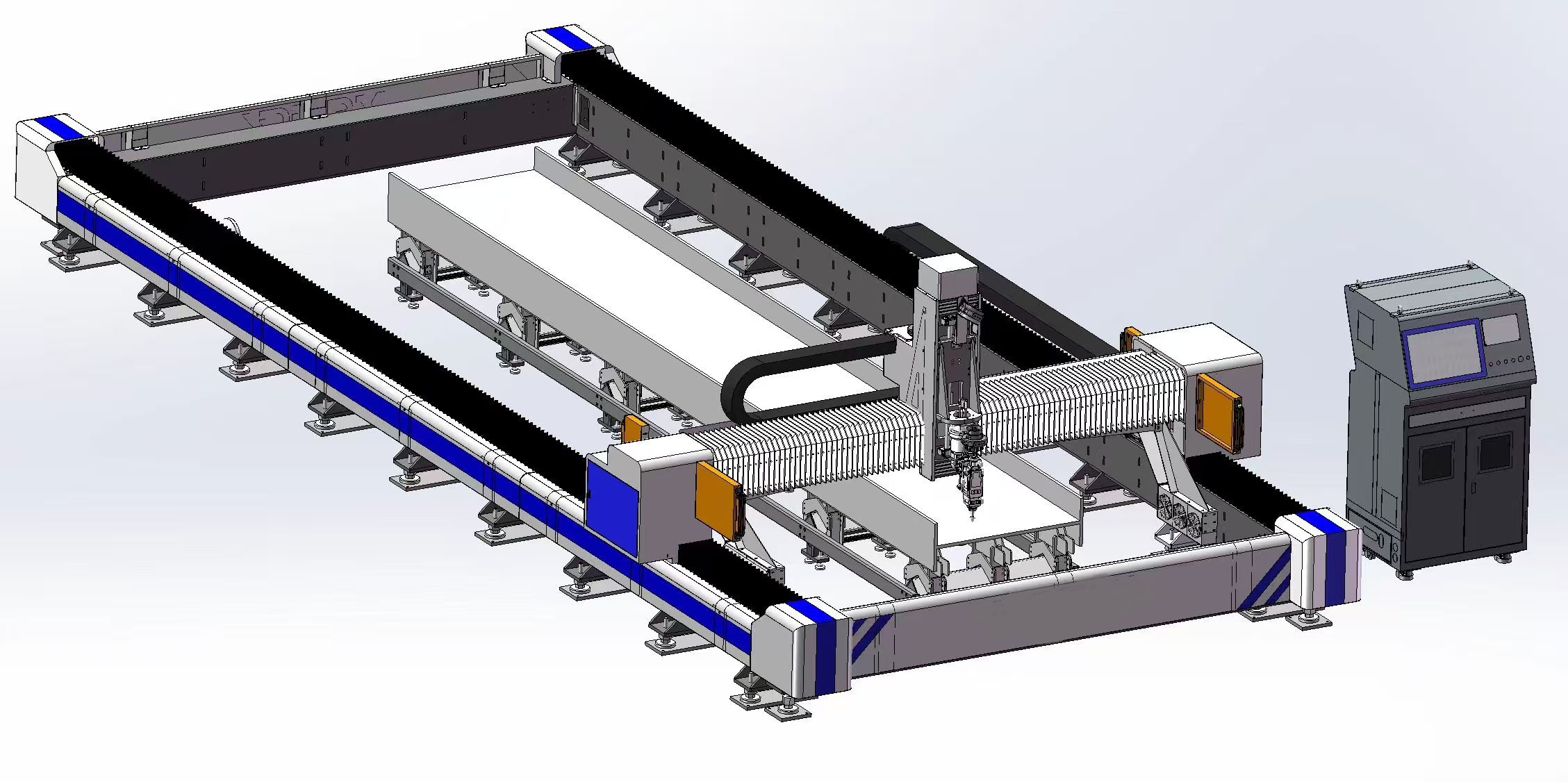
Industrial Application of H-Beam Plasma Cutter
Gas Dynamics and Kerf Management
The precision of an H-Beam Plasma Cutter in Caxias do Sul is heavily dependent on gas selection when dealing with copper and aluminum. For aluminum, a mixture of Argon and Hydrogen (H35) or Nitrogen is often used to provide a clean, oxide-free cut. The anti-reflection technology is complemented by secondary gas shielding, which flushes the kerf of molten material before it can solidify. In copper processing, the high thermal conductivity requires a high-energy density arc. The anti-reflection system ensures that the energy is not reflected back into the nozzle, which would otherwise lead to premature consumable failure. Technical data suggests that systems utilizing integrated anti-reflection protocols see a 30 percent increase in consumable life when processing 6061-T6 aluminum compared to standard plasma configurations. This efficiency is critical for Caxias do Sul firms looking to maintain competitive margins in the global export market.
Integration with Robotic 3D Profiling
The structural demands of H-beams require the cutting head to move through various planes. When cutting the web of an H-beam made of an aluminum alloy, the angle of incidence changes. Standard plasma systems often struggle with arc lag during these transitions. However, the advanced units deployed in Caxias do Sul utilize real-time Torch Height Control (THC) that is calibrated for the specific voltage signatures of non-ferrous metals. The anti-reflection tech ensures that as the robotic arm tilts to perform a bevel cut, the reflected energy does not trigger a false “collision” signal in the sensors. This allows for continuous, uninterrupted processing of long-form structural members, which is essential for the high-volume production lines found in the region’s trailer and bus manufacturing plants.
Economic Impact on the Caxias do Sul Industrial Hub
The adoption of these high-tech plasma solutions has a direct correlation with the region’s economic output. By reducing the need for secondary grinding and finishing on aluminum and copper components, manufacturers in Caxias do Sul can decrease lead times by up to 40 percent. The ability to process multiple material types on a single H-Beam Plasma Cutter reduces the capital expenditure required for separate dedicated machines. Furthermore, the precision offered by anti-reflection technology allows local firms to meet stringent international standards, such as ISO 9013, which governs the thermal cutting of metallic materials. This compliance is a prerequisite for bidding on international infrastructure projects, particularly in the renewable energy sector where copper components are prevalent.
Concluding Industry Insight
The industrial landscape of Caxias do Sul is currently at a technological crossroad. As the global shift toward lightweighting and high-conductivity materials accelerates, the reliance on traditional carbon steel processing is no longer sufficient for maintaining a competitive edge. The integration of anti-reflection technology within H-beam plasma systems is not merely a localized trend but a necessary response to the evolving physics of modern fabrication. The industry is moving toward a “material-agnostic” approach to structural cutting, where the distinction between ferrous and non-ferrous processing is blurred by intelligent, adaptive hardware. For the Brazilian metal-mechanical sector, the investment in signal-stabilized plasma technology represents a strategic move toward high-value manufacturing. Future developments are expected to focus on the integration of artificial intelligence to further refine arc characteristics in real-time, effectively eliminating the variables introduced by material reflectivity and thermal expansion. In conclusion, the synergy between Caxias do Sul’s manufacturing expertise and advanced plasma diagnostics is setting a new benchmark for structural fabrication in the Southern Hemisphere.
Industrial Expertise & Support
Are you looking for high-performance H-Beam Plasma Cutter tailored for the Global market? Our engineering team provides comprehensive solutions for modern manufacturing.





