Precision Fabrication in the Caracas Industrial Corridor: Advancing Agri-Machinery Durability
The industrial landscape in Caracas, Venezuela, is currently undergoing a strategic shift toward high-precision structural fabrication. As the regional demand for robust agricultural machinery increases, local manufacturers are moving away from traditional thermal cutting methods toward advanced automated systems. Central to this evolution is the implementation of the H-Beam Plasma Cutter, a technology that addresses the critical requirement for structural integrity in high-stress environments. In the context of agricultural equipment—such as heavy-duty harvesters, seeders, and chassis frames—the ability to maintain the metallurgical properties of steel during the fabrication process is not merely a preference but a technical necessity for operational longevity.
The Technical Impact of the Heat Affected Zone (HAZ)
In thermal cutting processes, the Heat Affected Zone (HAZ) represents the area of the base metal that has not been melted but has had its microstructure and mechanical properties altered by the intense heat of the cutting arc. In the fabrication of H-beams and structural profiles, a large HAZ is a primary precursor to premature component failure. When the temperature of the steel exceeds the critical transformation point, it undergoes phase changes that can lead to localized hardening, increased brittleness, or the formation of martensite in carbon steels.
For agricultural machinery operating in the variable terrains of the Venezuelan plains and the wider LATAM region, these localized changes in the metal’s grain structure become focal points for stress concentration. The H-Beam Plasma Cutter utilized in Caracas facilities employs high-definition (HD) plasma technology, which focuses the arc through a narrow orifice. This results in a significantly higher energy density compared to standard plasma or oxy-fuel systems. By increasing the cutting speed and narrowing the kerf, the total heat input into the workpiece is minimized, thereby restricting the HAZ to microscopic levels. This preservation of the original tensile strength and ductility is essential for components subjected to the constant vibration and torsional loads inherent in field operations.
6-Axis Robotic Kinematics and Structural Accuracy
Modern fabrication units in Caracas are increasingly integrating 6-axis robotic kinematics within their plasma cutting cells. Unlike traditional linear CNC tables, a 6-axis system allows the plasma torch to maneuver around the fixed H-beam, executing complex geometries, bolt holes, and weld preparations (such as K, V, and Y-cuts) in a single pass. This multi-dimensional movement is critical for the agricultural sector, where machinery frames often require non-linear structural reinforcements.
The precision of these robotic systems ensures that the tolerance levels remain within +/- 0.5mm. In the assembly of heavy-duty plows or grain carts, such precision eliminates the need for secondary grinding or re-drilling. From a metallurgical perspective, the elimination of secondary mechanical processing is vital; grinding can introduce additional localized heat or surface abrasions that act as initiation sites for thermo-mechanical fatigue. By achieving a “bolt-ready” finish directly from the plasma cell, manufacturers in Caracas are significantly reducing the total cycle time while enhancing the fatigue life of the final product.
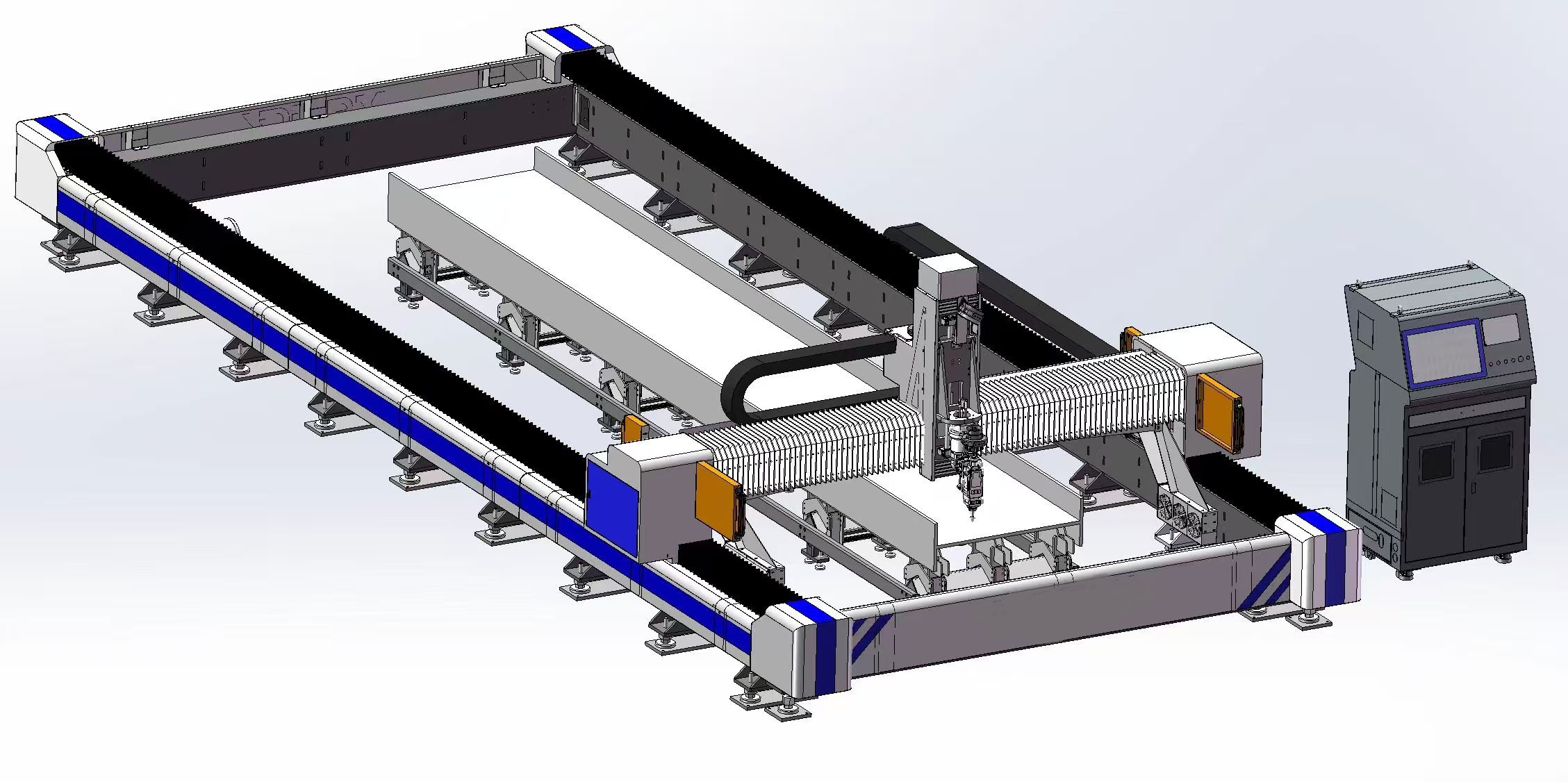
Industrial Application of H-Beam Plasma Cutter
Material Integrity and Agricultural Longevity
Agricultural machinery is unique in its exposure to cyclic loading and corrosive environments. A harvester frame, for instance, must withstand the constant oscillation of the engine and the uneven resistance of the terrain. If the structural H-beams used in the chassis have been compromised by a wide HAZ during the cutting phase, the material becomes susceptible to stress corrosion cracking. The brittle nature of a large HAZ means that under high-frequency vibration, micro-cracks can propagate rapidly through the beam’s web or flange.
By utilizing small-HAZ plasma technology, Caracas-based fabricators are ensuring that the H-beams retain their specified yield strength across the entire profile. The use of specific shielding gases—such as Oxygen for carbon steel or an Argon-Hydrogen mix for stainless steel—further refines the cut edge, preventing nitrogen absorption which can lead to porosity in subsequent welding stages. This integrated approach to material science and mechanical engineering results in machinery that can operate for thousands of additional hours before requiring structural maintenance.
Operational Efficiency in the Venezuelan Context
The adoption of the H-Beam Plasma Cutter in Caracas also addresses specific regional economic factors. With the need for efficient resource management, the reduction of scrap material is a high priority. Advanced nesting software integrated with these plasma systems optimizes the layout of cuts on a single beam, minimizing “off-cut” waste. Furthermore, the high-speed capability of plasma systems—often exceeding 3000mm/min depending on material thickness—allows local manufacturers to meet tight seasonal windows for agricultural equipment delivery.
The transition to automated plasma cutting also mitigates the reliance on manual labor for complex beveling. In a region where technical skill gaps can occasionally pose challenges, the automation of the most critical structural cuts ensures a consistent quality output that is independent of operator fatigue. This consistency is a cornerstone for Caracas-based firms looking to export machinery to neighboring markets in Colombia and Brazil, where international standards for structural safety are strictly enforced.
Concluding Industry Insight
The integration of small-HAZ H-beam plasma cutting technology in Caracas represents a broader trend in global manufacturing: the convergence of high-definition thermal processing and robotic automation to solve long-term durability issues. For the agricultural sector, longevity is the primary metric of value. As machinery grows in scale and complexity, the margin for error in structural fabrication narrows. The industry is moving toward a “zero-defect” metallurgical standard where the cutting process is no longer viewed as a preliminary stage but as a foundational element of the machine’s lifecycle engineering. In Caracas, the shift toward these high-precision systems is not merely an upgrade in machinery; it is a strategic commitment to producing industrial-grade equipment capable of withstanding the rigors of modern high-output farming. The future of heavy fabrication lies in the ability to manipulate steel without compromising its inherent molecular advantages, a feat now being realized through advanced plasma technology.
Industrial Expertise & Support
Are you looking for high-performance H-Beam Plasma Cutter tailored for the Global market? Our engineering team provides comprehensive solutions for modern manufacturing.





