Introduction: The Transition from Manual to Automated Structural Fabrication
In the industrial sectors of Caracas, Venezuela, structural steel fabrication has historically relied on manual thermal cutting processes. While functional for small-scale operations, the reliance on manual labor for processing heavy H-beams introduces significant variables in dimensional accuracy, production speed, and operational overhead. As global infrastructure demands shift toward tighter tolerances and faster delivery cycles, Venezuelan firms are increasingly adopting automated solutions. This technical analysis examines how the implementation of an H-Beam Plasma Cutter allowed a mid-sized fabrication facility to reduce operational expenditures by $5,000 per month, primarily through the elimination of manual labor inefficiencies and the optimization of material utilization.
The Limitations of Manual Thermal Cutting in Structural Steel
Prior to the adoption of automated systems, the fabrication process for H-beams involved multiple manual stages: layout marking, manual oxy-fuel or plasma cutting, and secondary grinding to rectify edge quality. Manual cutting is inherently susceptible to human error, resulting in inconsistent bevel angles and kerf widths. In a structural context, these inconsistencies necessitate extensive fit-up time during assembly and welding. The heat-affected zone (HAZ) produced by manual oxy-fuel cutting is often larger than that produced by high-definition plasma, affecting the metallurgical integrity of the beam edges and requiring further post-processing. In the Caracas facility, these manual steps accounted for 65 percent of the total production time per beam, creating a significant bottleneck in the workflow.
Technical Specifications of the Automated H-Beam Plasma Cutter
The transition involved the installation of a multi-axis Robotic Plasma Profiling system designed specifically for long-form structural profiles. Unlike standard 2D plasma tables, the H-Beam cutter utilizes a 6-axis robotic arm or a specialized gantry system capable of rotating the torch around the web and flanges of the beam. This allows for complex cuts, including bolt holes, notches, copes, and weld preparations (bevels), in a single pass. The system is driven by CAD/CAM Integration software that translates Tekla or AutoCAD files directly into machine code, ensuring that the physical output matches the digital twin with sub-millimeter precision. The integration of high-definition plasma power sources enables the system to maintain a constricted arc, resulting in narrower kerfs and superior edge perpendicularity.
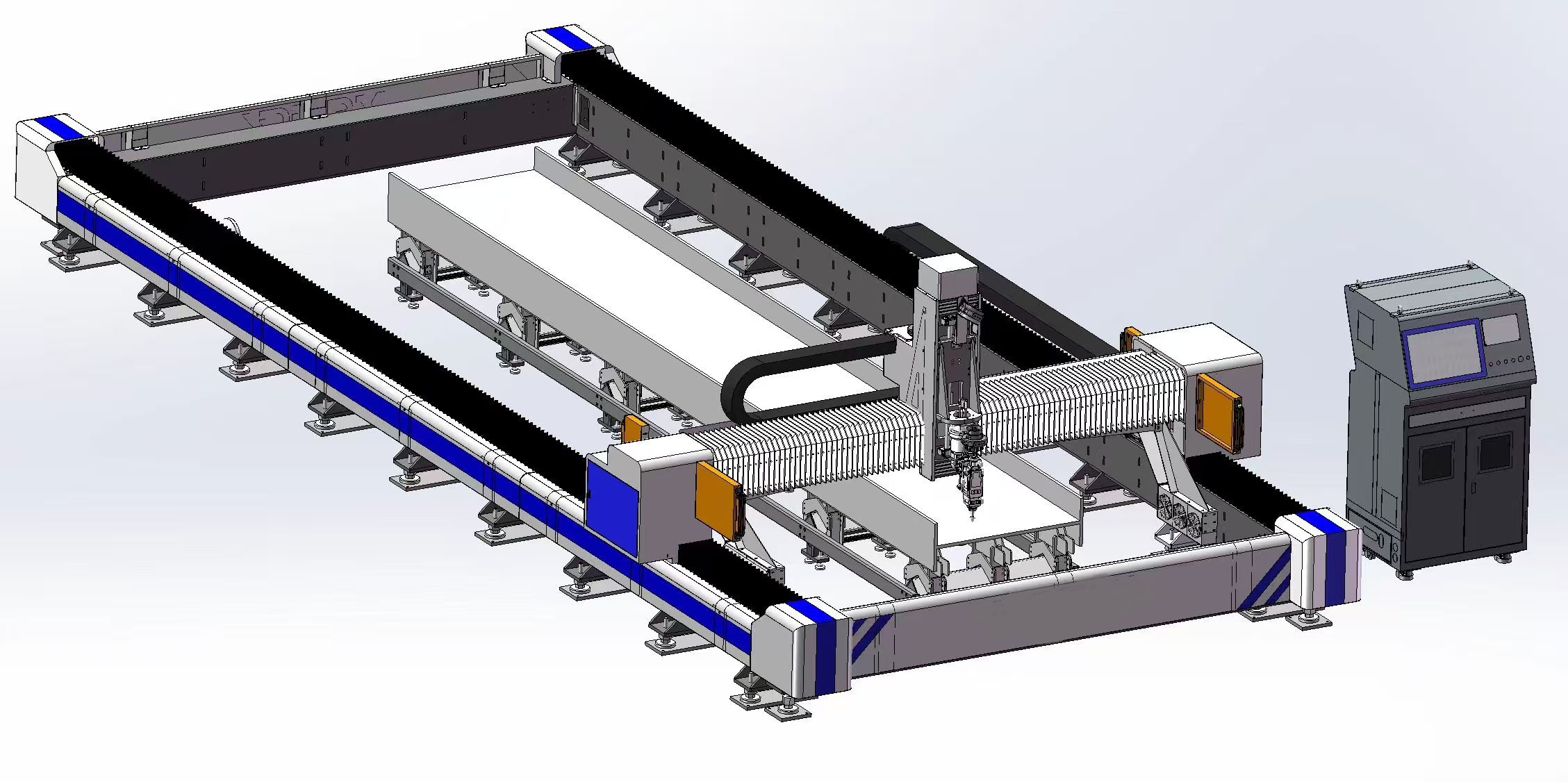
Industrial Application of H-Beam Plasma Cutter
Quantifying the $5,000 Monthly Operational Savings
The financial justification for the capital investment in an H-Beam Plasma Cutter is found in the drastic reduction of variable costs. In the Caracas case study, the $5,000 monthly savings were categorized into three primary areas: labor redistribution, consumable efficiency, and scrap reduction.
1. Labor Cost Reduction and Redistribution
In the manual setup, the facility employed four skilled layout technicians and four manual cutters to maintain a specific throughput. The automated system requires only one technician to oversee the CNC interface and material loading/unloading. By reducing the headcount required for the cutting phase, the company saved approximately $3,200 per month in direct wages and associated social overhead. These human resources were not terminated but were instead redistributed to high-value assembly and specialized welding tasks, increasing the plant’s overall output capacity without increasing the payroll.
2. Material Optimization and Scrap Mitigation
Manual marking and cutting often lead to cumulative errors, resulting in beams that are cut too short or with incorrect bevel orientations. In structural steel, such errors frequently lead to the total loss of the workpiece. The Structural Steel Automation software utilizes advanced nesting algorithms to minimize “drop” or remnant material. By achieving a 12 percent improvement in material utilization, the facility saved an average of $1,200 per month in raw material costs, based on current steel prices in the Latin American market.
3. Elimination of Secondary Processing
Manual cuts almost always require secondary grinding to remove dross and smooth out serrations. The automated plasma system produces a “weld-ready” finish. By eliminating the need for manual grinding, the facility reduced its consumption of abrasive discs and lowered compressed air usage, contributing an additional $600 in monthly savings. Furthermore, the reduction in shop noise and particulate matter improved the overall safety and health environment of the facility.
Throughput Analysis: Speed vs. Precision
Beyond the direct financial savings, the H-Beam Plasma Cutter significantly altered the production timeline. A standard H-beam requiring four bolt holes and a cope cut on both ends would take a manual team approximately 45 to 60 minutes to complete, including layout and cleaning. The automated system completes the same sequence in under 8 minutes. This 6x increase in throughput allowed the Caracas facility to bid on larger infrastructure projects that were previously beyond their operational capacity due to tight delivery schedules. The precision of the CNC system also ensured that during site erection, the beams aligned perfectly, reducing the need for field modifications, which are notoriously expensive and time-consuming.
Integration Challenges and Technical Solutions
Implementing such technology in Caracas presented unique challenges, particularly regarding power stability and technical support. To mitigate voltage fluctuations common in the region, the facility installed industrial-grade power conditioners to protect the CNC electronics and the plasma inverter. Additionally, the shift required a transition from manual craftsmanship to digital literacy. The workforce underwent training in CAD/CAM Integration, moving from physical tape measures to digital file management. This upskilling of the local workforce is a critical component of the long-term sustainability of the investment, ensuring that the machine is maintained and operated at peak efficiency.
Concluding Industry Insight: The Globalization of Precision Fabrication
The case study in Caracas reflects a broader global trend: the democratization of high-precision manufacturing technology. Historically, automated H-beam processing was reserved for the largest fabrication houses in Europe or North America. However, the development of more modular and user-friendly CNC systems has allowed regional hubs in emerging markets to achieve the same technical standards. The $5,000 monthly saving is a localized metric, but the underlying principle is universal. As labor costs rise and the global supply chain demands higher traceability and precision, the transition to automated structural steel processing is no longer an optional upgrade but a fundamental requirement for market competitiveness. The future of the industry lies in the seamless integration of digital design and robotic execution, effectively bridging the gap between engineering intent and physical reality.
Industrial Expertise & Support
Are you looking for high-performance H-Beam Plasma Cutter tailored for the Global market? Our engineering team provides comprehensive solutions for modern manufacturing.





