Introduction: The Evolution of Structural Steel Fabrication in South America
The industrial landscape of Caracas, Venezuela, serves as a critical node for heavy engineering and structural steel production within the Andean and Caribbean regions. As infrastructure projects demand higher precision and faster throughput, the transition from manual layout and mechanical drilling to automated thermal cutting has become a technical necessity. Central to this transition is the deployment of the H-Beam Plasma Cutter, a multi-axis robotic system designed to process complex structural profiles with minimal human intervention. However, the geographical and logistical challenges inherent in South American industrial hubs necessitate more than just hardware; they require a robust digital framework for maintenance and operational uptime. This article examines the integration of remote cloud diagnostics within plasma cutting systems to ensure continuous production in vast, logistically complex regions.
Technical Architecture of the H-Beam Plasma Cutter
The modern H-Beam Plasma Cutter is engineered around a 6-axis robotic kinematics system that allows the plasma torch to navigate the flanges and webs of structural steel profiles. Unlike traditional plate cutters, the H-beam variant must account for the geometric variances found in hot-rolled steel. The system utilizes laser profiling or mechanical probing to map the actual dimensions of the beam before the first arc is struck. This ensures that the programmed toolpath compensates for any camber or sweep present in the raw material.
The cutting process is typically powered by a high-definition plasma power source capable of maintaining a constricted arc for narrow kerf widths and dross-free cuts. In Caracas, where structural specifications often adhere to international standards such as ASTM or ISO, the ability to produce bolt-ready holes and complex copes without secondary grinding is a significant operational advantage. The integration of high-definition oxygen plasma technology allows for a heat-affected zone (HAZ) that is significantly smaller than that of conventional air plasma, preserving the metallurgical integrity of the structural steel.
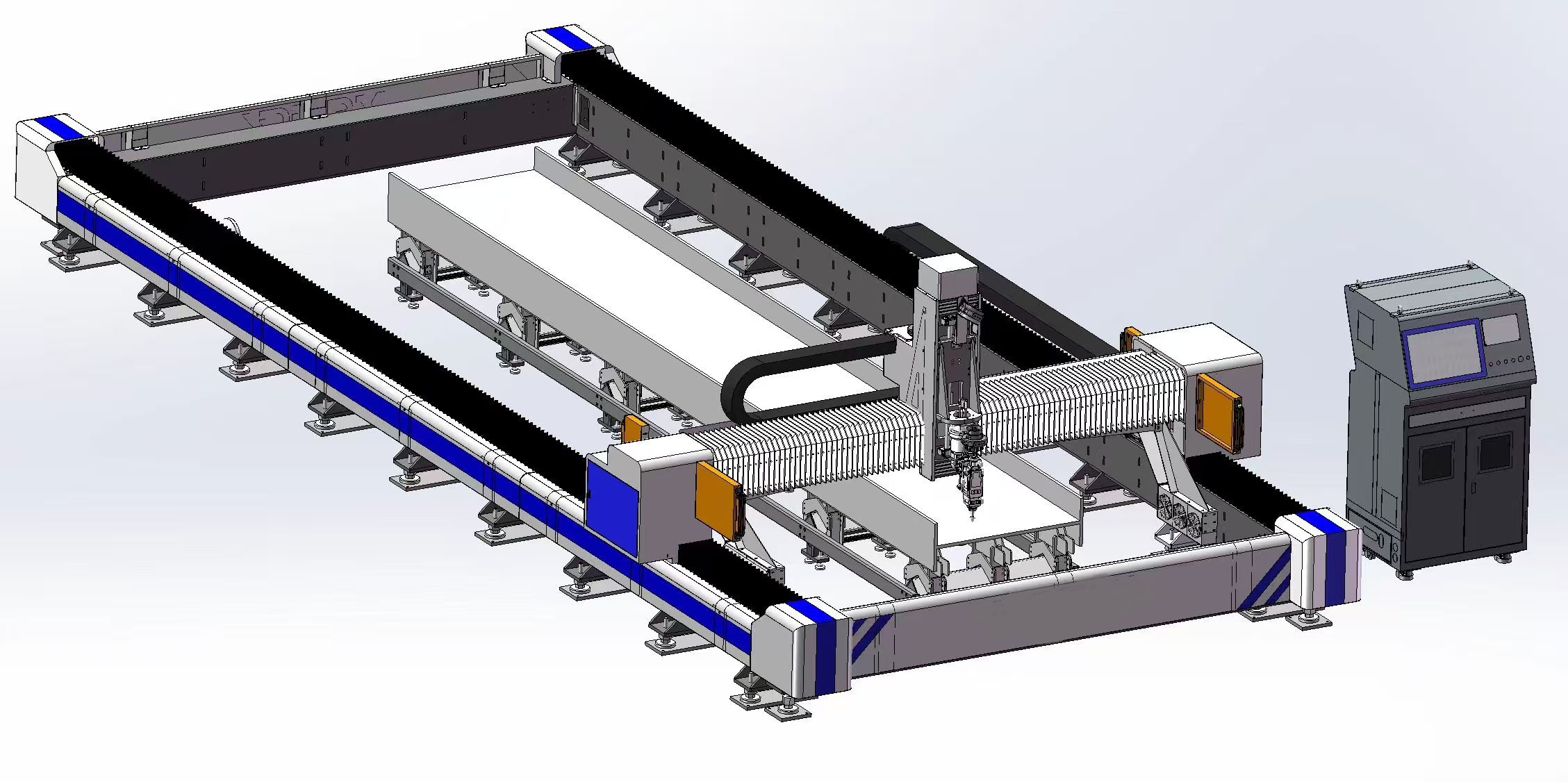
Industrial Application of H-Beam Plasma Cutter
Remote Cloud Diagnostics: Bridging the Geographical Gap
Operating sophisticated machinery in Caracas presents unique challenges regarding on-site technical support. Traditional service models rely on the physical presence of field service engineers, which can lead to extended downtime during travel and customs clearance. To mitigate this, advanced fabrication systems now incorporate Industrial Internet of Things (IIoT) gateways. These gateways facilitate a secure, encrypted tunnel between the machine’s Programmable Logic Controller (PLC) and the manufacturer’s global support center.
Remote cloud diagnostics allow for real-time monitoring of over 200 machine parameters, including gas pressures, inverter temperatures, and servo-motor torque profiles. When a deviation from the baseline is detected, the system generates a diagnostic packet. This data enables remote engineers to identify whether a fault is mechanical, electrical, or software-based. In many instances, logic errors or parameter misconfigurations can be rectified via the cloud, restoring production in minutes rather than days. This capability is vital for vast regions where the distance between the fabrication facility and the technical service hub may span thousands of kilometers.
Data-Driven Maintenance and Predictive Analytics
The shift from reactive to predictive maintenance is facilitated by the continuous stream of data uploaded to the cloud. By analyzing the wear patterns of consumables—such as electrodes, nozzles, and shields—the system can predict the end-of-life for these components. In the context of the Caracas industrial sector, where supply chain fluctuations can impact the availability of specialized parts, predictive analytics allow procurement teams to manage inventory with higher precision.
Furthermore, cloud diagnostics provide insights into the duty cycle and operational efficiency of the H-Beam Plasma Cutter. Managers can review “arc-on” time versus idle time, identifying bottlenecks in the material handling phase. If the robotic arm is waiting for the next beam to be loaded, the data will reflect this latency, prompting a review of the conveyor or cross-transfer systems. This level of transparency ensures that the capital investment is utilized at its maximum theoretical capacity.
Optimizing Cutting Parameters for Regional Material Variations
Steel chemistry and surface conditions can vary based on the mill of origin. Structural steel processed in Venezuela may exhibit different oxidation levels or mill scale thickness compared to European or Asian counterparts. Remote diagnostics allow application engineers to fine-tune the Ohmic sensing and arc voltage height control (AVHC) settings remotely. By adjusting the pierce delay and cut speed in the machine’s CNC database, the system can be optimized for the specific metallurgical characteristics of the local stock.
This remote optimization also extends to the nesting software. Cloud-integrated CAM (Computer-Aided Manufacturing) systems allow for the remote transmission of cutting files. If a complex structural node requires a specific bevel angle or a unique coping pattern, the file can be verified and simulated in a virtual environment before being pushed to the machine in Caracas. This reduces the risk of pilot error and material waste, which is critical when working with high-value structural members.
Cybersecurity and Connectivity in Industrial Environments
A primary concern for B2B stakeholders regarding cloud diagnostics is the security of the industrial network. Modern systems employ multi-layered security protocols, including hardware-based firewalls and VPN (Virtual Private Network) encryption. The connection is typically “outbound only,” meaning the machine initiates the request for support, preventing unauthorized external access to the local area network. In regions like Caracas, where internet stability may fluctuate, these systems include localized data buffering. If the connection is lost, the machine continues to log diagnostic data locally, synchronizing with the cloud once the connection is restored.
Concluding Industry Insight: The Decentralization of Technical Expertise
The deployment of the H-Beam Plasma Cutter in Caracas, supported by remote cloud diagnostics, represents a broader shift in the global manufacturing sector: the decentralization of technical expertise. The physical location of the machine is becoming less relevant than its digital connectivity. As we move toward a more integrated global supply chain, the ability to provide high-tier technical support via the cloud will be the deciding factor in the adoption of automated technologies in developing industrial regions.
For the structural steel industry, this means that fabrication shops in vast regions can now compete on a global scale, offering the same precision and reliability as facilities in more technologically dense areas. The future of heavy industry lies in this hybrid model—where robust, localized hardware is supported by a global, cloud-based intelligence network. This synergy not only reduces operational risk but also accelerates the industrialization of regions that were previously hindered by their geographical distance from technology providers.
Industrial Expertise & Support
Are you looking for high-performance H-Beam Plasma Cutter tailored for the Global market? Our engineering team provides comprehensive solutions for modern manufacturing.





