Introduction: The Transition from Manual to Automated Structural Fabrication
In the industrial corridors of Caracas, Venezuela, the structural steel sector has historically faced significant bottlenecks related to manual processing methods. The fabrication of heavy-duty H-beams, essential for high-rise infrastructure and industrial warehouses, traditionally demanded extensive man-hours for layout, cutting, and drilling. As global demand for faster project delivery cycles increases, regional fabricators are shifting toward high-precision automation. This technical analysis examines a specific case study where a Caracas-based facility integrated an advanced H-Beam Plasma Cutter to overhaul its production line, successfully compressing a 72-hour production cycle into a streamlined 3-hour window.
The reduction in cycle time is not merely a result of faster cutting speeds; it is the product of integrating multi-axis robotic motion with Computer Numerical Control (CNC) systems. By eliminating the cumulative delays inherent in manual material handling and multi-stage processing, the facility transformed its operational throughput and structural accuracy.
The Baseline: Analyzing the 72-Hour Manual Workflow
Before the implementation of automated plasma technology, the fabrication of a standard batch of processed H-beams required a sequence of discrete, labor-intensive steps. The process began with manual layout, where technicians used measuring tapes, squares, and chalk lines to mark cut lengths, bolt hole centers, and cope geometries. This phase alone was susceptible to human error, often necessitating rework during the assembly phase.
Following the layout, the beams were cut using oxy-fuel torches. While effective for thick carbon steel, oxy-fuel cutting introduces a wide Heat Affected Zone (HAZ) and produces significant dross, requiring secondary grinding operations. Bolt holes were subsequently created using magnetic drills or stationary radial drills, a process that required frequent repositioning of the heavy beams. When factoring in the time required for material handling—moving beams between marking stations, cutting stations, and drilling stations via overhead cranes—the total elapsed time for a standard project lot reached approximately 72 hours. This latency created a significant bottleneck, limiting the facility’s capacity to bid on large-scale international contracts.
Technical Specifications of the H-Beam Plasma Cutter
The solution implemented in Caracas centered on a 6-axis robotic arm integrated with a high-definition plasma power supply. Unlike traditional 2D plate cutters, the H-Beam Plasma Cutter utilizes a specialized gantry or robotic configuration capable of reaching all four sides of the beam (flanges and web) in a single pass. The system utilizes sophisticated nesting software that imports files directly from Building Information Modeling (BIM) software, such as Tekla or AutoCAD.
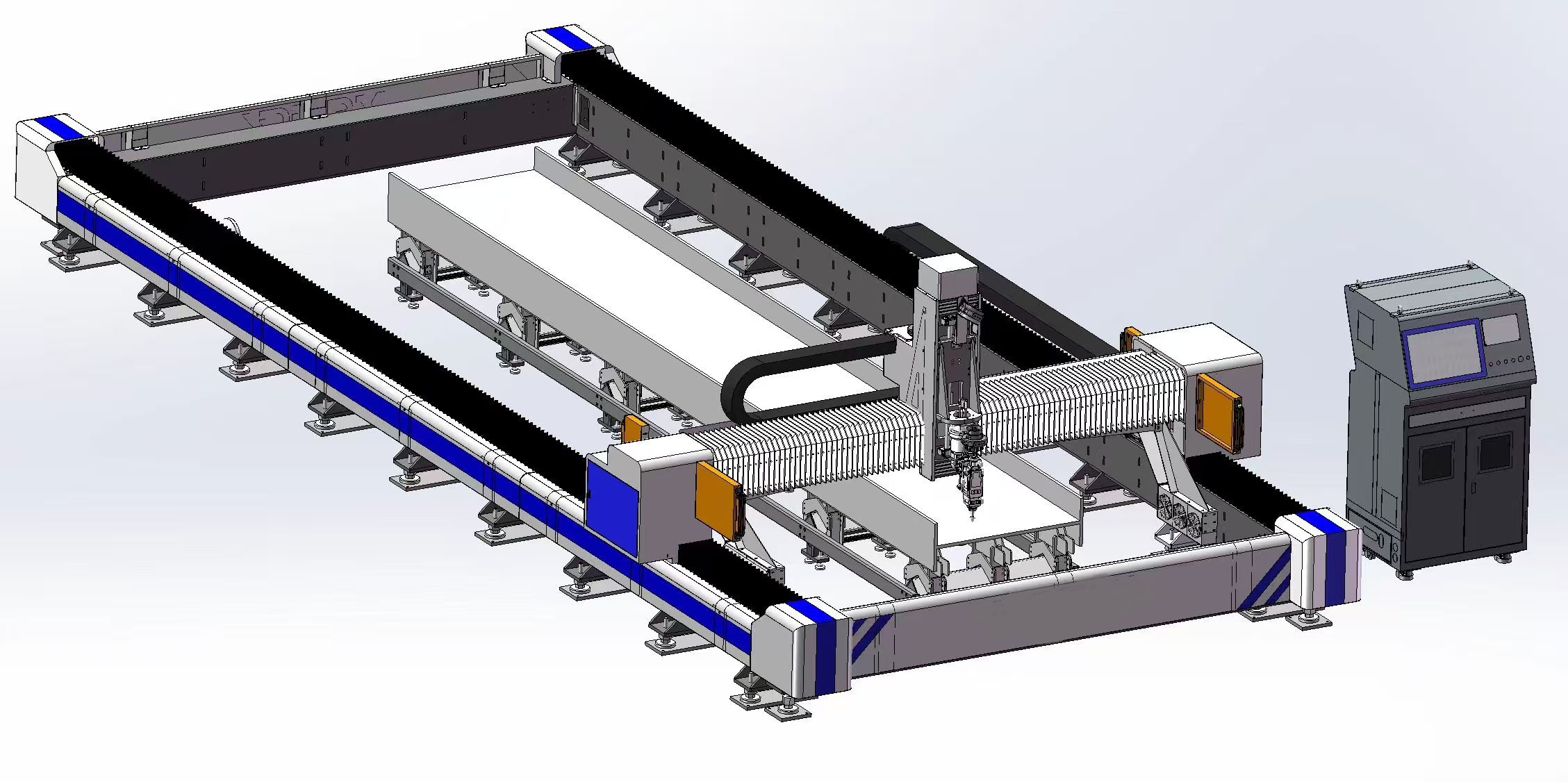
Industrial Application of H-Beam Plasma Cutter
Key technical components of the system include:
1. High-Definition Plasma Source: Utilizing oxygen or nitrogen as plasma gases to achieve laser-like edge quality with minimal bevel angles.
2. 6-Axis Kinematics: The robotic arm allows for complex geometries, including miter cuts, copes, and bolt holes, to be executed without rotating the workpiece.
3. Laser Profiling Sensors: Before the cut begins, the system scans the beam to detect any structural deviations or “mill tolerances” (bowing or twisting) and adjusts the cutting path in real-time to ensure dimensional accuracy.
Achieving the 3-Hour Cycle: The Mechanics of Efficiency
The reduction from 72 hours to 3 hours is achieved through the consolidation of processes. The H-Beam Plasma Cutter functions as a multi-processing center. In a single automated sequence, the machine performs the following tasks:
First, the material is loaded onto a motorized conveyor system. The High-Definition Plasma Power Supply then executes the programmed cut-to-length instructions. Simultaneously, the robotic head carves out bolt holes with tolerances of +/- 0.5mm, eliminating the need for mechanical drilling. Copes, notches, and weld preparations (bevels) are completed in the same sequence. Because the plasma arc is highly concentrated, the kerf width is minimized, and the HAZ is significantly reduced compared to oxy-fuel, which eliminates the need for post-cut grinding.
The 3-hour cycle includes the digital preparation time, material loading, automated cutting of the entire batch, and final quality inspection. By removing the need to move the beam between different workstations, the facility eliminated nearly 90% of the non-value-added material handling time.
Metallurgical Integrity and Precision Standards
A critical concern in structural steel fabrication is the preservation of the material’s mechanical properties. The high-speed nature of plasma cutting limits the duration of heat exposure to the steel. This ensures that the grain structure of the H-beam remains stable, meeting strict Venezuelan and international building codes (such as AISC standards). The precision of the CNC-driven robotic arm ensures that bolt holes align perfectly during site erection, reducing the need for field modifications, which are costly and time-consuming.
Economic Impact and ROI for the Caracas Facility
The transition to an H-Beam Plasma Cutter represents a significant capital expenditure, but the Return on Investment (ROI) is driven by the drastic reduction in labor costs and the increase in output. In the Caracas context, where specialized labor can be scarce and project timelines are aggressive, the ability to produce in 3 hours what previously took 72 hours allows the fabricator to handle multiple projects concurrently. Furthermore, the reduction in scrap material—achieved through optimized nesting algorithms—contributes to lower overall material costs.
Concluding Industry Insight: The Future of Distributed Fabrication
The successful implementation of robotic plasma cutting in Caracas serves as a benchmark for the global structural steel industry. It highlights a broader trend: the democratization of high-end fabrication technology in emerging markets. As CNC software becomes more intuitive and robotic hardware more robust, the geographical location of a fabrication facility becomes less of a barrier to competing on the global stage.
The shift from 72 hours to 3 hours is not just a localized success story; it is indicative of a global move toward “just-in-time” structural fabrication. For B2B stakeholders, the takeaway is clear: investment in multi-axis automation is no longer an optional upgrade for those seeking to remain competitive. The integration of Computer Numerical Control (CNC) with thermal cutting processes is the primary driver for reducing lead times and ensuring the structural integrity of the next generation of global infrastructure. As urban centers like Caracas continue to modernize, the reliance on automated, data-driven fabrication will be the defining factor in operational viability.
Industrial Expertise & Support
Are you looking for high-performance H-Beam Plasma Cutter tailored for the Global market? Our engineering team provides comprehensive solutions for modern manufacturing.





