Introduction: The Intersection of Structural Integrity and Abrasive Resistance
In the global mining sector, the operational lifespan of heavy machinery is dictated by the efficiency of wear-part replacement cycles. As mining operations in the Orinoco Mining Arc and surrounding South American regions intensify, the demand for precision-engineered wear plates has transitioned from standard procurement to highly customized, rapid-response fabrication. Caracas, Venezuela, has emerged as a critical logistical and technical hub for this specialized production, leveraging high-capacity H-Beam Plasma Cutter technology to bridge the gap between structural steel processing and wear-plate integration. This article examines the technical parameters of plasma-based customization and the mechanical advantages of localized fabrication for heavy-duty mining applications.
Structural Dynamics of Mining Wear-Plate Support Systems
Wear plates, typically composed of quenched and tempered martensitic steels such as AR400, AR500, or specialized chromium-carbide overlays, cannot function in isolation. They require robust structural frameworks—often utilizing heavy H-beams and I-sections—to withstand the kinetic energy of ore impact and the frictional stress of material flow. The integration of these plates onto structural members requires extreme geometric precision to ensure load distribution is uniform across the chassis of crushers, hoppers, and chutes.
The utilization of an H-Beam Plasma Cutter in the Caracas industrial corridor allows for the simultaneous processing of structural supports and the wear liners themselves. Unlike traditional oxy-fuel methods, high-definition plasma systems provide a significantly narrower kerf and a reduced thermal footprint. This is essential when working with high-carbon steels where excessive heat can lead to localized annealing, effectively softening the material and compromising its abrasion resistance. By utilizing multi-axis plasma heads, fabricators can execute complex bolt-hole patterns and countersinking directly into the structural beams, ensuring a flush fit for the wear plates that prevents fine-particle ingress behind the liner.
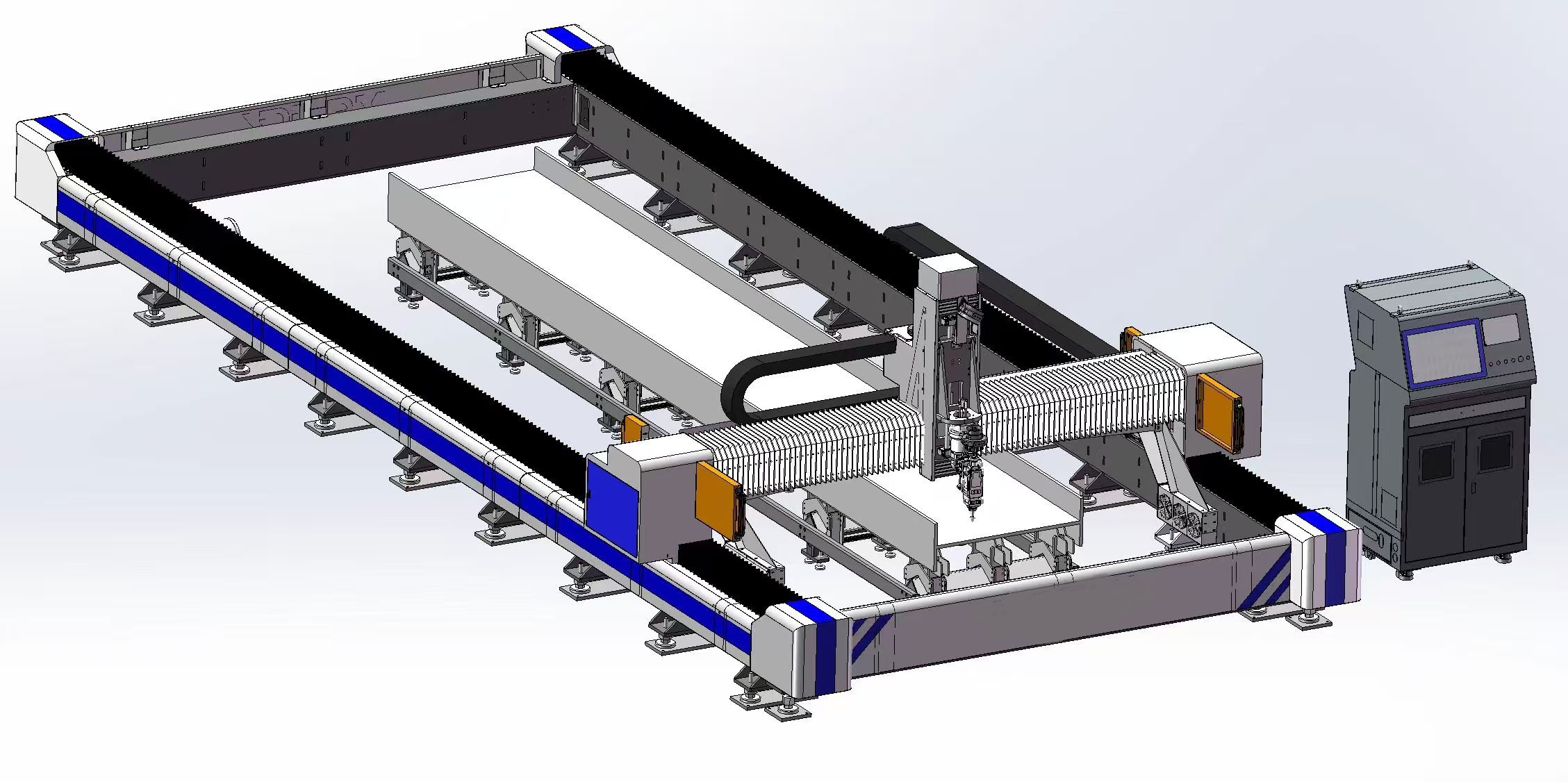
Industrial Application of H-Beam Plasma Cutter
Technical Parameters: Plasma Arc Constriction and Edge Quality
The efficacy of wear-plate customization is largely dependent on Plasma Arc Constriction. Modern plasma systems used in Caracas employ high-swirl gas technology to constrict the arc, increasing the energy density. For mining applications involving 25mm to 50mm thick plates, this density is critical for maintaining perpendicularity. A deviation of even a few degrees in the cut edge can result in improper seating of the wear plate, leading to vibration-induced fatigue in the mounting bolts.
Furthermore, the CNC-driven nature of these cutters allows for CNC Path Optimization, which minimizes material waste—a vital factor when dealing with expensive high-alloy steels. In the context of Caracas’s fabrication facilities, the integration of 5-axis robotic arms with plasma torches enables the cutting of complex bevels (V, Y, K, and X profiles) in a single pass. This eliminates the need for secondary grinding operations, which are often required to prepare edges for welding in structural mining assemblies. The result is a significant reduction in lead times for critical components like bucket liners and conveyor transfer points.
Managing the Heat-Affected Zone (HAZ) in High-Hardness Steels
A primary technical challenge in customizing wear plates for mining is the management of the Heat-Affected Zone (HAZ). When plasma cutting hard materials like AR500, the edge of the cut undergoes a microstructural change. If the cooling rate is not controlled or if the heat input is too high, the edges can become brittle or lose their hardness.
Industrial facilities in Caracas utilize underwater plasma cutting or specialized water-muffler systems to dissipate heat rapidly. By submerging the workpiece or using a high-volume water shroud, the Heat-Affected Zone (HAZ) is restricted to a depth of less than 0.5mm. This ensures that the structural integrity of the wear plate remains consistent from the center to the very edge of the cut. For mining operators, this translates to uniform wear patterns and the elimination of premature edge chipping, which is a common failure mode in inferiorly processed liners.
Logistical Advantages of Caracas as a Fabrication Hub
The geographical and industrial positioning of Caracas provides a strategic advantage for mining operations across the Guyana Shield and the Andean volcanic belt. The proximity to primary steel production facilities allows for a streamlined supply chain of raw H-beams and plate stock. When a mining site experiences an unforeseen failure in a primary crusher liner, the ability to transmit CAD files to a Caracas-based facility equipped with an H-Beam Plasma Cutter ensures that custom replacements are fabricated and dispatched within a 24-to-48-hour window.
This rapid customization capability is augmented by the local engineering expertise in Caracas, where technicians specialize in retrofitting legacy mining equipment with modern wear-package geometries. By using 3D laser scanning at the mine site and importing that data directly into the plasma cutter’s CNC software, fabricators can produce wear plates that account for the specific deformation and wear patterns of an aging machine, extending its operational life beyond original OEM specifications.
Conclusion: Industry Insight on Decentralized Advanced Fabrication
The evolution of mining maintenance is moving away from the stockpiling of generic spare parts toward a model of “Just-In-Time” precision fabrication. The implementation of high-definition H-Beam Plasma Cutter technology in regional hubs like Caracas represents a shift in how heavy industry manages mechanical downtime. As material science continues to produce harder and more complex alloys, the requirement for high-energy-density cutting processes will only increase.
The industry insight for the coming decade suggests that the integration of AI-driven nesting algorithms and real-time plasma arc monitoring will further refine the customization of wear-resistant components. For global mining enterprises, the lesson is clear: localized technical hubs capable of high-precision structural and wear-plate fabrication are no longer a luxury but a fundamental requirement for maintaining high throughput in increasingly abrasive environments. Caracas, through its adoption of advanced plasma technologies, is positioning itself as a vital node in this high-tech industrial ecosystem.
Industrial Expertise & Support
Are you looking for high-performance H-Beam Plasma Cutter tailored for the Global market? Our engineering team provides comprehensive solutions for modern manufacturing.





