Advancing Structural Fabrication: The Integration of Dust-Free H-Beam Plasma Cutting in Caracas
The industrial landscape of Caracas, Venezuela, is currently undergoing a significant transition as local heavy engineering and construction firms align themselves with global Environment, Health, and Safety (EHS) protocols. At the center of this transformation is the adoption of the H-Beam Plasma Cutter, a sophisticated piece of machinery designed to replace traditional manual thermal cutting and mechanical drilling. As the demand for complex structural steel increases in sectors such as oil and gas, urban infrastructure, and large-scale manufacturing, the shift toward automated, dust-free processing has become a technical necessity rather than a luxury.
For decades, the fabrication of H-beams and I-beams involved manual layout and oxy-fuel cutting, processes that are notoriously inefficient and environmentally hazardous. The modern H-Beam Plasma Cutter utilizes multi-axis robotic arms and high-definition plasma torches to execute precise cuts, copes, and bolt holes in a single pass. However, the true innovation lies in the integration of advanced filtration systems that mitigate the release of metallic dust and hazardous fumes, ensuring that the air quality within Caracas-based facilities meets international ISO standards.
Technical Architecture of High-Definition H-Beam Processing
The mechanical efficiency of a modern H-Beam Plasma Cutter is rooted in its CNC robotic profiling capabilities. Unlike standard plate cutters, an H-beam system must navigate the complex geometry of structural sections, including the web and both flanges. To achieve this, these machines typically employ a 6-axis or 7-axis robotic manipulator. This allows the plasma torch to maintain a perpendicular angle to the surface of the steel at all times, ensuring clean edges that require zero secondary grinding.
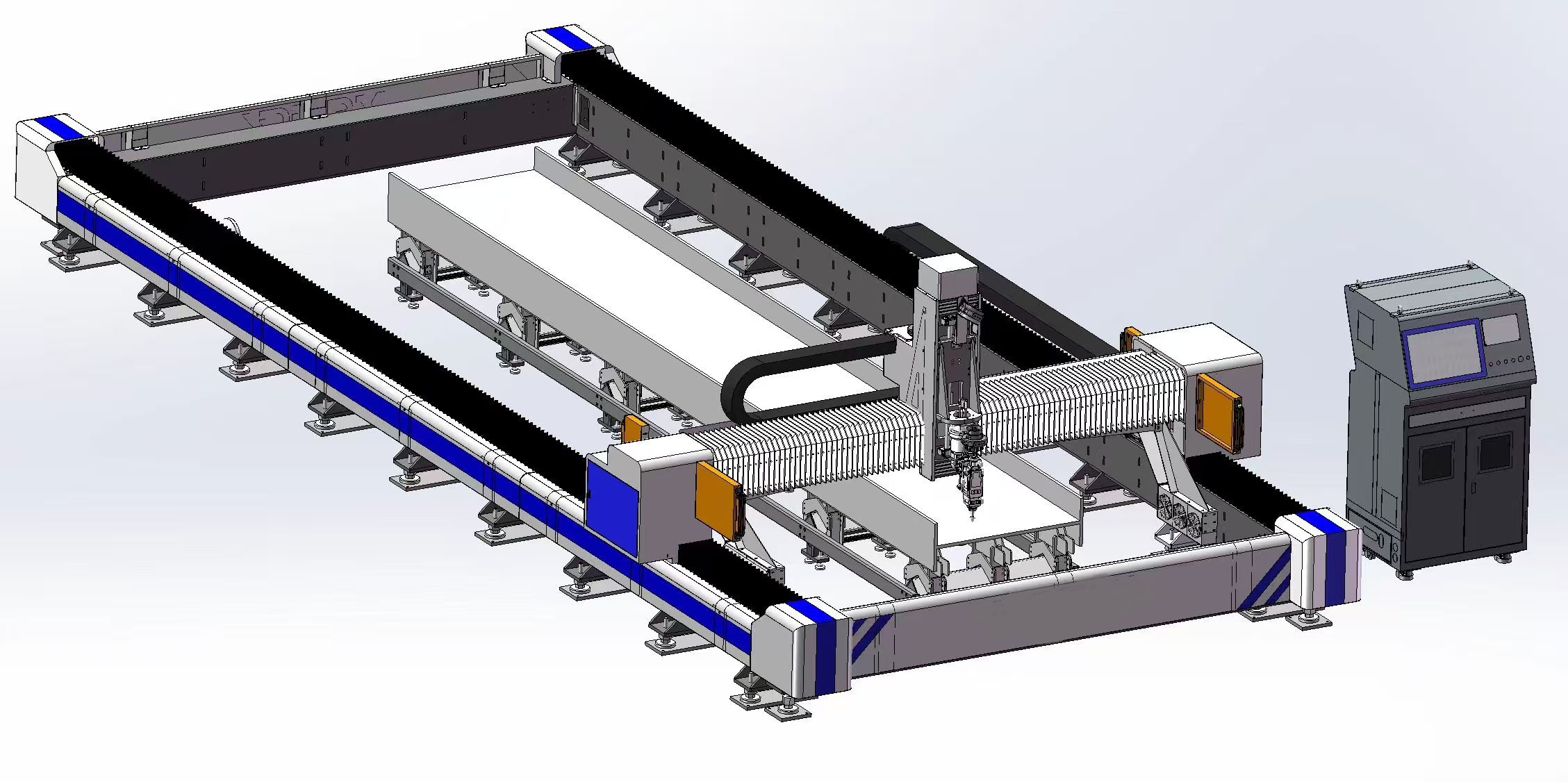
Industrial Application of H-Beam Plasma Cutter
In the context of the Caracas industrial zone, where power stability and equipment durability are paramount, these systems are often paired with a high-definition plasma power source. These power units utilize refined gas flow dynamics—using oxygen, nitrogen, or H35 (a hydrogen-argon mix)—to constrict the plasma arc. The result is a higher energy density that produces a narrower kerf and a significantly reduced heat-affected zone (HAZ). By minimizing the HAZ, the structural integrity of the H-beam is preserved, which is critical for seismic-resistant construction projects common in the Venezuelan capital.
Dust Extraction and Air Quality Management
One of the primary challenges in plasma cutting is the generation of sub-micron particulate matter. When a high-temperature plasma arc vaporizes steel, it creates a mixture of metallic oxides and ozone. In a modern EHS-compliant facility, the H-Beam Plasma Cutter is equipped with a localized fume extraction system. This system operates on a high-vacuum, low-volume principle, capturing pollutants directly at the source of the cut before they can disperse into the factory environment.
The extraction process typically involves a multi-stage filtration unit. The first stage uses a spark arrestor to prevent hot metallic embers from reaching the filter media. The second stage utilizes high-efficiency pleated cartridges, often coated with a PTFE (polytetrafluoroethylene) membrane. This membrane allows the system to capture particulate matter (PM2.5) with an efficiency rating of up to 99.9%. For operations in Caracas, where humidity can fluctuate, these self-cleaning pulse-jet filters ensure that the extraction remains consistent, preventing the accumulation of dust that could otherwise pose a combustible dust hazard or lead to respiratory issues for the workforce.
Alignment with Modern EHS and ISO Standards
Global EHS standards, such as ISO 45001 for occupational health and safety and ISO 14001 for environmental management, are increasingly becoming a prerequisite for Venezuelan contractors bidding on international projects. The implementation of dust-free plasma technology directly addresses these requirements. By automating the cutting process, operators are removed from the immediate vicinity of the thermal reaction, reducing exposure to intense UV radiation, high-decibel noise, and toxic fumes.
Furthermore, the precision of CNC-driven systems significantly reduces material waste. In traditional fabrication, human error in layout or cutting often leads to scrapped sections of high-grade steel. A robotic H-beam cutter utilizes nesting software to optimize the placement of cuts across the length of the beam, maximizing material utilization. This reduction in waste contributes to the “green manufacturing” footprint that modern industrial stakeholders demand. In the resource-conscious environment of Caracas, the ability to lower overhead while increasing safety provides a dual advantage to local fabricators.
Operational Efficiency and Economic Impact in the Venezuelan Market
The economic justification for installing a dust-free H-Beam Plasma Cutter in Caracas extends beyond safety compliance. The throughput capacity of an automated system is approximately four to five times higher than that of manual methods. A single robotic station can perform the work of several manual stations, including drilling, sawing, and marking. This consolidation of processes reduces the footprint required for the production line, allowing for higher output in constrained urban industrial sites.
Moreover, the “dust-free” aspect protects the longevity of other sensitive machinery within the facility. Metallic dust is conductive and abrasive; if left unmanaged, it can infiltrate the control cabinets of other CNC machines, leading to short circuits and premature component failure. By investing in integrated extraction, Caracas-based firms protect their broader capital investments, ensuring that their entire production floor remains operational with minimal downtime for maintenance.
Industry Insight: The Future of Clean Fabrication
The global shift toward sustainable and safe manufacturing is no longer a trend localized to highly regulated Western markets; it is an international baseline. As Caracas continues to modernize its industrial capabilities, the adoption of clean-cutting technologies represents a critical step in the evolution of the regional supply chain. The integration of high-definition plasma cutting with sophisticated dust filtration demonstrates that heavy industry can coexist with rigorous environmental standards.
The industry is moving toward a future where “zero-emission” fabrication shops are the benchmark. We anticipate that the next generation of H-beam processing will incorporate real-time air quality monitoring sensors that communicate directly with the CNC controller, automatically adjusting extraction flow rates based on material thickness and gas type. For fabricators in Venezuela and beyond, the message is clear: technical excellence is now inseparable from environmental responsibility. Those who invest in dust-free, high-precision automation today will be the leaders of the structural steel market tomorrow, possessing the agility to meet both complex engineering specifications and the highest EHS mandates.
Industrial Expertise & Support
Are you looking for high-performance H-Beam Plasma Cutter tailored for the Global market? Our engineering team provides comprehensive solutions for modern manufacturing.





