Precision Engineering in Caracas: The Role of the H-Beam Plasma Cutter in Industrial Furniture Production
The industrial landscape of Caracas, Venezuela, is currently undergoing a significant technological transition, specifically within the high-end furniture export sector. As global demand for “industrial-chic” and structural steel furniture rises, manufacturers are moving away from traditional manual fabrication toward high-precision automated systems. Central to this evolution is the H-Beam Plasma Cutter, a specialized CNC-controlled apparatus designed to handle the complex geometries of structural steel with a focus on edge quality and dimensional accuracy.
For exporters in Caracas, the primary challenge has historically been the secondary processing required after the initial cut. Manual oxy-fuel cutting or basic mechanical sawing often leaves significant dross and irregularities. In a B2B context, where international quality standards dictate tight tolerances, the implementation of advanced plasma technology is no longer optional. It is the baseline for entering the global supply chain.
Technical Specifications and Thermal Dynamics of Burr-Free Cutting
The achievement of a “burr-free” finish on structural H-beams depends on the precise control of the plasma arc’s thermal density. The H-Beam Plasma Cutter utilizes a high-velocity jet of ionized gas to melt and expel metal from the kerf. In Caracas’s manufacturing facilities, these machines are typically configured with high-definition plasma power sources that narrow the arc, significantly reducing the Heat-Affected Zone (HAZ).
A reduced HAZ is critical for furniture exporters. When the thermal input is concentrated, the metallurgical properties of the steel remain stable, preventing the hardening of the edges that can interfere with subsequent drilling or powder coating. To ensure a burr-free result, the system must maintain a constant standoff distance between the torch nozzle and the beam surface. This is achieved through CNC multi-axis synchronization, which allows the cutting head to rotate and tilt around the H-beam’s flanges and web without losing arc stability.
Optimizing Gas Dynamics for Export-Grade Quality
The choice of shielding and plasma gases is a technical variable that Caracas-based engineers must optimize based on the material thickness. For mild steel H-beams commonly used in architectural furniture, an oxygen-oxygen (O2/O2) configuration is often employed to maximize cutting speed while minimizing dross. The chemical reaction between the oxygen and the molten steel creates a more fluid slag that is easily ejected by the gas pressure.
Furthermore, the integration of Kerf compensation software within the CNC controller ensures that the physical width of the cut is accounted for in the digital blueprint. This level of precision ensures that interlocking furniture components—such as beam-to-column joints—fit with a tolerance of +/- 0.5mm, eliminating the need for manual filing or corrective welding on the assembly line.
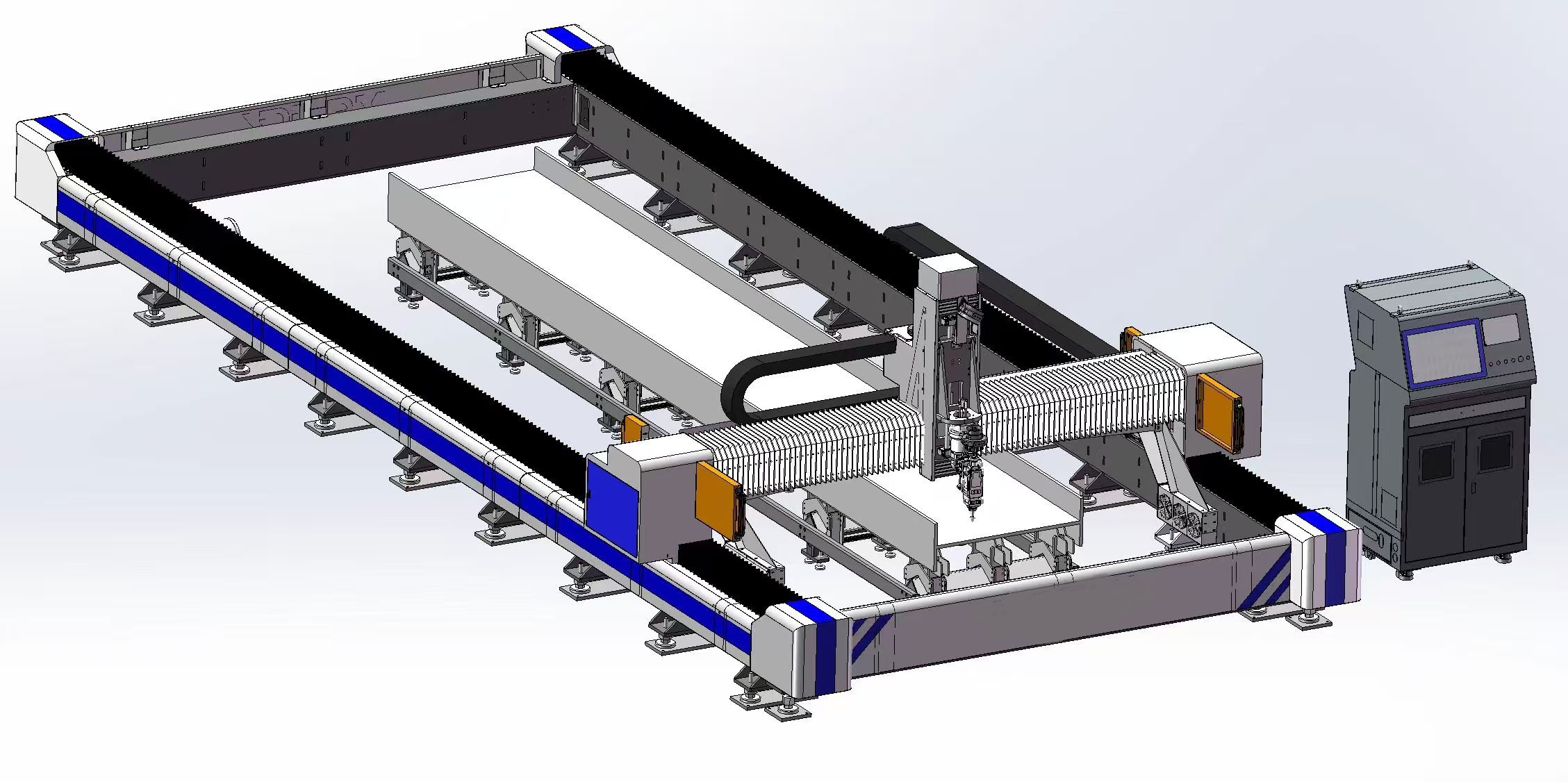
Industrial Application of H-Beam Plasma Cutter
Economic Impact: Reducing Post-Processing Labor
In the competitive global furniture market, the cost of labor associated with “cleaning” a cut can account for up to 30% of the total fabrication time. By utilizing an H-Beam Plasma Cutter, Caracas exporters can bypass the grinding stage entirely. The high-frequency arc starting and precision motion control result in a surface roughness that meets ISO 9013 Range 3 or 4 standards.
For a B2B buyer in North America or Europe, receiving components that are ready for immediate assembly or coating is a significant value proposition. It reduces lead times and shipping weights (by eliminating scrap earlier in the process) and ensures that the aesthetic finish of the industrial furniture remains consistent across large production runs. The reduction in manual grinding also decreases the local facility’s overhead regarding consumables, such as abrasive discs and electricity, while improving the safety of the work environment by reducing airborne metallic dust.
Structural Integrity and Aesthetic Requirements
Furniture designed for commercial spaces—such as restaurants, offices, and hotels—often leaves the structural steel exposed. In these applications, the H-beam is not just a support element but a visual feature. The plasma cutting process must therefore produce clean, sharp corners and smooth longitudinal cuts. The multi-axis capability of the cutter allows for complex “cope” cuts and miter joints that would be impossible to execute with standard mechanical saws.
Technical data from Caracas production lines indicate that the use of 3D plasma heads allows for the cutting of bolt holes, slots, and decorative patterns in a single pass. This consolidation of processes ensures that the structural integrity of the H-beam is maintained, as the material is subjected to fewer handling cycles and less mechanical stress compared to traditional punching or drilling methods.
Integration with Global CAD/CAM Standards
To operate effectively in the global market, Caracas manufacturers utilize software that translates 3D models (such as Tekla or AutoCAD) directly into G-code for the plasma system. This digital continuity ensures that the “As-Built” product matches the “As-Designed” specifications exactly. For furniture exporters, this means they can provide digital twins of their products to international architects and interior designers, facilitating easier integration into large-scale commercial projects.
The ability to handle various beam sizes—from small decorative beams to heavy structural sections—on the same machine provides the versatility required for diverse furniture portfolios. Whether the project calls for a minimalist desk frame or a massive shelving unit for a logistics hub, the plasma cutter’s programmable parameters allow for rapid switching between different material grades and thicknesses.
Concluding Industry Insight: The Future of Venezuelan Steel Fabrication
The adoption of H-Beam Plasma Cutter technology in Caracas signifies a broader shift in the South American manufacturing sector toward high-value-added exports. By prioritizing burr-free quality and technical precision, Venezuelan furniture exporters are effectively decoupling themselves from the limitations of local market volatility and positioning themselves as reliable partners in the global B2B supply chain.
The industry insight for the coming decade suggests that the convergence of robotics and plasma cutting will further refine these processes. We anticipate the integration of real-time optical sensors that can adjust cutting parameters on the fly to account for minor variations in steel mill tolerances. For Caracas, the investment in high-precision plasma technology is not merely an equipment upgrade; it is a strategic move toward an automated, data-driven manufacturing model that meets the rigorous demands of international architectural and furniture standards. As the “industrial-chic” aesthetic becomes a permanent fixture in global design, the ability to produce clean, structural steel components at scale will remain a significant competitive advantage for the region.
Industrial Expertise & Support
Are you looking for high-performance H-Beam Plasma Cutter tailored for the Global market? Our engineering team provides comprehensive solutions for modern manufacturing.





