Introduction: The Industrial Landscape of Caracas and Power Infrastructure
Caracas, Venezuela, remains a critical hub for heavy industry, particularly in sectors supporting oil and gas infrastructure, bridge construction, and large-scale architectural steelwork. However, the industrial sector in this region faces a persistent challenge: electrical grid instability. For steel fabricators utilizing high-precision machinery, such as the H-Beam Plasma Cutter, fluctuations in voltage are not merely an inconvenience; they are a significant risk to operational continuity and component integrity. The integration of advanced power management systems within these machines has transitioned from an optional feature to a technical necessity for maintaining global manufacturing standards in the local market.
The Impact of Grid Volatility on Thermal Cutting Precision
In the context of H-beam fabrication, precision is measured in fractions of a millimeter across lengths that can exceed 12 meters. The plasma cutting process relies on the maintenance of a stable ionized gas arc. When the input voltage from the municipal grid fluctuates—a common occurrence in the Caracas metropolitan area—the power source output can vary, leading to inconsistencies in arc density and temperature. This results in “dross” accumulation, increased kerf width, and potential metallurgical changes in the Heat Affected Zone (HAZ).
Without internal stabilization, a sudden voltage sag can cause the arc to extinguish mid-cut, while a voltage surge can lead to premature failure of the plasma torch components. For structural steel, where the structural integrity of the H-beam is paramount, these inconsistencies are unacceptable. Engineering firms in Venezuela are increasingly specifying equipment that can compensate for these external variables without requiring massive, external industrial stabilizers that consume valuable floor space.
Technical Specifications of Built-in Automatic Voltage Regulation (AVR)
Modern industrial cutting systems designed for volatile environments incorporate Automatic Voltage Regulation (AVR) directly into the power supply unit (PSU). This technology utilizes a series of high-speed solid-state components to monitor incoming line voltage in real-time. When the input deviates from the nominal 220V or 440V 3-phase standard, the system adjusts the transformer taps or uses electronic switching to normalize the output.
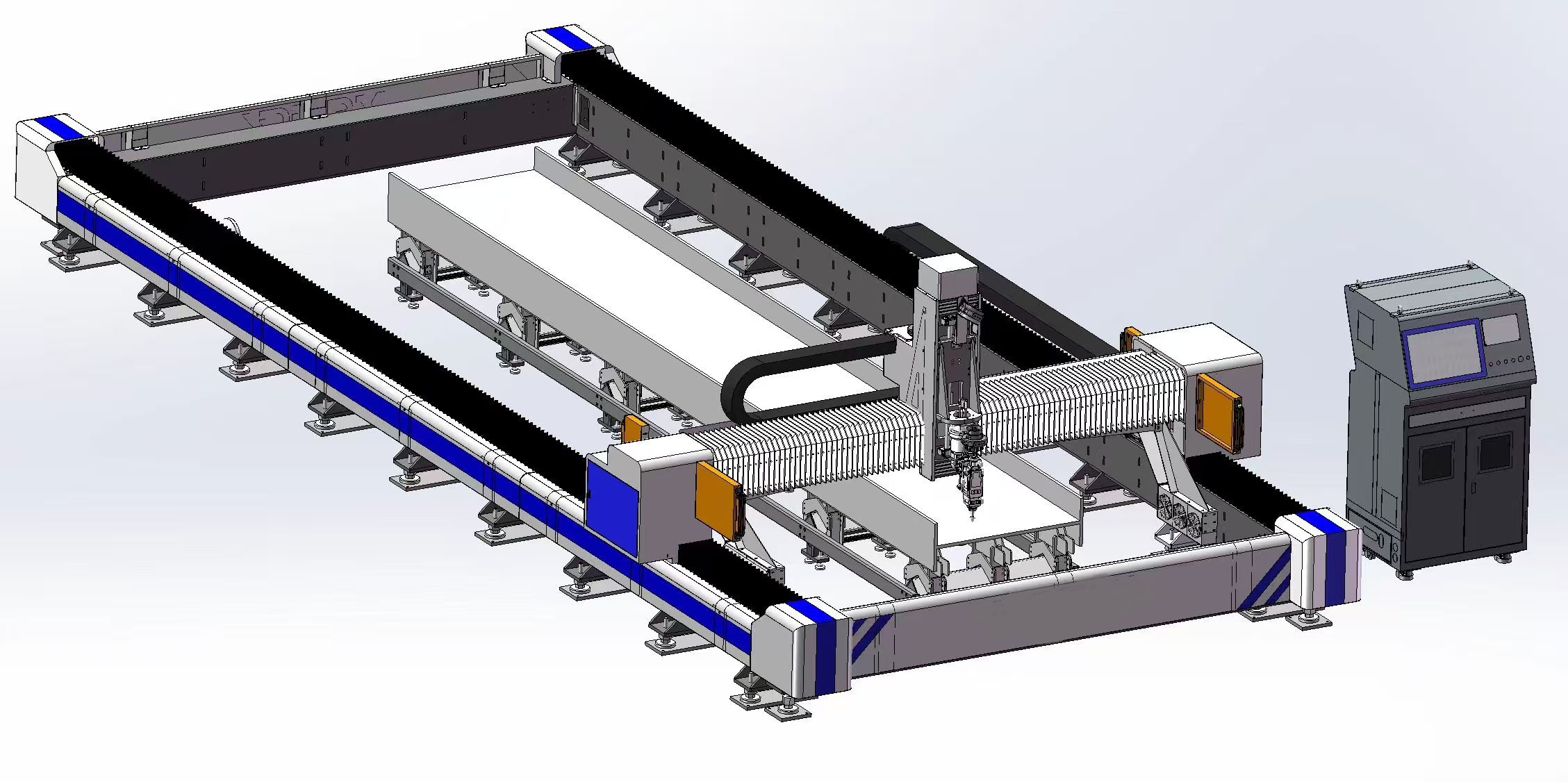
Industrial Application of H-Beam Plasma Cutter
The core of this regulation often involves Insulated Gate Bipolar Transistor (IGBT) technology. These components allow for high-frequency switching, which enables the power source to react to voltage spikes or drops within milliseconds. By converting the incoming AC power to DC, and then back to a highly regulated high-frequency AC before the final rectification for the plasma arc, the system creates a “buffer” between the unstable grid and the sensitive cutting process. This ensures that the Duty Cycle of the machine remains constant even if the local substation is under heavy load.
Synchronizing CNC Motion Control with Power Stability
An H-Beam Plasma Cutter is a multi-axis system, often requiring the simultaneous movement of the longitudinal gantry, the transverse carriage, and the rotational axis of the torch head to navigate the flanges and web of the beam. This CNC Motion Control system is highly sensitive to “dirty” power—electrical noise and harmonics often associated with unstable grids.
Built-in regulation does more than just stabilize the arc; it protects the logic boards and servo drives that dictate the torch’s path. In Caracas, where industrial zones may share lines with residential or heavy inductive loads, electrical noise is prevalent. Integrated filtration systems work alongside voltage regulation to ensure that the digital signals within the CNC cabinet are not corrupted. This prevents “ghost” errors or coordinate drifting, which are common failure points in less sophisticated machinery operating under similar conditions.
Economic Advantages: Consumable Life and Reduced Downtime
From a B2B perspective, the Total Cost of Ownership (TCO) of a plasma system in Venezuela is heavily influenced by the lifespan of consumables—nozzles, electrodes, and swirls. These parts are designed to operate at specific voltage and amperage parameters. When voltage fluctuations occur, the arc becomes unstable, causing the electrode to wear unevenly and the nozzle to sustain “double-arcing” damage.
By implementing built-in regulation, fabricators in Caracas report a significant extension in consumable life, sometimes as high as 30 percent. Furthermore, the reduction in “scrap” material is substantial. In H-beam processing, a failed cut on a 12-meter beam can result in thousands of dollars in lost material and labor. The ability of the machine to “ride through” minor power dips ensures that the cut path is completed without interruption, maintaining the high-margin efficiency required for international competitiveness.
Environmental and Operational Considerations in the Venezuelan Climate
The tropical environment of Caracas adds an additional layer of complexity. High humidity and ambient temperatures can affect the cooling efficiency of the power source. Systems equipped with integrated voltage regulation are typically engineered with more robust thermal management systems. Because voltage regulation involves handling excess energy or compensating for deficits, the internal heat sinks and forced-air cooling systems are designed with higher tolerances. This synergy between electrical regulation and thermal resilience makes these units particularly suitable for the year-round operating conditions in South America.
Concluding Industry Insight: The Globalization of Resilient Manufacturing
The deployment of H-beam plasma cutting systems with built-in voltage regulation in Caracas serves as a microcosm for a broader shift in global manufacturing. As industrialization expands into regions with developing infrastructure, the “intelligence” of the machine must compensate for the deficiencies of the environment. The industry is moving away from the assumption of “perfect power.”
For global manufacturers and suppliers, the technical takeaway is clear: the next generation of CNC machinery will not be judged solely on its peak performance under laboratory conditions, but on its “resilience-by-design.” In markets like Venezuela, the machine is no longer just a tool for shaping steel; it is an integrated power-management platform. This trend will likely see further integration of energy storage systems (such as supercapacitors) within the machine chassis to provide short-term “ride-through” capability for total outages, ensuring that the torch can be safely retracted and the state of the cut saved, preventing both mechanical damage and material waste. Fabricators who invest in these resilient technologies today are positioning themselves to maintain operational stability regardless of the external infrastructure’s volatility.
Industrial Expertise & Support
Are you looking for high-performance H-Beam Plasma Cutter tailored for the Global market? Our engineering team provides comprehensive solutions for modern manufacturing.





