Introduction to Advanced Structural Fabrication in Caracas
The industrial landscape in Caracas, Venezuela, is undergoing a significant transition toward automated structural steel fabrication. As infrastructure projects demand higher precision and faster throughput, traditional manual cutting methods are being replaced by high-performance CNC machinery. Central to this evolution is the deployment of the H-Beam Plasma Cutter, a specialized system designed to handle the complexities of heavy structural profiles. In the context of Caracas’s growing role as a hub for regional heavy industry, the integration of 4-chuck stability systems represents a critical leap in manufacturing capability. This article examines the technical architecture of 4-chuck plasma cutting systems and their specific advantages in the processing of heavy H-beams, I-beams, and channels.
The Engineering Necessity of 4-Chuck Stability
In structural steel fabrication, the primary challenge involves maintaining the axial alignment of long-span workpieces. Standard plasma cutters often utilize two or three chucks, which can lead to material sagging or rotational deviation when processing beams exceeding 12 meters in length. The 4-chuck configuration provides a redundant support system that ensures the workpiece remains perfectly centered throughout the entire rotation cycle. This setup utilizes two main driving chucks and two auxiliary support chucks, working in a 4-Chuck Synchronous Rotation sequence. By distributing the load across four points, the system eliminates the “tailing” effect—a common issue where the final section of the beam loses support and vibrates, leading to inaccurate cuts or torch damage.
Mechanical Load Distribution and Torque Management
Heavy structural steel beams can weigh several tons, placing immense stress on the mechanical components of a cutting machine. The 4-chuck system employed in Caracas facilities utilizes high-torque servo motors synchronized via a central CNC controller. This synchronization ensures that each chuck rotates at an identical angular velocity, preventing torsional stress that could warp the beam. From a technical standpoint, the 4-chuck design allows for “zero-tailing” cutting. This means the machine can process the beam to its absolute end because the fourth chuck maintains a grip even when the primary chucks have released the material to allow the torch access to the beam extremities. This leads to a significant reduction in raw material waste, often improving yield by 5% to 8% per profile.
Precision Cutting with High-Definition Plasma
The core of the cutting process relies on a High-Definition Plasma Power Source capable of piercing thick-walled structural steel. In the Caracas industrial sector, these machines are typically configured with 200A to 400A power supplies, allowing for clean cuts on H-beam flanges and webs up to 50mm thick. The plasma torch is mounted on a multi-axis robotic arm or a specialized gantry that provides 360-degree access to the beam. This allows for the execution of complex geometries, including bolt holes, cope cuts, miter cuts, and welding preparations (bevels) in a single pass. The integration of high-definition technology ensures that the Heat Affected Zone (HAZ) is minimized, preserving the structural integrity of the steel—a critical requirement for seismic-resistant construction in the Venezuelan region.
Integration of CNC Multi-Axis Control Systems
A CNC Multi-Axis Control System serves as the brain of the H-beam plasma cutter. These systems utilize specialized software that converts BIM (Building Information Modeling) and CAD files directly into machine code. In Caracas, where engineering firms often collaborate with international partners, the ability to import TEKLA or AutoCAD files without manual data entry is vital for maintaining global standards. The controller manages the simultaneous movement of the chucks (X-axis), the torch carriage (Y and Z axes), and the torch inclination (A and B axes). This synchronized movement allows the machine to compensate for any inherent deviations in the raw steel profile, such as slight bows or twists, by using laser sensors to map the beam’s surface before the arc is struck.
Operational Efficiency and Throughput Data
Quantifying the impact of 4-chuck plasma cutting involves looking at cycle times and labor reduction. Conventional manual fabrication of an H-beam—including marking, drilling, and manual oxy-fuel cutting—can take several hours per unit. An automated system in a Caracas facility can complete the same operations in under 20 minutes. The stability provided by the 4-chuck system allows for higher travel speeds during the cutting process because the vibration is virtually eliminated. Furthermore, the automation of hole-drilling equivalents (plasma-cut holes) meets the stringent tolerances required for high-strength bolted connections in structural frames, often achieving accuracy within plus or minus 0.5mm.
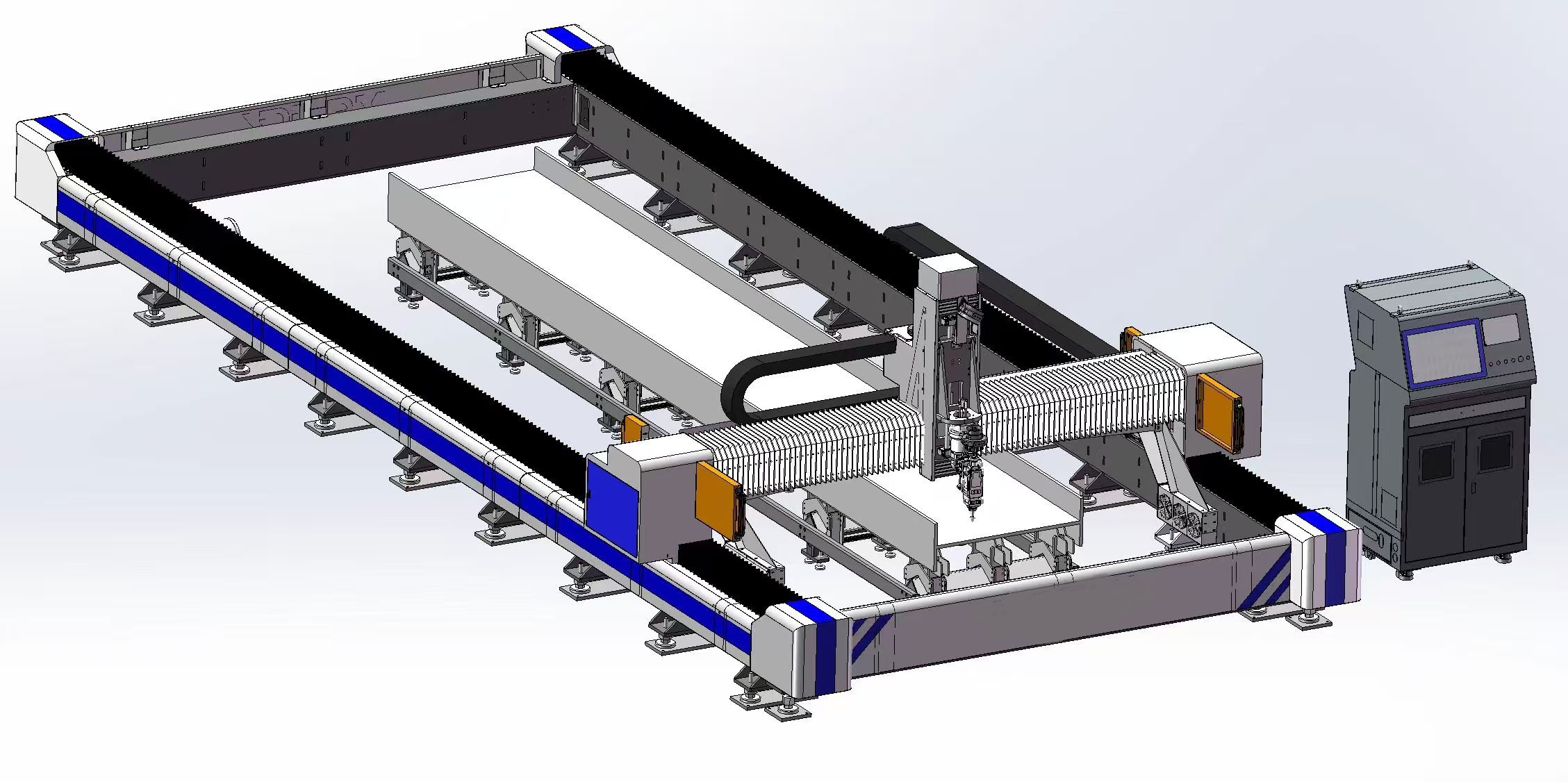
Industrial Application of H-Beam Plasma Cutter
Environmental and Economic Factors in the Caracas Market
Operating heavy machinery in Venezuela requires consideration of local power stability and maintenance infrastructure. Modern H-beam cutters are now being equipped with advanced voltage regulation and dust extraction systems to handle the specific environmental conditions of Caracas. Economically, the move toward 4-chuck stability allows local fabricators to compete on a global scale. By reducing the reliance on secondary finishing processes—such as grinding or manual deburring—the cost per ton of fabricated steel is significantly lowered. This efficiency is crucial for the domestic oil and gas sector, where rapid deployment of structural supports and pipe racks is frequently required.
Concluding Industry Insight: The Future of Automated Steel Fabrication
The adoption of 4-chuck H-beam plasma cutting technology in Caracas is indicative of a broader global trend: the convergence of heavy mechanical engineering and digital precision. As the global construction industry moves toward modular and prefabricated steel structures, the demand for “ready-to-assemble” components will increase. The 4-chuck system is no longer a luxury but a baseline requirement for facilities aiming to eliminate material waste and maximize geometric complexity. Looking forward, the integration of Artificial Intelligence in tool-path optimization and real-time wear monitoring of plasma consumables will further refine these systems. For the Caracas market and the global B2B sector at large, the focus remains clear: stability in the machine leads to reliability in the structure. The transition to 4-chuck technology ensures that even the heaviest structural profiles are handled with the surgical precision required for the next generation of global infrastructure.
Industrial Expertise & Support
Are you looking for high-performance H-Beam Plasma Cutter tailored for the Global market? Our engineering team provides comprehensive solutions for modern manufacturing.





