Strategic Integration of H-Beam Plasma Cutting in Callao’s Industrial Corridor
The industrial landscape of Callao, Peru, serves as a critical nexus for South American logistics and heavy manufacturing. As the primary maritime gateway, Callao is increasingly becoming a hub for the fabrication of high-end agricultural machinery destined for the interior regions of the continent. The transition from traditional mechanical sawing and oxy-fuel cutting to advanced 3D plasma processing is not merely a matter of speed; it is a fundamental shift in metallurgical integrity. Specifically, the deployment of the H-Beam Plasma Cutter has redefined the precision standards for structural steel components used in heavy-duty harvesters, irrigation infrastructure, and grain transport systems.
Agricultural machinery operates under extreme cyclic loading and corrosive environmental conditions. The structural frameworks of these machines typically utilize H-beams and I-beams to manage torsional stress. However, the longevity of these components is often compromised during the fabrication phase. Traditional thermal cutting methods introduce excessive thermal energy into the substrate, leading to a significant Heat Affected Zone (HAZ). In the context of Callao’s growing manufacturing sector, the adoption of small HAZ technology is the primary driver for extending the operational lifecycle of agricultural assets.
The Physics of Small HAZ in Structural Steel Fabrication
The Heat Affected Zone is the area of base metal that has not been melted but has had its microstructure and mechanical properties altered by the intense heat of the cutting process. In H-beams, which are often composed of high-strength low-alloy (HSLA) steels, excessive heat can lead to grain coarsening and the formation of brittle phases such as untempered martensite. This localized change in the Microstructural Transformation leads to stress concentration points that are susceptible to fatigue cracking under the dynamic loads common in field operations.
Modern plasma cutting systems utilized in Callao employ high-definition (HD) plasma technology. These systems utilize a constricted arc with a higher energy density compared to conventional plasma. By narrowing the plasma arc through specialized nozzle geometry and secondary shielding gases, the energy is focused on a much smaller surface area. The result is a narrower Kerf Width and a significantly reduced thermal footprint. For agricultural machinery manufacturers, this means the edges of the H-beam maintain their original tensile strength and ductility, ensuring that the structural integrity of the chassis remains intact over thousands of hectares of operation.
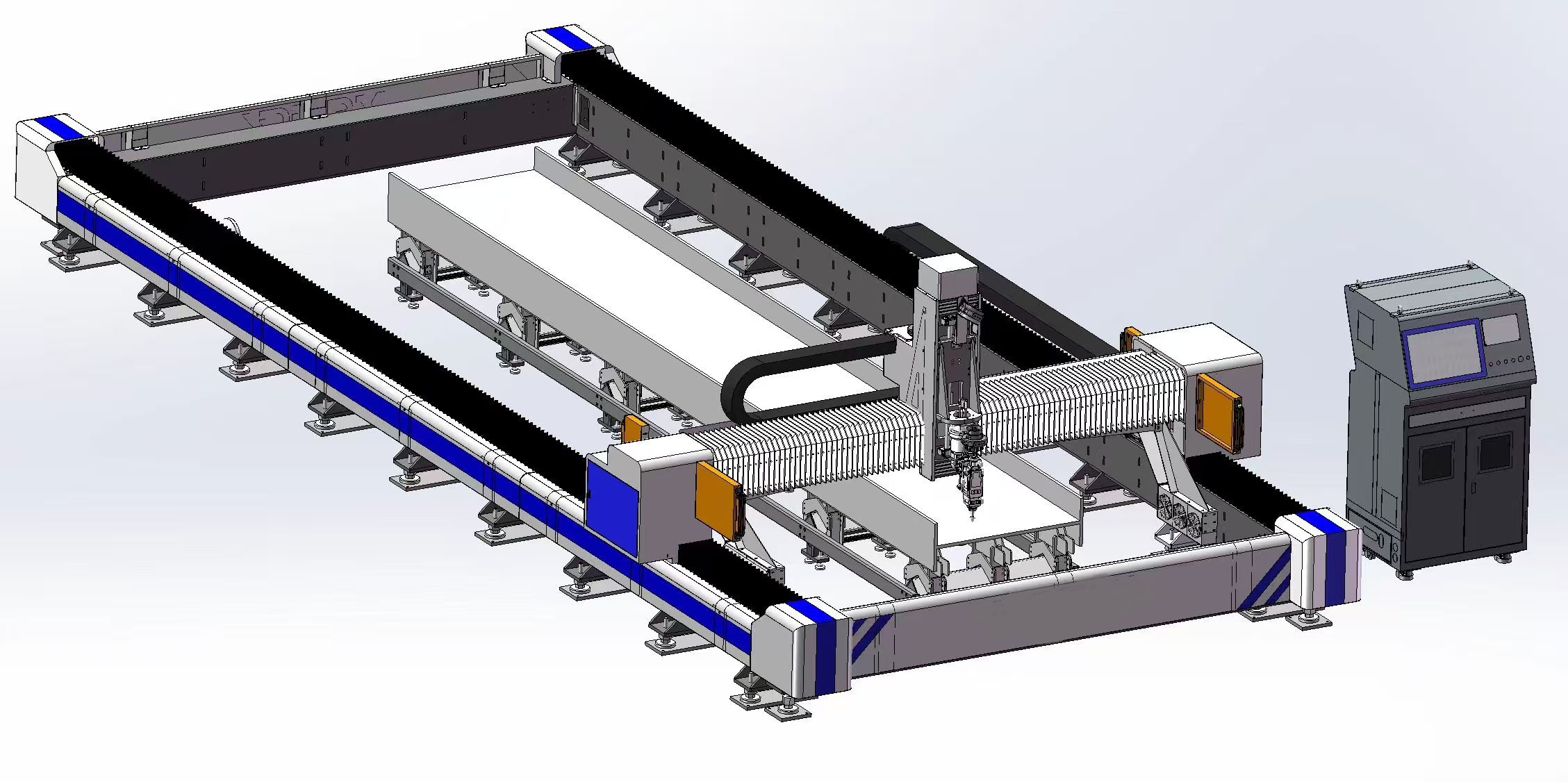
Industrial Application of H-Beam Plasma Cutter
Robotic 5-Axis Maneuverability for Complex Geometries
The H-Beam Plasma Cutter units currently being integrated into Callao’s facilities are typically equipped with robotic 5-axis or 6-axis heads. This allows for the precise execution of complex geometries, including bolt holes, copes, and weld preparations (bevels) in a single pass. In the fabrication of agricultural trailers and plow frames, the ability to cut precise circular holes without the taper associated with older plasma systems is vital. A tapered hole creates uneven stress distribution on bolts, leading to premature failure in the field.
Furthermore, the integration of sophisticated CAD/CAM software allows for the direct translation of engineering designs into machine code. This eliminates manual layout errors and ensures that every beam produced meets the exact tolerances required for modular assembly. In a global B2B environment, where interoperability of parts is essential, the precision offered by these robotic systems ensures that components fabricated in Callao can be seamlessly integrated with assemblies manufactured in Europe or North America.
Optimizing Feed Rates and Gas Dynamics
Technical efficiency in plasma cutting is a function of gas selection and feed rate optimization. For the structural steels used in Peruvian agri-machinery, a combination of Oxygen (O2) as the plasma gas and compressed air or Nitrogen (N2) as the shield gas is often utilized. The exothermic reaction of oxygen with the molten steel increases the cutting speed while maintaining a clean, dross-free edge. High-speed processing is not only a productivity metric; it is a quality metric. The faster the plasma torch moves across the H-beam flange, the less time the heat has to conduct into the surrounding metal, thereby minimizing the HAZ.
Data from local fabrication centers indicates that high-definition plasma systems can reduce the HAZ width by up to 50 percent compared to standard air-plasma systems and up to 80 percent compared to oxy-fuel cutting. This reduction is critical for components that will undergo subsequent welding. A smaller HAZ provides a more stable metallurgical foundation for the weld pool, reducing the risk of hydrogen-induced cracking and ensuring a more homogenous transition between the beam and the joining member.
Economic Implications for the Agricultural Supply Chain
The adoption of this technology in Callao has direct economic ramifications for the agricultural sector. Machinery longevity is a primary factor in the Total Cost of Ownership (TCO) for farming enterprises. By utilizing H-beams with superior edge quality and minimal thermal degradation, manufacturers can offer longer warranties and reduce the frequency of structural failures. In the rugged terrain of the Andean foothills or the expansive plantations of the coast, a structural failure is not just a repair cost; it is a significant loss in seasonal productivity.
Moreover, the reduction in secondary processing—such as grinding or edge cleaning—lowers the labor cost per ton of fabricated steel. In the competitive global market for agricultural machinery, the ability to produce high-durability components at a lower price point allows Peruvian fabricators to compete effectively with international OEMs. The efficiency of the plasma process also reduces material waste, as nesting algorithms can optimize the layout of parts on the beam, ensuring maximum utilization of the raw material.
Concluding Industry Insight: The Future of South American Steel Processing
The industrial evolution in Callao reflects a broader trend in global manufacturing: the convergence of digital precision and metallurgical science. As agricultural machinery continues to scale in size and complexity, the demands on the structural skeleton of these machines will only intensify. The H-Beam Plasma Cutter is no longer an optional upgrade for fabricators; it is a foundational requirement for any facility aiming to participate in the global supply chain.
Looking forward, the integration of real-time monitoring and AI-driven parameter adjustment will likely be the next step for Callao’s industrial sector. Sensors that monitor arc voltage and gas flow in real-time can adjust the cutting speed to compensate for variations in steel composition, ensuring a consistent HAZ regardless of material fluctuations. For the B2B sector, this means a transition from “quality control” (detecting errors after they happen) to “quality assurance” (preventing errors during the process). In the context of agri-machinery longevity, the focus on small HAZ technology is the most effective strategy for ensuring that the backbone of the agricultural industry remains resilient against the tests of time and terrain.
Industrial Expertise & Support
Are you looking for high-performance H-Beam Plasma Cutter tailored for the Global market? Our engineering team provides comprehensive solutions for modern manufacturing.





