Introduction: The Industrial Transition in Cali’s Structural Steel Sector
The industrial corridor of Cali, Colombia, particularly within the Valle del Cauca region, has long served as a critical hub for structural steel fabrication and heavy manufacturing. Historically, the fabrication of H-beams, I-beams, and channels relied heavily on manual labor-intensive processes involving oxy-fuel torches, manual layout marking, and magnetic-base drilling. However, the rising cost of skilled labor and the increasing demand for tighter tolerances in seismic-resistant construction have forced a shift toward automation. This article analyzes the technical and financial impact of implementing a high-precision H-Beam Plasma Cutter in a Cali-based facility, demonstrating a documented operational saving of $5,000 per month through the displacement of traditional manual workflows.
Technical Limitations of Manual H-Beam Processing
Before the integration of automated systems, the standard workflow for H-beam preparation involved multiple discrete stages. First, engineers produced 2D drawings which were then manually translated onto the steel surface using chalk lines and center punches. This “layout” phase was prone to human error, often resulting in deviations of 3mm to 5mm. Following layout, manual cutting with oxy-fuel equipment resulted in a large Heat Affected Zone (HAZ), necessitating secondary grinding operations to meet welding specifications.
Furthermore, the creation of bolt holes required manual drilling, a process that is both slow and consumable-heavy. In a high-volume environment, the cumulative time spent on positioning, clamping, and drilling multiple holes across a 12-meter beam represents a significant bottleneck. The lack of 6-axis robotic kinematics in manual processes meant that complex cuts, such as coping, notches, and miter cuts, required specialized jigs and highly skilled operators, further increasing the cost per ton of fabricated steel.
The Implementation of the H-Beam Plasma Cutter
The transition to an automated H-Beam Plasma Cutter introduces a centralized CNC (Computer Numerical Control) environment. The system utilized in this case study features a multi-axis robotic arm equipped with a high-definition plasma power source. This configuration allows for the simultaneous processing of all four sides of the beam (flanges and web) without the need to flip or reposition the workpiece manually.
The technical core of the system is its CAD/CAM integration. By importing files directly from structural software like Tekla Structures or Autodesk Revit, the machine eliminates the manual layout phase entirely. The software calculates the optimal cutting path, including compensation for the plasma kerf width, ensuring that every bolt hole and cope is placed with a precision of +/- 0.5mm. This level of accuracy is unattainable through manual methods and is essential for the “bolt-up” assembly required in modern steel skyscrapers and industrial warehouses.
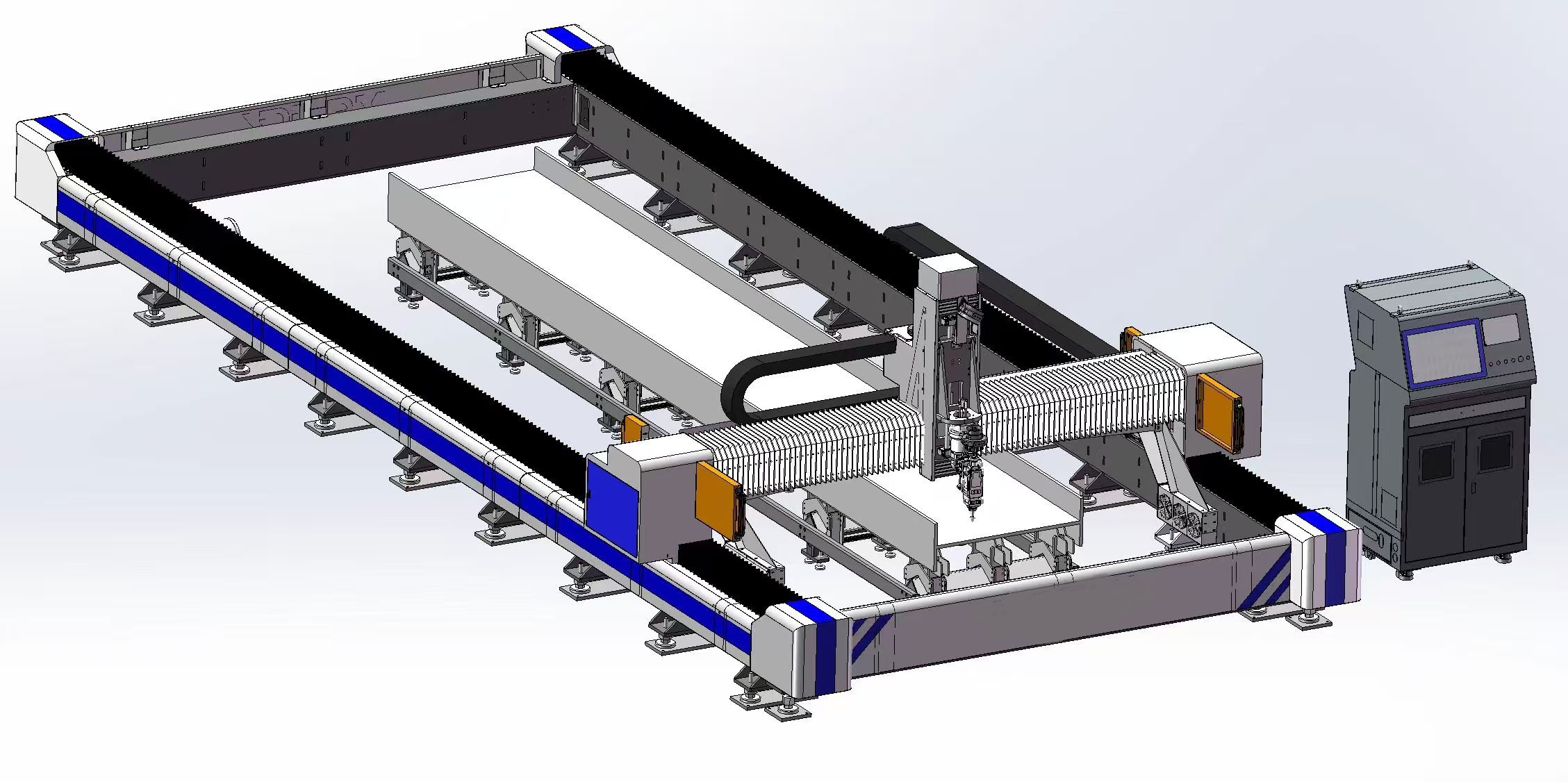
Industrial Application of H-Beam Plasma Cutter
Quantifying the $5,000 Monthly Savings
The financial justification for the H-Beam Plasma Cutter is rooted in the reduction of “man-hours per ton.” In the Cali facility, the previous manual workflow required a team of five skilled fabricators to process approximately 40 tons of steel per month. With the introduction of the plasma system, the labor requirement was reduced to a single machine operator and one material handler.
1. Labor Cost Reduction: By reallocating three skilled workers to other high-value assembly tasks, the facility saved approximately $3,600 in direct monthly wages and associated social security contributions (based on local Colombian labor rates for specialized welders/fabricators).
2. Consumable and Utility Efficiency: While plasma cutting consumes electricity and industrial gases (Oxygen/Nitrogen/Air), it eliminates the high cost of drill bits and the excessive use of acetylene and oxygen required for slow oxy-fuel cutting. The speed of the plasma arc reduces the total gas consumption per linear meter of cut by nearly 40 percent. This contributed to a monthly saving of approximately $600.
3. Elimination of Rework and Scrap: Manual errors previously resulted in roughly 2 percent of material being scrapped or requiring extensive rework. With the CNC system, the scrap rate dropped to under 0.2 percent. Given the price of structural steel, this reduction in waste accounted for an additional $800 in monthly savings. Totaling these factors, the facility achieved a conservative $5,000 monthly reduction in operational expenditure (OPEX).
Enhanced Throughput and Structural Integrity
Beyond direct financial savings, the H-Beam Plasma Cutter significantly improved the facility’s throughput. A task that previously took four hours manually—such as cutting a complex miter with multiple bolt holes—is now completed in under 12 minutes. This 20-fold increase in speed allows the company to bid on larger contracts with shorter delivery timelines, a competitive advantage in the global construction market.
From a metallurgical perspective, the high-definition plasma process produces a much narrower Heat Affected Zone compared to oxy-fuel. This preserves the structural integrity of the structural steel fabrication, ensuring that the mechanical properties of the H-beam flanges remain within the design parameters specified by structural engineers. The clean, dross-free cuts also mean that the beams can move directly from the cutting table to the welding station without secondary cleaning, further streamlining the factory floor.
Safety and Ergonomics in the Fabrication Environment
Manual steel fabrication is inherently hazardous, involving heavy lifting, exposure to intense heat, and the risk of injury from manual tools. The automation of the H-beam process improves the safety profile of the Cali plant. The operator controls the machine from a shielded console, away from the cutting sparks and fumes, which are managed by an integrated dust extraction and filtration system. This shift not only reduces workplace accidents but also lowers insurance premiums and improves employee retention by providing a technologically advanced working environment.
Concluding Industry Insight: The Global Shift Toward Data-Driven Fabrication
The case study in Cali, Colombia, is a microcosm of a broader global trend in the structural steel industry. As we move further into the era of Industry 4.0, the distinction between “manufacturing” and “construction” is blurring. Fabrication shops are no longer just cutting steel; they are becoming data-driven processing centers where CAD/CAM integration acts as the single source of truth from design to assembly.
The transition from manual labor to automated plasma cutting is not merely about cost-cutting; it is about scalability and predictability. In a volatile global market where material prices fluctuate, the ability to guarantee precision and minimize waste is the only way to maintain healthy margins. We anticipate that within the next five years, manual layout and cutting of H-beams will become obsolete in any facility processing more than 20 tons per month. Companies that fail to adopt 6-axis robotic automation will find themselves unable to compete on precision or price, as the industry standard moves toward fully automated, “lights-out” fabrication workflows. The $5,000 monthly saving observed in Cali is the baseline; the true value lies in the long-term viability and increased capacity for complex, high-margin structural projects.
Industrial Expertise & Support
Are you looking for high-performance H-Beam Plasma Cutter tailored for the Global market? Our engineering team provides comprehensive solutions for modern manufacturing.





