The Strategic Role of Structural Steel Fabrication in the Andean Region
Cali, Colombia, serves as a critical industrial axis within the Andean region, facilitating the flow of manufactured goods and structural components between the Pacific coast and the interior highlands. As infrastructure projects across South America demand increasingly complex steel geometries, the transition from manual layout and mechanical drilling to automated thermal cutting has become a technical necessity. The deployment of the H-Beam Plasma Cutter in this geographic context represents a significant shift in how regional fabricators address the requirements of large-scale civil engineering and industrial construction.
The primary challenge for operators in Cali, and more broadly across the vast regions of Colombia, is not merely the acquisition of high-precision hardware, but the long-term maintenance and calibration of these systems. In a landscape characterized by diverse topographic barriers and varying levels of local technical specialization, the integration of Remote Cloud Diagnostics has emerged as the standard for ensuring operational continuity. This technology mitigates the logistical hurdles associated with traditional on-site servicing, allowing for real-time synchronization between local production floors and global technical support centers.
Technical Architecture of the H-Beam Plasma Cutter
The H-Beam Plasma Cutter is engineered to execute complex 3D profiles on structural steel members, including H-beams, I-beams, channels, and square tubing. Unlike traditional 2D plate cutters, these systems utilize multi-axis robotic arms or specialized gantry rotations to achieve precise beveling, coping, and bolt-hole perforation. The kinematic complexity of managing six or more axes of motion requires a robust control system capable of calculating tool-path compensations in real-time to account for material deviations and thermal expansion.
Key technical specifications often include high-definition plasma power sources capable of piercing thicknesses exceeding 50mm, with positioning accuracies within sub-millimeter tolerances. The integration of Kinematic Calibration software ensures that the plasma torch maintains an optimal standoff distance and angle relative to the workpiece surface. This level of precision is essential for meeting the stringent AISC (American Institute of Steel Construction) standards often required for international infrastructure projects managed out of Colombian industrial hubs.
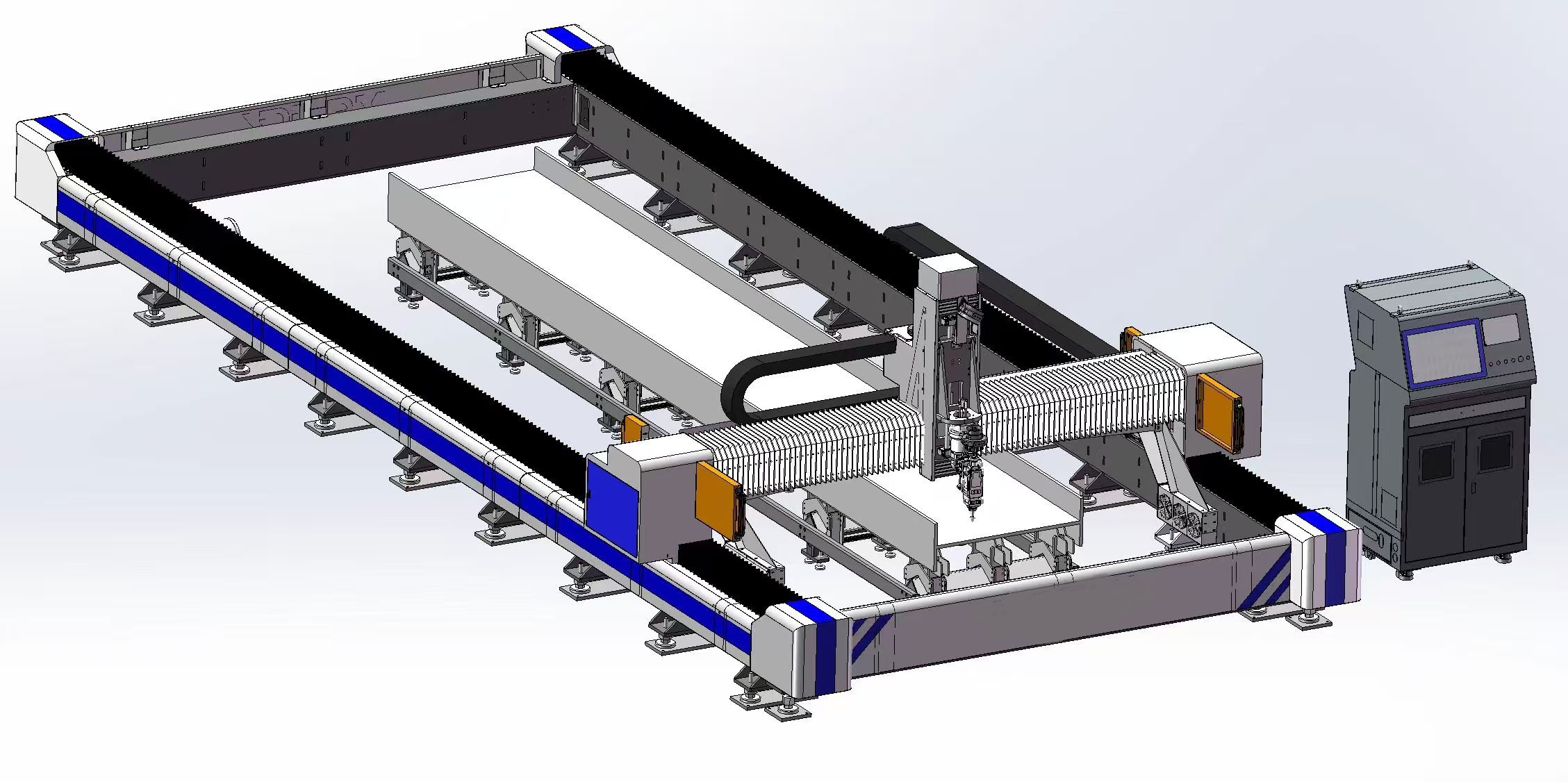
Industrial Application of H-Beam Plasma Cutter
Challenges of Maintenance in Geographically Dispersed Markets
In regions like Valle del Cauca, the proximity to the Port of Buenaventura facilitates equipment import, but the subsequent technical support lifecycle faces geographic friction. When a sophisticated plasma system experiences a software conflict or a hardware sensor failure, the traditional response involves dispatching a specialized field engineer. In a globalized market, these engineers may need to travel from North America, Europe, or East Asia, leading to excessive Mean Time to Repair (MTTR) and significant operational downtime costs.
Furthermore, environmental factors in tropical regions, such as high humidity and fluctuations in power grid stability, can impact the sensitive electronics within the CNC (Computer Numerical Control) cabinets. Without a proactive monitoring system, these variables can lead to incremental wear or sudden component failure that local maintenance teams may not be equipped to diagnose via manual inspection. The need for a digital bridge between the machine site in Cali and the manufacturer’s diagnostic laboratory is paramount for maintaining high throughput.
Remote Cloud Diagnostics: Bridging the Infrastructure Gap
The implementation of Remote Cloud Diagnostics transforms the H-beam fabrication process from a localized mechanical operation into a node within a global data network. By utilizing secure VPN tunnels and industrial IoT protocols, the machine’s internal control system transmits telemetry data to a centralized cloud platform. This allows off-site engineers to access the PLC Integration layer, viewing real-time error logs, I/O states, and servo motor performance metrics without physical intervention.
This diagnostic capability extends beyond simple troubleshooting. It enables deep-packet inspection of the machine’s logic, allowing for remote firmware updates and the optimization of cutting parameters based on specific material grades found in the Colombian market. By analyzing the “digital twin” of the machine in the cloud, technicians can identify the root cause of an anomaly—whether it is a mechanical misalignment, a pneumatic pressure drop, or a software parsing error—and provide the local operator with precise corrective instructions in minutes rather than days.
IoT-Enabled Telemetry and Real-Time Error Resolution
The technical backbone of IoT-Enabled Telemetry involves the continuous streaming of sensor data, including gas flow rates, arc voltage, and coolant temperatures. In the context of an H-Beam Plasma Cutter operating in Cali, this data is critical for predictive maintenance. For instance, if the cloud-based analytics engine detects a subtle increase in the torque required by the X-axis drive over a 48-hour period, it can trigger an automated alert indicating a potential lubrication failure or rail obstruction before a catastrophic breakdown occurs.
This proactive model relies on high-speed data acquisition boards that interface directly with the machine’s bus system. The data is encrypted and pushed to the cloud, where machine learning algorithms compare the current performance against baseline datasets. For fabricators in South America, this means that the expertise of the original equipment manufacturer (OEM) is effectively “on-site” 24/7, providing a level of technical security that was previously unavailable to firms operating outside of major global industrial corridors.
Impact on Operational Downtime and MTTR
Quantifying the impact of remote diagnostics requires an analysis of the reduction in Mean Time to Repair. In a conventional scenario, a failure in the plasma ignition sequence might take three days to diagnose and resolve through back-and-forth communication and physical travel. With cloud-enabled access, the diagnostic phase is reduced to less than an hour. If the issue is software-related, the resolution is instantaneous through a remote patch; if hardware-related, the exact spare part can be identified and shipped immediately, bypassing the “discovery” visit entirely.
For high-volume structural steel facilities in Cali, where the H-Beam Plasma Cutter is often the primary bottleneck in the production line, reducing downtime by even 15% can result in significant annual revenue gains. The ability to maintain consistent production schedules is vital for securing contracts in the competitive international construction market, where liquidated damages for project delays are standard. The cloud-connected machine becomes a more reliable asset, depreciating less rapidly due to optimized maintenance schedules and expert-led operation.
Concluding Industry Insight: The Digital Twin and Remote Sovereignty
The evolution of structural steel fabrication in vast regions like Colombia is no longer solely dependent on mechanical robustness, but on the digital sovereignty provided by cloud connectivity. The transition toward the “Digital Twin” model—where every physical H-Beam Plasma Cutter is mirrored by a virtual data profile—marks the end of isolated industrial operations. As the industry moves toward further automation, the integration of Remote Cloud Diagnostics will become the baseline requirement for any capital equipment investment.
The insight for the global B2B sector is clear: the value of heavy machinery is increasingly tied to the service ecosystem that supports it. For fabricators in Cali and other emerging industrial hubs, the ability to leverage global expertise via the cloud ensures that geographic distance is no longer a barrier to technical excellence. The future of the industry lies in this convergence of high-precision thermal cutting and high-latency-resistant data networks, creating a resilient, interconnected manufacturing landscape that can withstand the logistical challenges of the world’s most demanding regions.
Industrial Expertise & Support
Are you looking for high-performance H-Beam Plasma Cutter tailored for the Global market? Our engineering team provides comprehensive solutions for modern manufacturing.





