Optimizing Structural Steel Fabrication: A Case Study on Cycle Time Reduction in Cali, Colombia
The industrial sector in Cali, Colombia, has long served as a strategic hub for South American infrastructure and manufacturing. As global demand for structural steel increases, fabricators in this region face the dual challenge of maintaining high-precision standards while significantly increasing throughput. Traditional methods of processing structural members—specifically H-beams, I-beams, and channels—often involve fragmented workflows including manual layout, mechanical drilling, and oxy-fuel cutting. These legacy processes are characterized by high labor intensity and extensive cycle times.
A recent implementation of an automated H-Beam Plasma Cutter at a major fabrication facility in Cali has demonstrated a transformative shift in production metrics. By transitioning from manual multi-stage processing to a single-pass automated system, the facility reduced the total cycle time for a standard batch of structural profiles from 72 hours to just 3 hours. This analysis explores the technical parameters, software integration, and mechanical advantages that enabled this 95.8 percent reduction in production time.
The Limitations of Legacy Processing Methods
Prior to the adoption of automated plasma technology, the fabrication workflow in the Cali facility relied on manual intervention at every stage. For a standard structural project requiring complex coping, bolt holes, and flange thinning, the process followed a linear path: manual measurement and marking (layout), manual drilling using magnetic base drills, and thermal cutting using hand-held oxy-fuel torches.
This methodology presented three primary bottlenecks. First, the human error margin in manual layout often exceeded 3mm, necessitating secondary grinding and fit-up adjustments during assembly. Second, the mechanical drilling of high-tensile steel is inherently slow, with significant downtime required for tool changes and lubrication. Third, the heat-affected zone (HAZ) produced by oxy-fuel cutting required extensive post-process cleaning to meet welding codes. When aggregated across a standard project volume, these factors resulted in a 72-hour lead time from raw material input to weld-ready components.
Technical Specifications of the H-Beam Plasma System
The solution implemented was a multi-axis robotic profiling system specifically engineered for structural steel. Unlike standard flat-bed plasma tables, this system utilizes a multi-axis robotic arm capable of 360-degree rotation around the workpiece. This allows for the simultaneous processing of the web and both flanges of an H-beam without the need to flip or rotate the heavy material manually.
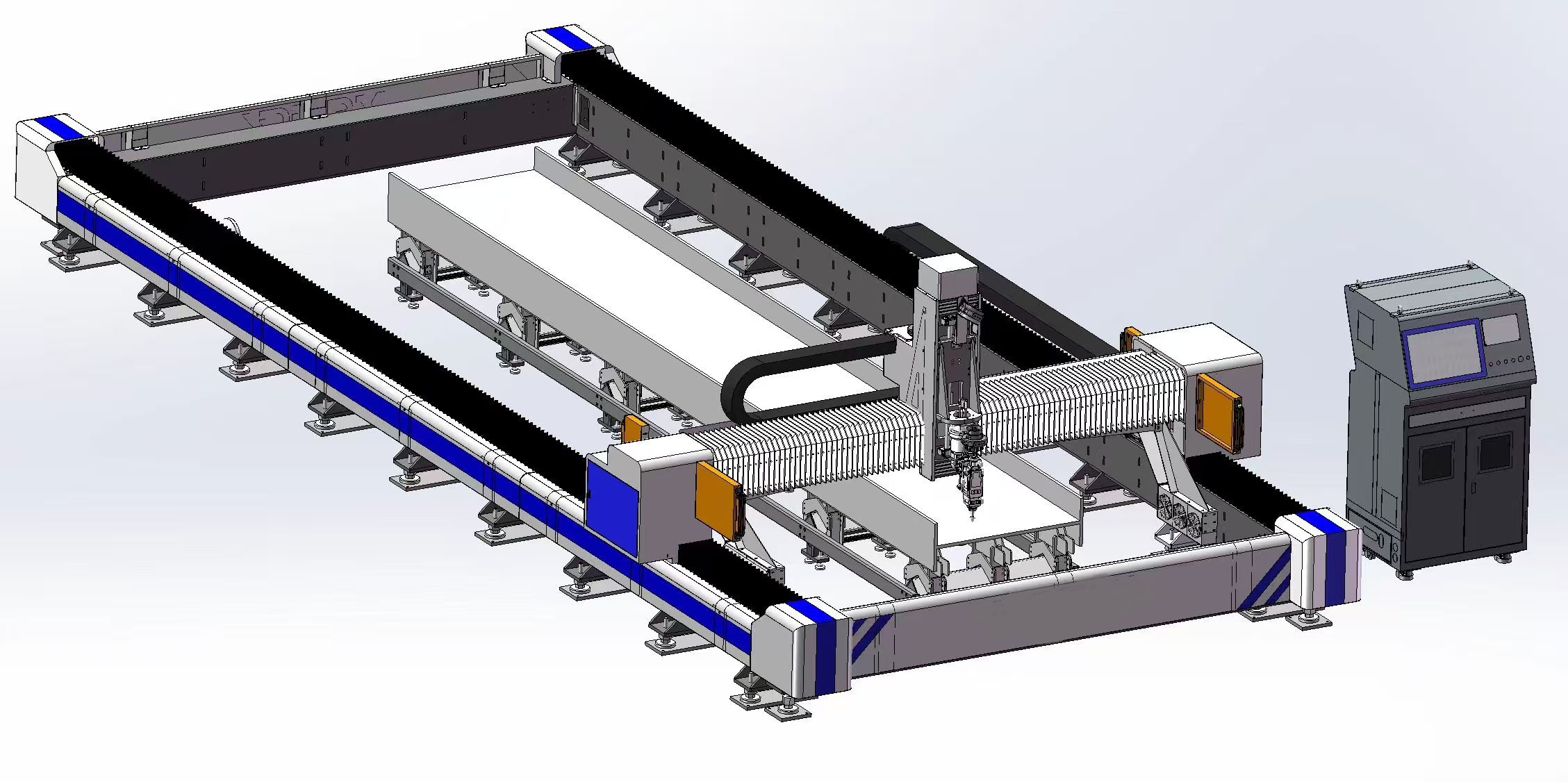
Industrial Application of H-Beam Plasma Cutter
The system is powered by a high-definition plasma power source, which utilizes a constricted arc to provide a higher energy density than conventional plasma. This results in narrower kerf widths and a significantly smaller heat-affected zone (HAZ). The integration of Computer Numerical Control (CNC) integration allows the machine to interpret Tekla or AutoCAD files directly, translating complex 3D geometries into precise torch movements without manual data entry.
The Transition to a 3-Hour Cycle
The reduction to a 3-hour cycle time is achieved through the elimination of non-value-added movements and the consolidation of four distinct fabrication steps into a single automated sequence. The technical breakdown of this efficiency gain includes:
1. Automated Material Handling: The system utilizes motorized conveyor beds equipped with encoders to track the exact position of the beam. This eliminates the need for crane-assisted positioning between different workstations.
2. Simultaneous Hole and Cope Processing: While manual methods require separate setups for drilling and cutting, the plasma system executes bolt holes, slots, and complex copes in a single continuous path. The robotic arm adjusts its angle of attack in real-time to create beveled edges, which are essential for weld preparation.
3. Real-Time Deviation Compensation: Structural steel sections often possess slight deviations in flange parallelism or web centering. The H-Beam Plasma Cutter in the Cali facility utilizes laser probing to scan the actual dimensions of the loaded beam. The CNC software then adjusts the cutting path to account for these deviations, ensuring that every cut is mathematically centered relative to the actual material, rather than the theoretical CAD model.
Data-Driven Results and Quality Assurance
The transition from 72 hours to 3 hours does not merely represent a speed increase; it represents a shift in the precision of the output. In the 3-hour automated cycle, the tolerance levels are maintained within +/- 0.5mm. This level of accuracy ensures that when the processed H-beams reach the assembly site, the fit-up is seamless. In the previous 72-hour manual cycle, fit-up issues frequently required “re-work” on-site, which added hidden costs and further delayed project timelines.
Furthermore, the high-definition plasma process achieves a surface finish that often meets the requirements for ISO 9013 Range 3 or 4, reducing the need for secondary shot blasting or grinding. The reduction in labor hours also allows the facility to reallocate skilled welders to assembly and finishing tasks rather than basic material preparation, effectively increasing the overall plant capacity without increasing the headcount.
Economic Impact on the Cali Industrial Sector
For fabricators in Cali, the ability to process structural steel at this speed changes the competitive landscape. Lowering the cycle time allows for shorter lead times on government infrastructure bids and private commercial developments. The reduction in power consumption per ton of processed steel—due to the shorter duration of machine operation compared to multiple days of manual tool usage—also contributes to a lower carbon footprint for the facility.
Concluding Industry Insight: The Digitalization of Structural Fabrication
The case study of the Cali facility serves as a microcosm for a broader trend in the global B2B steel industry: the move toward fully integrated, data-driven fabrication. The reduction of cycle time from 72 hours to 3 hours is not an isolated achievement of hardware alone, but a result of the synergy between robotic hardware and sophisticated nesting software.
As the industry moves forward, the primary differentiator between successful fabrication firms and their competitors will be the “digital thread”—the ability to maintain data integrity from the initial structural design through to the automated cutting floor. The H-Beam Plasma Cutter is no longer a luxury for high-volume producers; it has become a technical necessity for any firm seeking to mitigate rising labor costs and meet the compressed timelines of modern construction. In emerging markets like Colombia, this leap in technology signifies a transition from traditional craftsmanship to high-precision industrial engineering, setting a new benchmark for the South American steel supply chain.
Industrial Expertise & Support
Are you looking for high-performance H-Beam Plasma Cutter tailored for the Global market? Our engineering team provides comprehensive solutions for modern manufacturing.





